
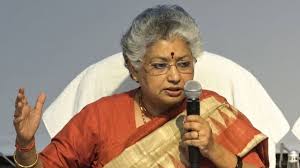
A Hindu is a Hindu, he can go to any temple, Justice Nagarathna’s big comment in the Sabarimala hearing.

News India Live, Digital Desk: During the hearing of Sabarimala reference case in the Supreme Court, Justice B.V. Nagarathna has made a very important comment regarding the unity of Hindu society and the right to enter temples. In the debate going on before a nine-judge Constitution bench, he made it clear that a Hindu has the right to visit any temple on the basis of his faith and it should not be limited on the basis of denominations. ‘Hindu unity’ and inclusivity of temples Justice Nagarathna said this in response to the arguments of senior advocate V. Giri and other lawyers that devotees of Lord Ayyappa should be treated as a separate ‘religious sect’. Were presenting. Justice Nagarathna said, “A Hindu is a Hindu, he can go to any temple.” He warned that if discriminatory walls were erected in temples on the basis of sects, it would weaken the unity of Hindu society and ultimately those sects would also find themselves isolated from the society. ‘Boycott’ in the name of sect is not acceptable. During the hearing, Justice Nagarathna emphasized that under Article 26, a religious sect has the freedom to manage its affairs, but it cannot be used to completely exclude a particular section (such as women). Can be done. He said that temples should be ‘inclusive’ and not ‘exclusionary’. The court also remarked that the job of the state is to remove social evils, and if people want reform, the state can intervene. Sharp talk on ‘untouchability’ and respect for womenIn an earlier hearing, Justice Nagarathna had also taken a strong stand on the ban on entry of women on the basis of menstruation. He had asked whether a woman could be considered ‘untouchable’ for three days of the month and become ‘sacred’ on the fourth day? He said that this concept is against Article 17 of the Indian Constitution (abolition of untouchability) and the dignity of women. What is the Sabarimala reference case? A nine-judge bench of the Supreme Court is currently considering major constitutional questions arising from the 2018 Sabarimala verdict. In this, the Constitution is being interpreted not only on Sabarimala, but also on women’s entry into mosques, rights of Parsi women and practices like circumcision in the Dawoodi Bohra community. This bench led by Chief Justice (CJI) Surya Kant is looking for a balance between freedom of religion (Articles 25-26) and gender equality. Justice Nagarathna’s remarks are being seen as a major step towards reform and integration within the Hindu society. According to him, temples are not the property of any one small group, but are the center of faith of the entire society. In the next hearing of this case, the court will also discuss the fine line between religion and superstition.

Comments are closed.