

As the FIFA World Cup 2026 approaches its business end and the two traditional powerhouses — Europe and Latin America — continue to strive for the ultimate crown in football, one must not lose sight of another potential powerhouse emerging in the game.
It is Africa.
Teams from the continent have impressed at the World Cup in the past. After flashes in the pan between 1930 and 1986, when countries made irregular appearances, Cameroon’s quarter-final run in 1990 announced Africa’s arrival in a big way.
Also read: FIFA World Cup 2026: Full quarterfinal schedule, venues, and India timings
The trend continued thereafter, with Nigeria (1994), Senegal (2002), Ghana (2010) and Morocco (2022) leaving major impacts in the tournament. In 2022, Morocco became the first African side to make the semi-finals and finished fourth. Teams like Tunisia, Algeria and Ivory Coast have also produced performances that kept the World Cup’s global spectators enthralled.
Africa in FIFA World Cup 2026
♦ South Africa (Round of 32)
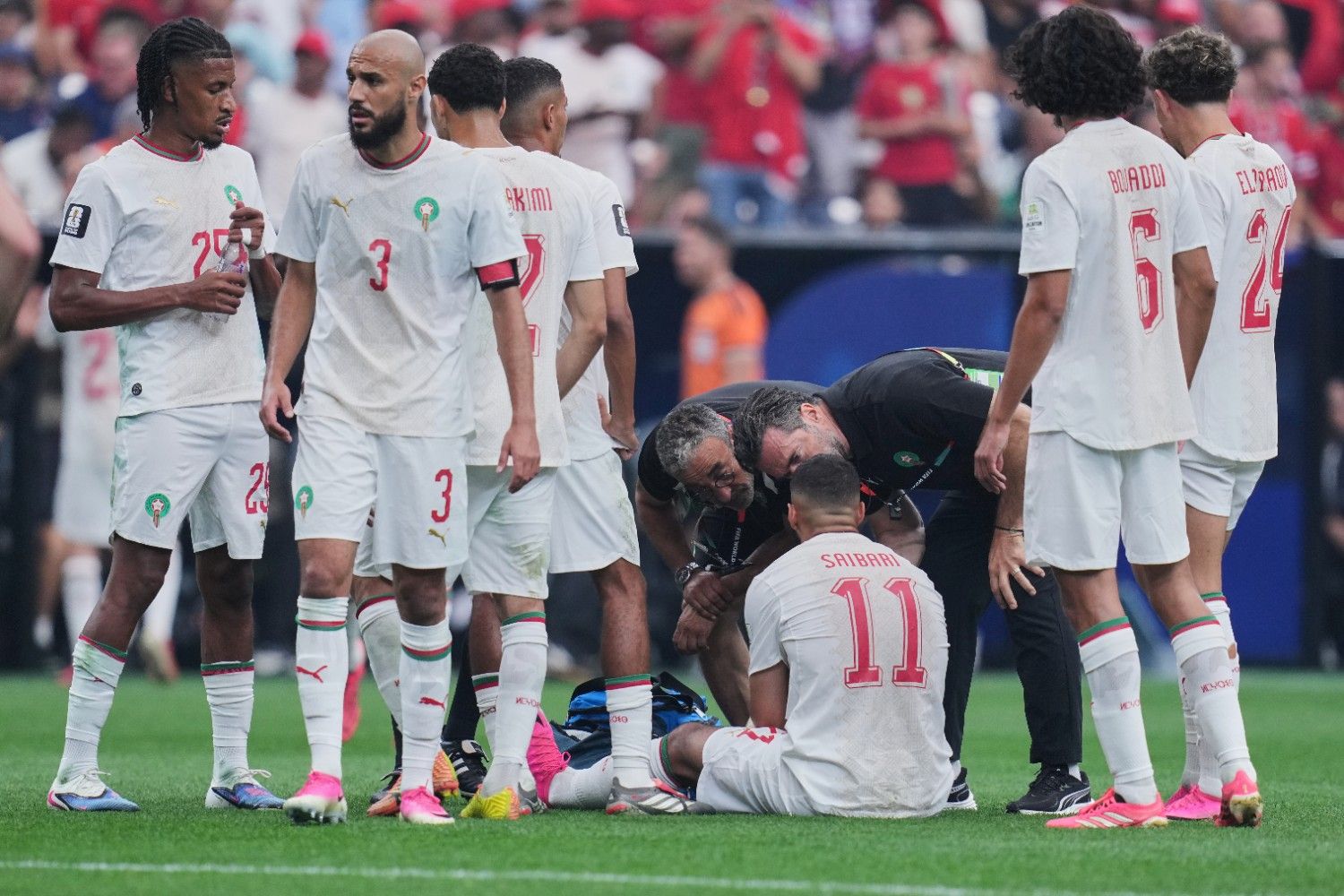
♦ Morocco (Quarterfinal till now)
♦ Algeria (Round of 32)
♦ Senegal (Round of 32)
♦ Egypt (Round of 16)
♦ Ivory Coast (Round of 32)
♦ Tunisia (Group Stage)
♦ Cape Verde (Round of 32)
♦ DR Congo (Round of 32)
♦ Ghana (Round of 32)
Nine out of 10 African teams made knockouts
However, the 2026 edition eclipsed all the previous high points. This year, nine out of 10 teams that participated crossed the group-stage hurdle to reach the knockouts, scripting the continent’s most successful performance at the quadrennial tournament. Although South Africa lost the World Cup’s opening game against co-hosts Mexico on June 11, the African side produced a commendable show as the tournament progressed.
Barring Tunisia, which failed to win a single game, every other team from Africa progressed, including debutants Cape Verde. The African teams that qualified for the knockouts are: Morocco, Egypt, Cape Verde, South Africa, Democratic Republic of Congo, Ivory Coast, Senegal, Algeria and Ghana.
Losing by late-munite goals
Things did not go very well from the Round of 32 onwards for the African teams, though. Seven of the nine teams lost, and many of them lost in last-minute scoring by their opponents. Canada beat South Africa by a 92nd-minute goal; Norway got rid of Ivory Coast by an 86th-minute strike; England left DR Congo heartbroken with an 86th-minute goal too; Belgium beat Senegal in extra time; as did Argentina against Cape Verde. Morocco and Egypt advanced by winning in penalty shootouts, but, again, Egypt lost to Argentina on a late goal to crash out of the tournament. Only Morocco kept the African flag flying high in the quarterfinal, looking to match or better its 2022 run to the semifinals.
It was particularly earth-shattering for many of these African sides that dominated matches against formidable European or American opponents but squandered them in the dying moments, particularly Senegal against Belgium and Egypt against Argentina. Suddenly, they seemed to have lost their tempo and composure, giving away the matches moments before history.
Many of these teams, despite their organised and disciplined games to begin with, crumbled in the closing stages while trying to defend too deeply and becoming too cautious not to concede. Their experienced opponents won the nervous moments to kill the African dreams. A lack of experience in playing the knockout stages is also one reason that made these teams suffer.
Fatigue and tactical errors, such as late substitutions or their inability to maintain the energy level running also exposed the African sides. In many of the games, starting players were continued far too long, and their exhaustion made the team pay in the final outcome. Mental resilience is another area that they would have to work on.
Yet, Asia can learn from Africa
Yet, their achievements cannot be ignored. FIFA’s decision to expand the World Cup to 48 teams was made even before the 2018 World Cup took place in Russia, and given the fact that none of the five teams from Africa that played in that tournament could go beyond the group stage had raised doubts over the decision to give the continent four more slots in the tournament.
Also read: Deschamps dismisses Argentina referee factor ahead of QF: ‘Our opponent is Morocco’
Irrespective of the knockout shows, the African teams’ performance in the 2026 edition vindicates FIFA’s call. Particularly when compared with Asia, another developing football world, Africa’s rise has been no less than meteoric. Out of nine Asian teams that competed, only two, Japan and Australia, advanced to the Round of 16 and lost there.
Morocco lead the way, Cape Verde show grit
Among the African sides, the country that has dominated discussions the most is Morocco. They continued from where it left off in the 2022 edition when they thumped Belgium, Spain and Portugal; they drew with Brazil and beat Scotland and Haiti in the group stage this year before eliminating the Netherlands and co-hosts Canada in the knockouts to face France in the quarterfinal.
Former Nigeria captain William Troost-Ekong told BBC Sport Africa in June that the North African state has created a blueprint of how things can be done, and it is about years of investment in grassroots football and academies.
“Morocco have invested not just money but also time and effort, with a clear idea of how they can progress. The facilities they have, the consistency throughout their age groups, I think that’s the only blueprint you can follow,” he was quoted as saying.
In the 1994 World Cup, also held in the USA, Morocco were also-ran, losing to Belgium, the Netherlands and even Saudi Arabia in the group stages. Thirty-two years later, they are a different breed altogether.
Cape Verde, who made debut in the tournament as the smallest nation from Africa, did not lose a single game till their clash with Argentina, where an own goal ended their journey in extra time. But their performance of remaining unbeaten against former champions Spain and Uruguay and battling Argentina till the last breath would remain alive in the annals of the tournament’s history.
Also read: Kasparov, Brathwaite react as VAR row mars Argentina win: ‘Can’t shame the shameless’
But there are also organisational reasons why Africa is leading Asia in its World Cup performances.
Jamal Sellami, the head coach of Jordan, who made their debut in the top tournament this time, told BBC that the gap between Africa and Asia is telling since African players play in major European football leagues.
The first signs of Africa’s improvement came in Qatar in 2022, when two nations from the continent made the knockout stage for the first time.
Till then, only three African teams had reached the quarter-finals — Cameroon (1990), Senegal (2002) and Ghana (2010).
A little more experience and tactical smartness, and Africa could see its representation in the final in the years ahead, who knows!

Comments are closed.