
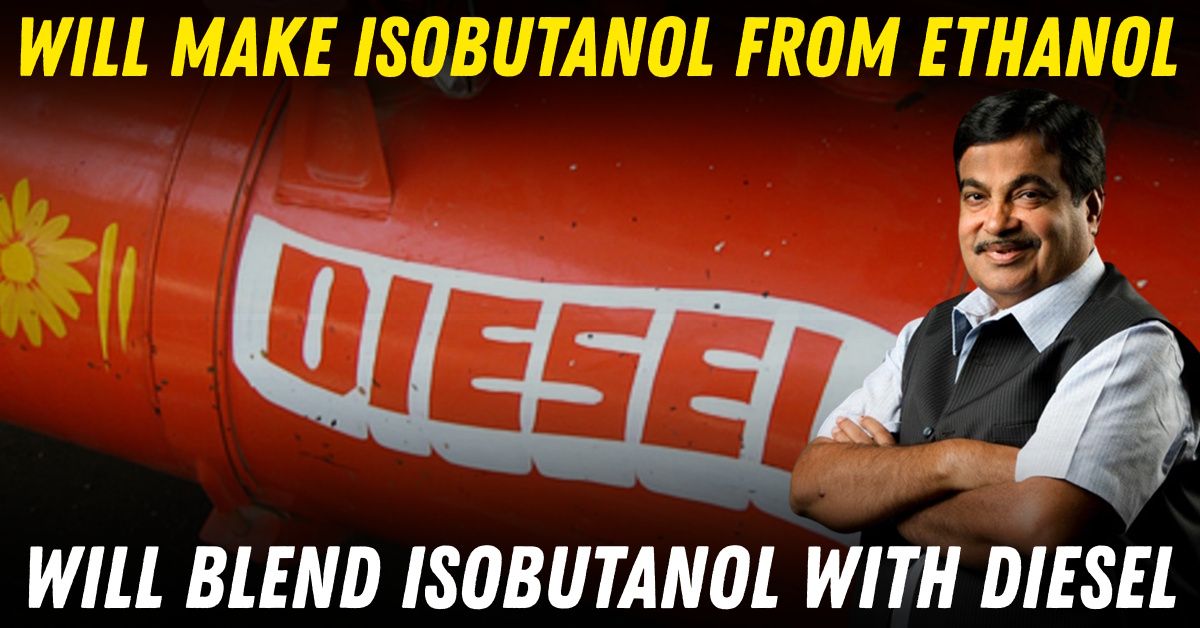

Recently, at an event organized by the All India Management Association (AIMA), Union Minister Nitin Gadkari has confirmed that the Government of India is now working on blending isobutanol with diesel. The plan is part of the government’s larger clean fuel and energy diversification roadmap. Gadkari, while discussing India’s energy future, highlighted the transition from fossil fuels to biofuels and green alternatives.
In his speech, he emphasized that the government of India wants to evolve the farmers from Annadata (food providers) to Urjadata (energy providers), and eventually contributors to bio-bitumen and hydrogen production. He continued and stated that the isobutanol-diesel plan is a corrective step after ethanol failed in diesel applications.
For those who may not be aware, last year it was announced by Gadkari that the previously attempted mixing of ethanol with diesel failed. What happened was that blending ethanol beyond 5 percent was unsuccessful due to multiple technical issues, including combustion and engine issues. It was reported that the ethanol caused a sharp drop in cetane number.
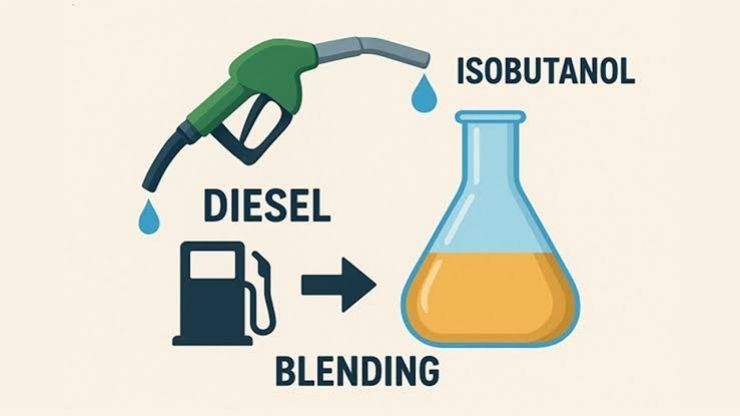
Diesel engines require high cetane (45–55) for proper ignition. As a result of this, there was delayed ignition and incomplete combustion, due to which the vehicle was suffering from power loss, severe engine knocking, and fuel stability problems. Additionally, it was noted that there were fuel separation issues and inconsistent combustion quality.
Another major issue which was noted was that the flash point of ethanol, being low, made it highly volatile. Due to this, the storage and blending became unsafe and unstable. As a result, ARAI had to abandon diesel and ethanol blending beyond 5 percent.
During the recent event, Gadkari explained that the government is now pivoting towards isobutanol. For those who may not be aware, isobutanol is an alcohol-based biofuel, and it is produced through fermentation (similar to ethanol). Now, the main reasons for selecting isobutanol include better blend stability with diesel and no phase separation issues.
Additionally, it offers a higher flash point, which is safer for handling, and it also has lower volatility, which means it can be stored and easily transported. The mixture of diesel with isobutanol also offers higher energy density than ethanol and leads to better mileage and torque.
Coming to the economic and infrastructure advantages, it can be easily produced using sugarcane molasses, grains, and agricultural residues. Also, the existing ethanol plants can be retrofitted with minimal changes to ensure supply chain compatibility and lower transition cost.
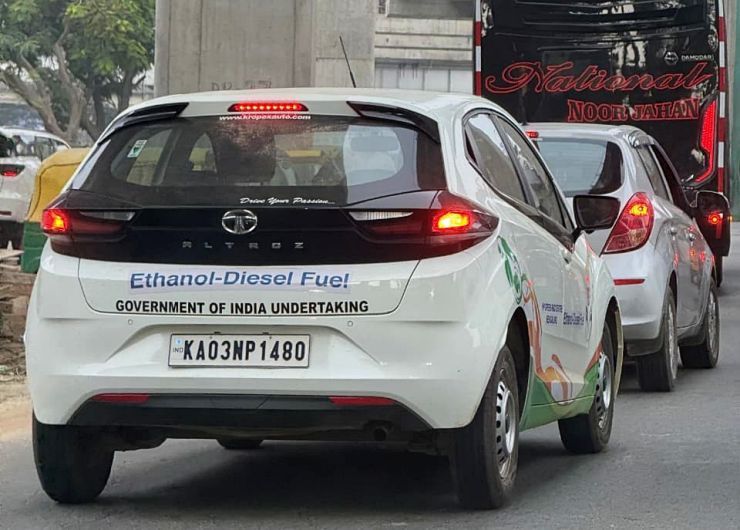
Presently, the testing for isobutanol-blended diesel has already commenced, making India the first country to conduct real-world tests of this kind. This pilot project is led by Hindustan Petroleum Corporation Limited (HPCL), and it is being conducted at the HPCL R&D Centre in Bengaluru. Last year, a test vehicle, which was a Tata Altroz Diesel, was seen testing on public roads.

According to the government of India, blending isobutanol with diesel will help with the reduction in crude oil imports and savings in foreign exchange. Additionally, the environmental impact of this new fuel will help in lowering CO₂ emissions and particulate emissions, and supports India’s Net Zero 2070 goal. Lastly, it will also help in providing an agricultural boost, as there will be an increased demand for sugarcane, grain, and biomass, and also prevents agricultural waste, creating additional income streams for farmers and sugar mills.
Comments are closed.