
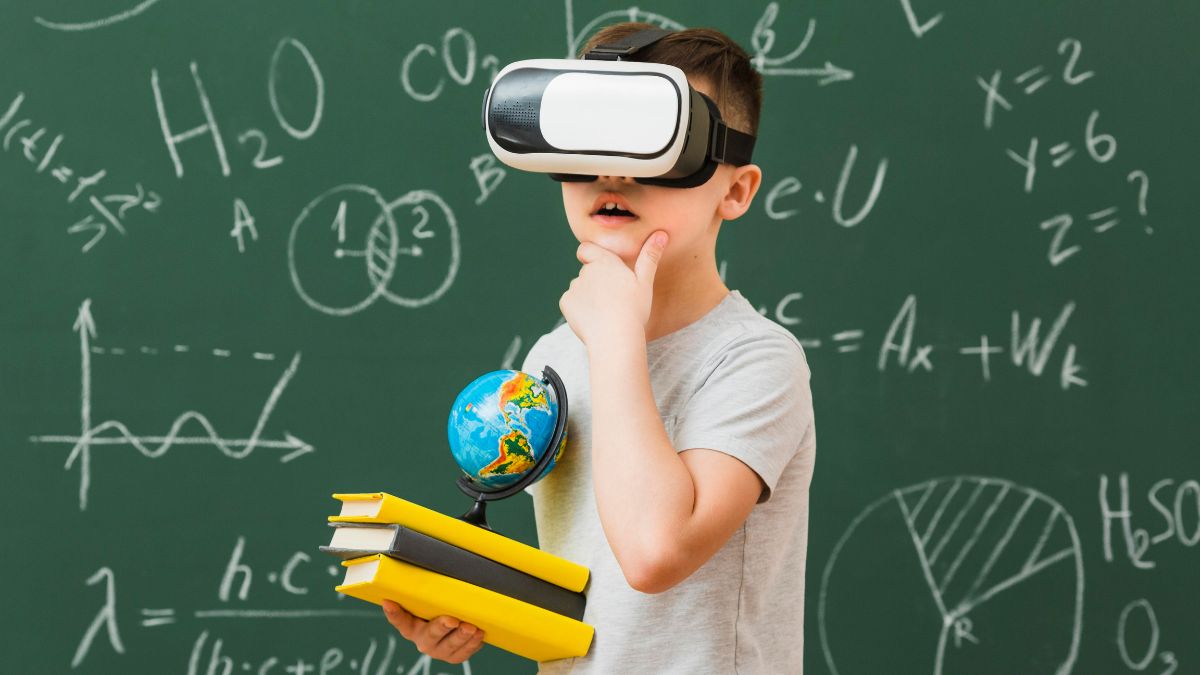

Artificial Intelligence is shaking up every industry, and education is no exception. From personalized learning to smart grading tools, AI is making classrooms more efficient, inclusive, and future-ready. But like any powerful tool, it comes with its own set of challenges. Let’s take a closer look at the benefits and hurdles of using AI in education in a way that’s easy to understand.
Benefits
AI is already transforming how we teach and learn. Here are some of the biggest benefits:
Personalization
Every student learns differently. Some are visual learners, while others need to hear things to understand. AI-powered platforms can analyze a student’s learning style and adjust lessons accordingly.
Think of it like having a private tutor for every student—one that never gets tired and adapts in real time.
Accessibility
AI is making education more inclusive. Students with disabilities can use speech-to-text, text-to-speech, or AI interpreters to participate in class. Language barriers? AI translation tools can help students learn in their native language.
In remote areas or developing countries, AI-powered apps can deliver quality education even without a full-time teacher.
Automation
Teachers spend hours grading papers, making lesson plans, and handling admin work. AI can automate these repetitive tasks, giving educators more time to focus on teaching and mentoring.
From auto-grading multiple-choice tests to generating reading comprehension questions, automation is a game-changer.
Tutoring
AI tutoring systems are available 24/7. They can walk students through problems, explain tricky concepts, and offer extra practice. Platforms like Khan Academy or Duolingo use AI to help users learn at their own pace.
No more waiting until the next school day to get help—AI is always on.
Insights
AI can track a student’s progress and pinpoint problem areas. This helps teachers step in before a student falls behind.
For example, if a student consistently struggles with fractions, the system can alert the teacher and recommend targeted exercises.
| Benefit | Description |
|---|---|
| Personalization | Tailors content to student’s needs |
| Accessibility | Helps disabled or non-native learners |
| Automation | Speeds up admin work and grading |
| Tutoring | Offers 24/7 on-demand help |
| Insights | Identifies learning gaps early |
Challenges
As exciting as AI in education sounds, it’s not perfect. Here are some of the biggest challenges:
Privacy
AI systems collect a lot of student data—test scores, learning habits, even emotions. If not protected, this data could be misused. Schools must be careful about how they store and share information.
Data privacy laws and transparent data policies are becoming more important than ever.
Bias
AI learns from the data it’s given. If that data is biased, the AI can make unfair decisions. For example, grading tools trained on past exam results might favor certain writing styles or cultural references.
Bias in education AI can widen gaps instead of closing them.
Cost
Implementing AI systems isn’t cheap. Schools need hardware, software, internet access, and training for teachers. For underfunded schools, especially in developing countries, AI can feel out of reach.
Teacher Resistance
Not all educators are ready to embrace AI. Some fear it could replace their jobs, while others find the tech overwhelming. Without proper training and support, AI tools may go unused or misused.
Dependency
Over-reliance on AI could hurt critical thinking. If students always get hints or answers, they might stop trying to solve problems on their own. Balance is key—AI should assist, not replace, the learning process.
The Balance
AI has the potential to revolutionize education, but it’s not a magic solution. When used wisely, it can enhance teaching, support struggling students, and bring learning to places it’s never reached before. But it must be implemented thoughtfully, with attention to ethics, equality, and privacy.
As AI continues to evolve, so will its role in classrooms. The future of education is not about robots replacing teachers—it’s about teachers and AI working together to help every student succeed.
FAQs
How does AI help in education?
It personalizes learning, automates tasks, and supports students.
Can AI replace teachers?
No, AI supports teachers but doesn’t replace them.
Is AI in schools affordable?
It can be costly, especially for low-budget schools.
Is AI in education biased?
It can be, if trained on biased data.
What are AI privacy concerns?
AI collects student data, raising data protection risks.

Comments are closed.