
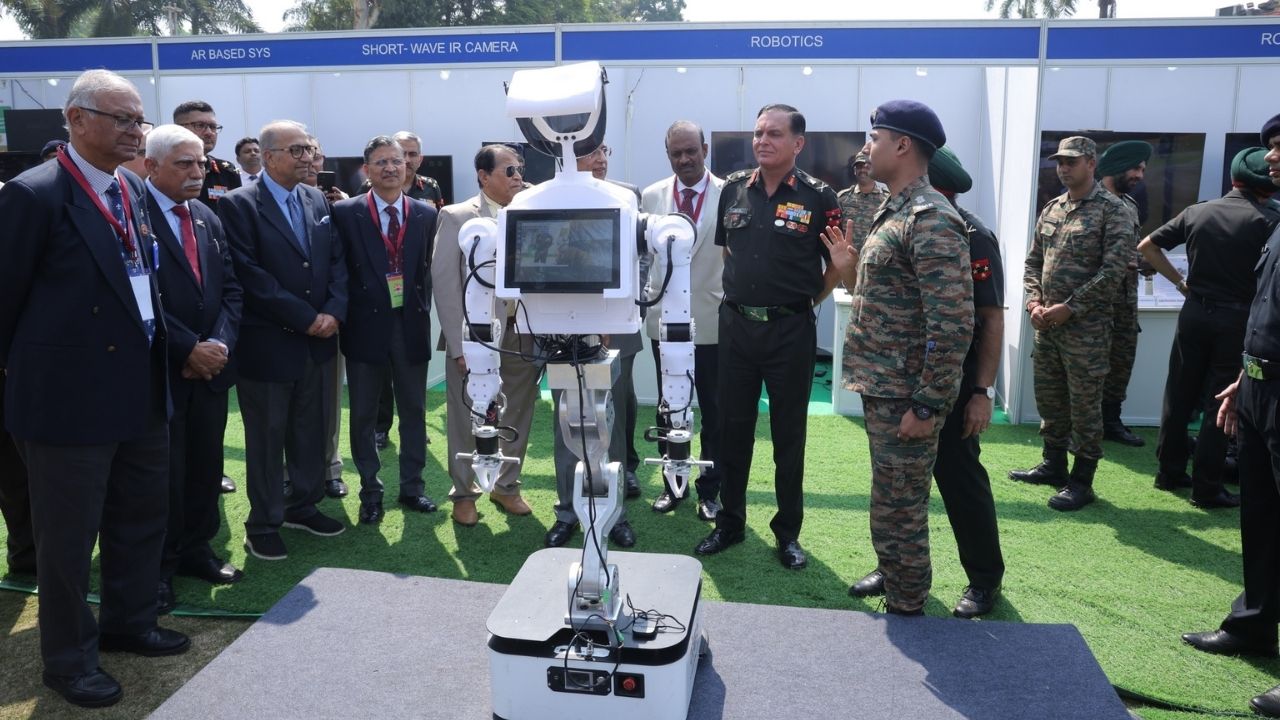

Pune City Representative: The rapid advancement of modern technology is rapidly changing the nature of future wars and only nations that master artificial intelligence, robotics and cyber capabilities will be globally dominant. Therefore, it is imperative to strengthen military-civilian coordination in the defense sector, provide financial support to start-ups and speed up the procurement process, military and industrial experts said.
A two-day seminar based on the concept of ‘Jai Se Vijay’ (Unity, Self-reliance and Innovation) by the South Headquarters of the Army concluded at the Bipin Rawat Auditorium in Pune. The symposium on ‘Military-Civil Fusion: Defense Innovation and Self-Reliance’ brought together military officers, entrepreneurs and researchers to discuss the country’s defense provenance. The session was moderated by Raj Shukla. Additional Director General of Army Design Bureau C. S. Mann, Chairman of Kalyani Group’s Defense Business R. S. Bhatia as well as Monty Khanna participated.
Also Read: IMD Alert: Will it be time to buy umbrellas, sweaters in summer? Where it rains, where…; There will be a rush
Major General C. S. Mann said that artificial intelligence, robotics and cyber technologies are no longer just concepts but have become the backbone of modern warfare. This is evident from the war in Ukraine as well as recent global cyber attacks. Currently there are more than 13 thousand startups operating in this sector in India but lack of funding and opportunities – the ‘valley of death’ – is a major challenge. While failure is natural in research, the fear of failure does not prevent risk taking. Therefore, he mentioned that it is necessary to adopt a ‘fail fast’ strategy to empower startups.
R. S. Bhatia said that although the number of startups in the country is large, they need solid support at the government level to avoid the risk of failure. The ‘Advanced Towed Artillery Gun System’ (ATAGS) project, which started in 2012, is taking a long time to get an order in 2025. Therefore, it is imperative that the procurement process in the defense sector keeps pace with the pace of technological development.
Also Read: Chemical factory fire: Seven workers burn to death
“There was skepticism when we produced the first cannon in 2014; but today we are one of the largest artillery manufacturers in the world. With 1,500 to 2,000 cannon balls being produced every day, India’s current 3.5 per cent share in the global defense market will reach 16 per cent by 2047,” he added.
The symposium agreed on strengthening joint military capabilities, wider adoption of indigenous technologies and enhancing military-civilian partnerships. It was also highlighted on this occasion that strengthening the coordination between industry, research institutes and the military is the need of the hour to speed up the movement towards self-reliance.

Comments are closed.