
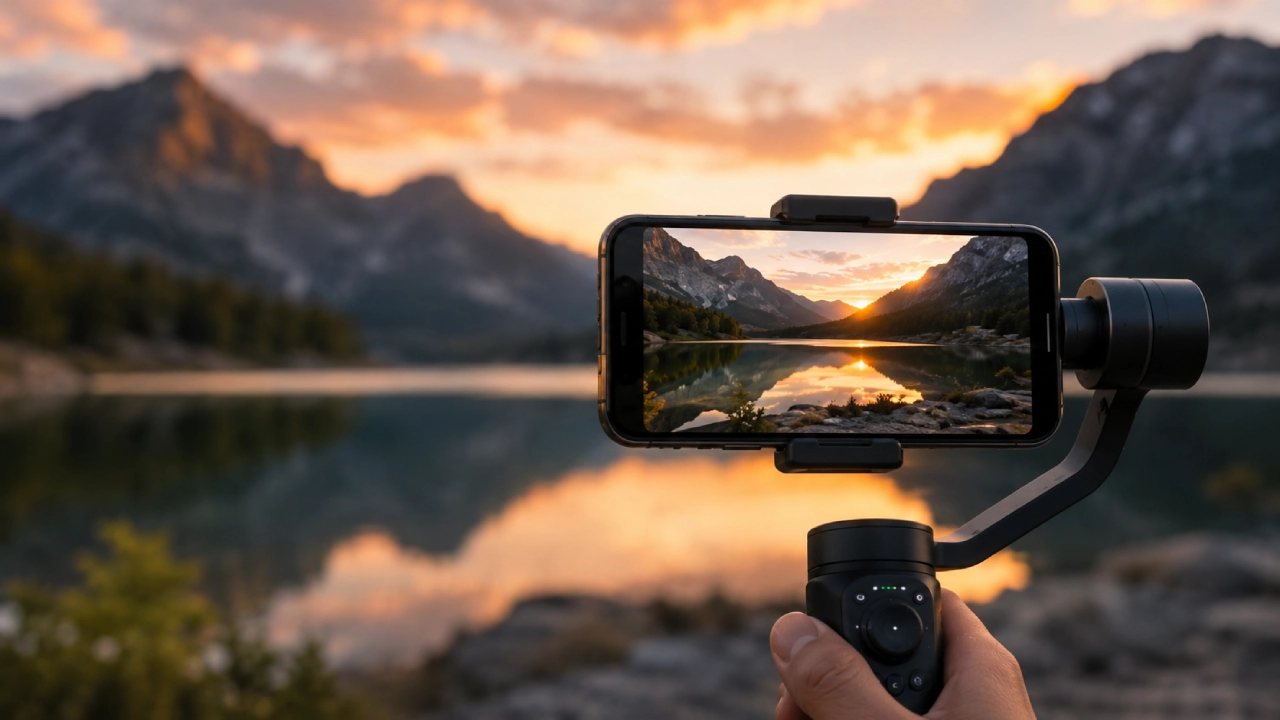
The Future of AI Video Stabilization: How Intelligent Algorithms Are Revolutionizing Mobile Filmmaking

The rise of short-form video platforms, mobile filmmaking, and digital storytelling has changed how people create and consume content. Nowadays, smartphones have become powerful tools for video production, able to record high-resolution videos with cinematic effects. However, one persistent challenge remains: camera shake. Whether users are filming while walking, running, cycling, or capturing spontaneous moments, unwanted motion can significantly lower video quality. This is where AI-powered video stabilization has emerged as an important advancement in computational photography.
Unlike traditional stabilization methods that rely mainly on hardware components like optical image stabilization or mechanical gimbals, AI-driven stabilization uses machine learning algorithms, computer vision, and motion prediction to create smoother, more professional-looking footage. These technologies analyze each frame, detect unwanted movement, and intelligently reconstruct stable video while keeping image quality intact. As AI continues to improve, AI video stabilization is becoming faster, smarter, and more accessible to both novice creators and seasoned filmmakers.
The future of AI video stabilization promises not only smoother videos but also new creative possibilities. From real-time stabilization during live streaming to AI-assisted cinematic camera movements, the technology is set to redefine mobile videography.
Video Stabilization Evolution
Video stabilization has transformed significantly over the past two decades. Early digital cameras relied heavily on mechanical stabilization systems that compensated for minor hand movements. While these systems helped reduce blur, they had limitations when recording dynamic scenes or rapid action.
With the introduction of smartphones came optical image stabilization and electronic image stabilization, which used gyroscopic data and frame cropping to minimize shake. Although effective in many cases, EIS often resulted in a reduced field of view and noticeable image distortion during intense movement.
AI has fundamentally shifted this approach. Instead of just cropping frames or relying on hardware fixes, machine learning models understand how cameras move in three-dimensional space. They differentiate between intentional camera motion—like panning or tracking—and accidental shaking, allowing videos to maintain their natural movement while removing unwanted jitter.
Modern AI stabilization combines sensor data from gyroscopes and accelerometers with advanced neural networks that analyze visual information frame by frame. The outcome is smoother footage with minimal quality loss and greater creative flexibility.
Real-Time AI Processing Becomes the Standard
One of the most notable trends in AI video stabilization is real-time processing. Earlier AI stabilization systems usually required videos to be processed after recording, delaying content creation and editing. Improvements in mobile processors with dedicated AI engines now allow stabilization to occur while recording.
Modern smartphone chipsets include specialized neural processing units that can perform billions of AI calculations every second without significantly impacting battery life. This enables users to preview stabilized footage instantly and make adjustments during filming instead of fixing problems later.
Real-time AI Video Stabilization is particularly beneficial for vloggers, travel creators, journalists, and live streamers who need immediate, professional-quality results without depending on desktop editing software.
Smarter Motion Prediction with Machine Learning
Future AI Video Stabilization systems will increasingly rely on predictive intelligence rather than reacting to movement after it happens. Instead of correcting motion post-factum, AI models will predict camera motion based on previous movement patterns.
By continuously learning from millions of recorded motion sequences, machine learning algorithms can forecast how a device is likely to move in the next fraction of a second. This leads to smoother stabilization even during rapid movements such as running, sports recording, drone flying, or action photography.
Predictive stabilization also reduces the “rubber band” effect sometimes seen in electronic stabilization, where sudden corrections look unnatural. Instead, camera movement feels fluid and intentional, closely resembling footage captured with professional camera rigs.

Context-Aware Scene Recognition
AI is quickly becoming capable of understanding the context of a scene rather than treating every recording the same. Future stabilization systems will recognize whether a user is filming a landscape, sporting event, concert, walking vlog, pet, vehicle, or fast-moving subject.
Once the scene is recognized, AI can automatically adjust stabilization strength accordingly. For example, action sports may need aggressive shake reduction, while cinematic storytelling benefits from preserving subtle handheld movement to maintain realism.
Context-aware stabilization helps create footage that feels natural rather than artificially smooth, allowing creators to achieve professional aesthetics without manually adjusting many settings.
Multi-Sensor Fusion Improves Accuracy
The future of stabilization lies in combining various hardware sensors with AI software. Smartphones already have gyroscopes, accelerometers, GPS modules, LiDAR sensors on some devices, and multiple camera lenses. AI integrates information from all these sources simultaneously.
Sensor fusion allows algorithms to build a more complete understanding of camera movement and environmental conditions. Depth sensors help distinguish foreground objects from backgrounds, improving stabilization while moving through crowded environments.
Multiple camera lenses also provide valuable perspective data that helps AI reconstruct scenes more accurately while minimizing distortion and preserving image details.
This integrated approach significantly enhances stabilization performance under challenging conditions like low light, uneven terrain, or rapidly shifting environments.
Enhanced Low-Light Video Stabilization
Capturing stable footage in low-light conditions has been tough because longer exposure times can increase motion blur. AI is starting to overcome this limitation by combining stabilization with computational photography techniques.
Future AI systems will reduce shake, minimize image noise, and recover lost details through advanced neural image processing. Instead of just stabilizing frames, AI will intelligently reconstruct missing information while keeping realistic textures and colors.
As mobile camera sensors continue to improve, AI stabilization will be crucial for nighttime videography, allowing creators to capture handheld footage that previously required costly professional equipment.
AI-Powered Cinematic Camera Movements
One emerging trend is the shift from simply removing shake to actively enhancing storytelling through smart camera motion.
Future AI Video Stabilization tools will recognize cinematic filming techniques like slow tracking shots, smooth pans, and controlled tilts. Rather than eliminating every movement, AI will refine user input into polished cinematic camera motions.
For example, a slightly shaky handheld tracking shot could be transformed into a fluid dolly-style movement. AI may even replicate crane shots or subtle cinematic camera paths based on user intent, making advanced filmmaking techniques accessible to beginners.
This change turns stabilization from a corrective technology into a creative production tool.
Personalized Stabilization Profiles
AI is increasingly adapting to individual users instead of applying generic stabilization settings. Future systems are expected to learn how each creator typically records videos and automatically optimize stabilization based on personal filming habits.
A travel vlogger who frequently films while walking may receive different stabilization than a sports creator recording high-speed action. Similarly, professional filmmakers may prefer to preserve natural camera movement, while casual users may want maximum smoothness.
These personalized AI models continuously improve through on-device learning while protecting user privacy, resulting in stabilization that feels tailored to each creator’s style.
AI Integration with Augmented Reality and Virtual Reality
As augmented reality and virtual reality become more mainstream, stabilization will be increasingly important for creating immersive content.
AR experiences require accurate camera tracking to position virtual objects correctly within physical environments. AI Video Stabilization enhances motion tracking precision, reducing jitter that can break immersion.
Likewise, VR video demands exceptionally smooth footage to prevent viewer discomfort. AI algorithms capable of stabilizing 360-degree video while keeping spatial orientation will become essential for next-generation immersive storytelling.
These developments will benefit industries such as entertainment, gaming, education, healthcare, tourism, and industrial training.
Cloud-Based AI Video Enhancement
Although smartphones are getting more powerful, cloud computing offers nearly unlimited processing capabilities. Future AI stabilization workflows will likely combine on-device processing with cloud-based enhancement.
Users might record stabilized video in real time while also uploading footage for more advanced AI refinement using large neural networks hosted on cloud servers. This hybrid approach allows for complex corrections, object reconstruction, and cinematic enhancements that exceed current mobile hardware capabilities.
Cloud-assisted stabilization could also speed up collaborative editing, allowing creators to process large video projects without needing high-end desktop computers.

Ethical Considerations and Transparency
As AI becomes more integrated into video production, ethical considerations will be important. Advanced stabilization algorithms may significantly alter original footage, raising questions about authenticity in journalism, legal documentation, and documentary filmmaking.
Technology companies will likely focus more on transparency by informing users when AI modifications have substantially changed recorded scenes. Clear distinctions between stabilization, enhancement, and synthetic content generation will become crucial for maintaining public trust.
Responsible AI development will ensure that creators retain control over the balance between authenticity and enhancement.
Conclusion
AI video stabilization has progressed well beyond simple shake reduction. Driven by advancements in machine learning, computational photography, and dedicated AI hardware, modern stabilization systems are turning smartphones into intelligent filmmaking tools capable of producing professional-quality footage across various conditions.
The next generation of AI stabilization will be defined by predictive motion analysis, real time processing, personalised learning, multi-sensor integration, and context aware scene recognition. These innovations will not only eliminate unwanted camera shake but also enhance storytelling through intelligent cinematic camera movements and adaptive creative assistance.
For mobile content creators, journalists, filmmakers, educators, and everyday users, AI stabilization represents more than a convenience, it is becoming an essential component of modern visual communication. As algorithms continue to evolve alongside increasingly capable mobile hardware, the boundary between smartphone videography, and professional filmmaking will continue to narrow. The future of AI video stabilization is therefore not simply about producing smoother videos; it is about empowering creators to tell richer, more compelling stories with confidence, creativity, and unprecedented ease.

Comments are closed.