

Last year, I was helping a friend buy an air purifier. We opened three tabs. All three machines looked almost the same. Same big claims. Same “99.99% clean air.” Same “True HEPA.” Same “covers 800 sq. ft.” But prices were very different.
That’s when we realized something simple — most people don’t actually understand what they are paying for. So let’s talk like normal people. No brand language. No tech drama. Just what really matters in 2026.
First Thing: Why Are You Buying It?
Before checking specs, ask yourself one thing.
Is it for dust?
For allergies?
For city pollution?
For pet hair?
Features that might not even mean anything to you can confuse you if you don’t understand the reason.
Small particles such as dust, smoke, pollen, and pet dander can be removed using air filters. However, air purifiers cannot remove dust. They don’t replace fresh air. They don’t remove carbon monoxide. They simply clean the air inside a closed room.
Let’s Talk About CADR (The Most Important Spec)
CADR sounds technical, but it’s not complicated. The CADR represents how quickly the air purifier can cleanse the air. To illustrate this concept, consider the following scenarios.
If your space is very large compared with the size and power of your air purifierthen although your machine will be constantly running, it will be ineffective at cleaning the air. This is equivalent to having a small fan in a very large room.
Conversely, if you are using a less powerful air cleaner in a bedroom or another small area, then your CADR will be lower. For a big living room, you need a higher CADR. Many brands show “coverage area” in big letters. But coverage depends on CADR. If CADR is low and the coverage claim is high, something is off.
If your room is around 200 square feet, don’t buy a purifier that says “up to 200 sq. ft.” Go slightly higher. It works better and doesn’t struggle.
HEPA Filter: Real vs Just Marketing
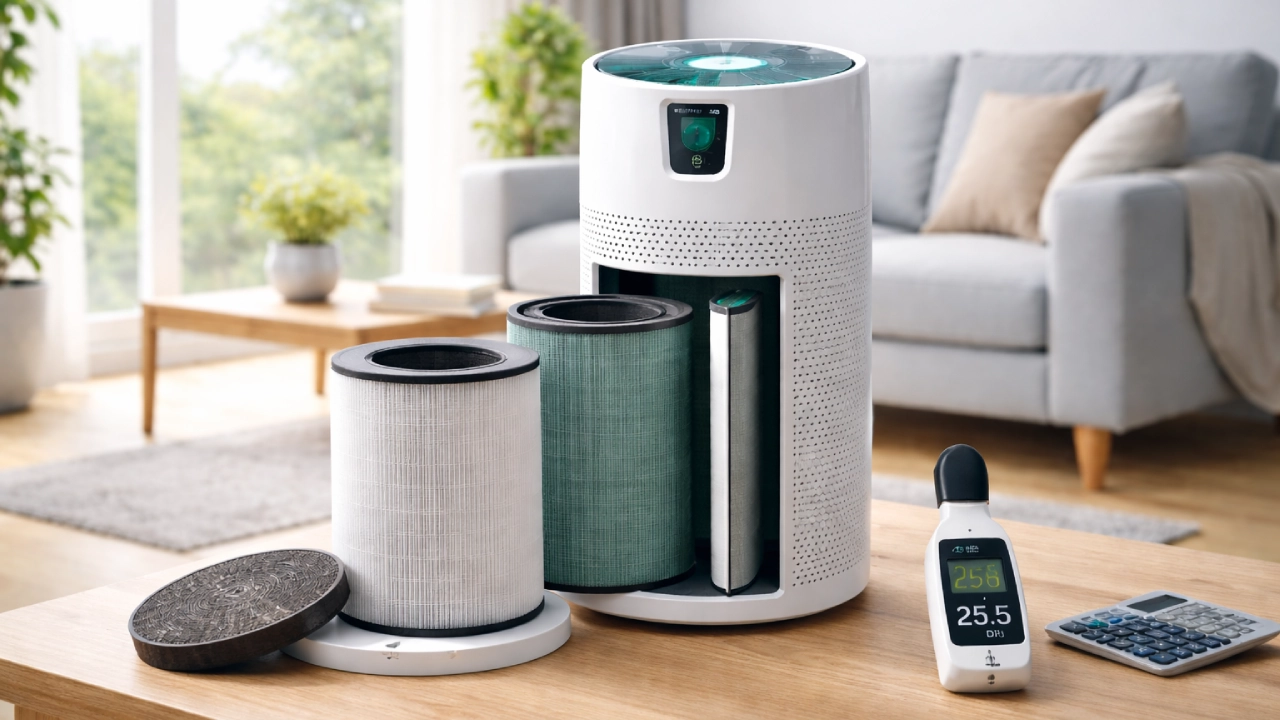
Now comes the word everyone uses — HEPA. But here’s the truth. Not all HEPA is the same. Some boxes say “HEPA-type.” Some say “HEPA-like.” Some say “True HEPA.” Only True HEPA H13 or H14 is the real deal.
For normal home use, H13 is more than enough. It can catch very small dust and smoke particles.
If the brand doesn’t clearly mention H13 or H14, check again. Many cheaper models use the word HEPA loosely. Also, one important thing. True HEPA filters are not washable. If a brand says washable HEPA, it is usually not genuine HEPA.
What About Carbon Filters?
HEPA catches particles. Carbon filters handle smells and some gases. If you live near traffic, cook a lot, or smoke inside, a carbon filter helps. Without carbon, the purifier may reduce dust but won’t reduce odor properly. Some brands cut carbon layers to reduce cost. Always check if a carbon filter is included.
Big Coverage Claims: Don’t Fall for It
You’ll see claims like “covers 900 sq. ft.” But check the CADR number. The larger the coverage area of a penny-sized air purification unit, with low Clean Air Delivery Rates (CADR), the longer it takes for it to clean the room. This can result in little noticeable change over time in an open space.
Air purifiers best serve a closed environment. If doors and/or windows remain open for airflow into and out of their respective locations, all of this continuous airflow, even with a high-flow air purifier, will make it difficult to produce clean air.
Noise Level: Nobody Talks About This
This is something many people regret later. Air purifiers run for hours. Sometimes all night. Brands usually show the noise level only in sleep mode. But sleep mode runs very slowly.
Check the noise level at medium speed, too. This is the amount of pollution you will experience when it’s at its highest because it is simply loud and too annoying to listen to.
Smart Features: Nice, But Not Necessary
Most of the units today will come with apps and Wi-Fi in order to monitor air quality from a smartphone in 2026. You can turn it on before reaching home.
Is it useful? Yes, sometimes.
Is it necessary? Not really.
If you have to choose between strong performance and a smart screen, always choose performance. A basic purifier with good CADR and true HEPA is better than a fancy machine that just looks modern.
The Hidden Cost: Filter Replacement
This is where many buyers make a mistake. They look at the machine price but ignore the filter cost. Most HEPA and carbon filters should be changed every 6-12 months. If pollution is high and usage is heavy, maybe earlier.
Before buying, search online for the replacement filter price of that model. Some brands sell the purifier at a good price but charge a lot for filters later. Over two or three years, this becomes expensive. Always think long-term.
Electricity Use
Most air purifiers don’t consume too much electricity. But if you plan to run it daily for long hours, checking the watt number is smart. Lower wattage means less power use, especially for overnight use.
Where You Place It Matters
Even a good purifier won’t work well if placed badly. Don’t push it into a tight corner. Don’t block the air outlet. Keep some space around it so air can move freely.
Close doors and windows when it’s running. Otherwise, outside air will keep entering, and the machine will keep working harder.
Some Honest Truths
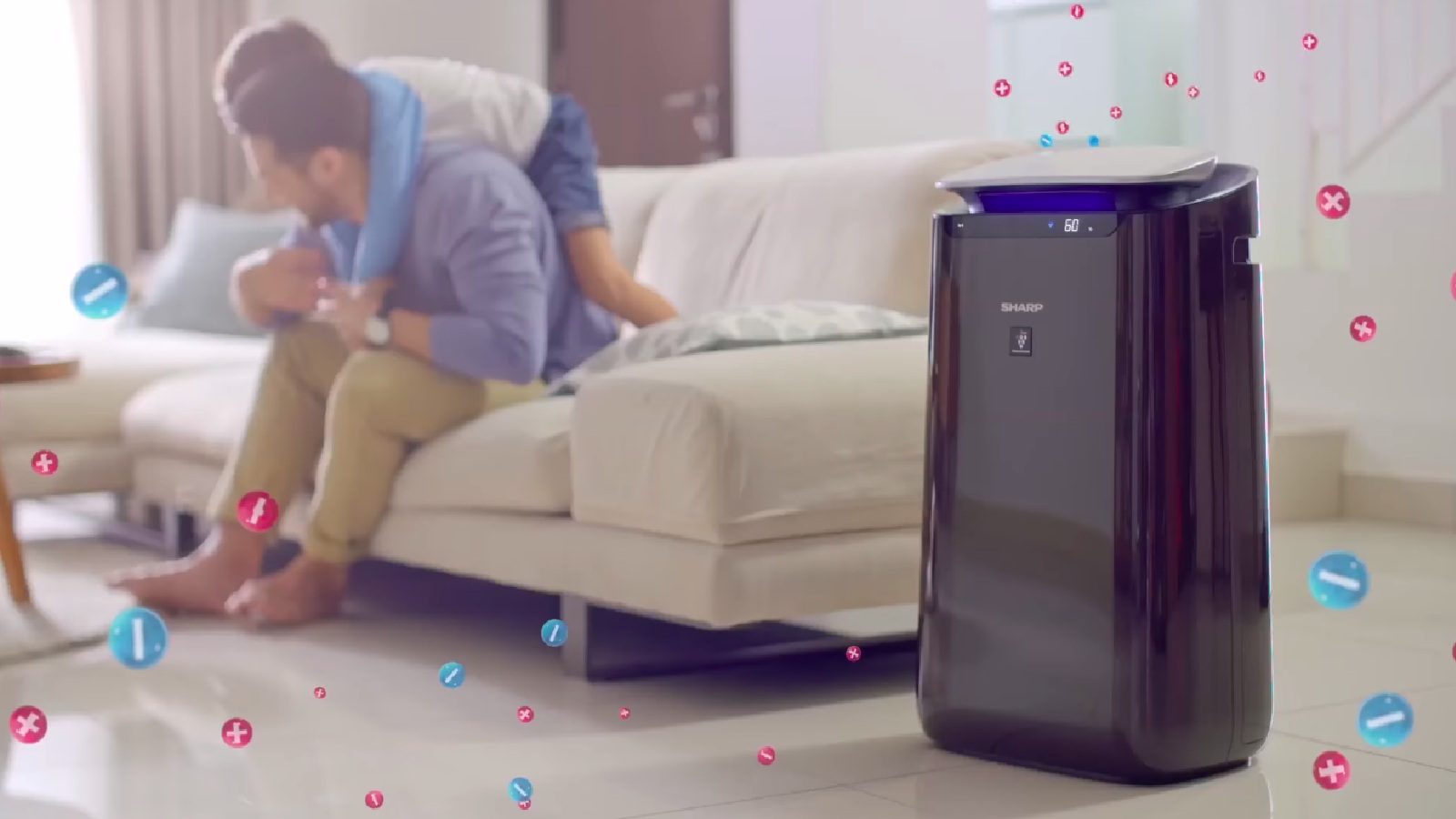
Air purifiers are helpful. But they are not magic. They don’t fix bad ventilation. They don’t remove every harmful gas. They don’t replace fresh outdoor air completely. They reduce indoor dust and fine particles. That’s their main job.
If you understand this, you won’t expect unrealistic results.
How I Would Choose in 2026
I would check the room size first before making a decision on which to purchase. Then CADR. Then confirm True HEPA H13. Check if the carbon filter is included. Look at the replacement filter cost. Check noise levels.
That’s it. Not color. Not touchscreen size. Not flashy claims.
Final Thoughts
Buying an air purifier should not feel confusing. Once you understand CADR, real HEPA, room size, and filter cost, the rest becomes simple. Ignore big marketing lines. Focus on the basics.
A properly sized air purifier will have a low noise level so it can be operated quietly while you are busy doing something else. A badly chosen one will just sit there, making noise and giving you false comfort. Spend your money on performance, not promises.

Comments are closed.