
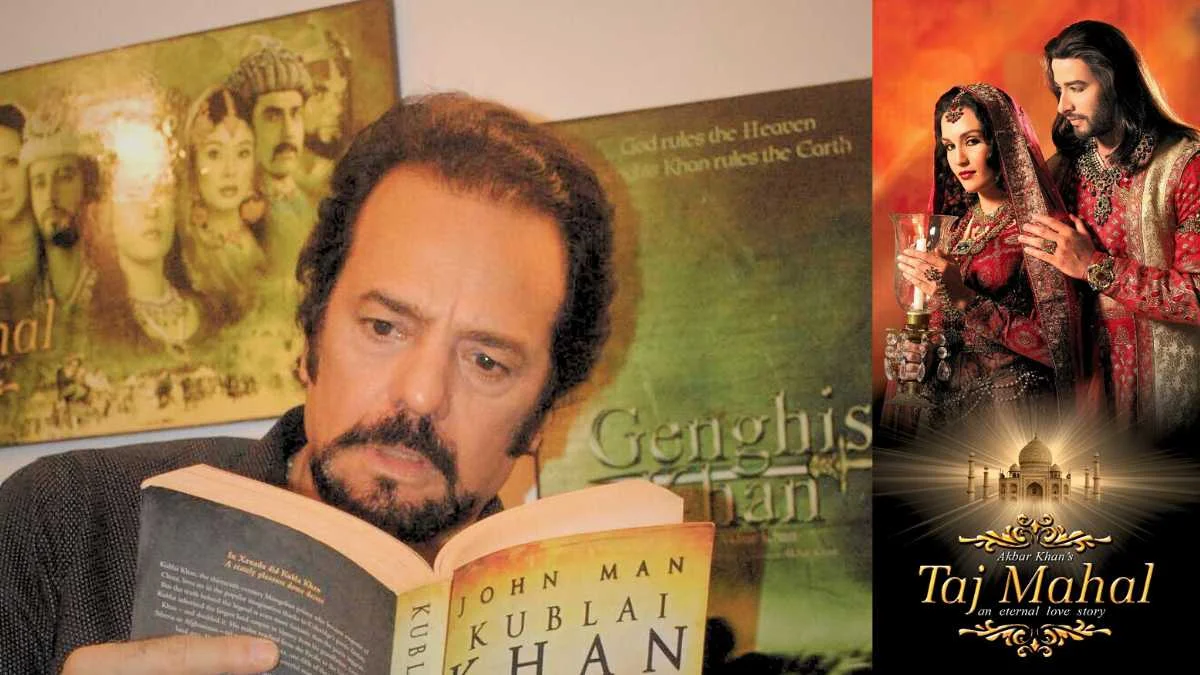

Filmmaker Akbar Khan in an exclusive interview with Business Upturn
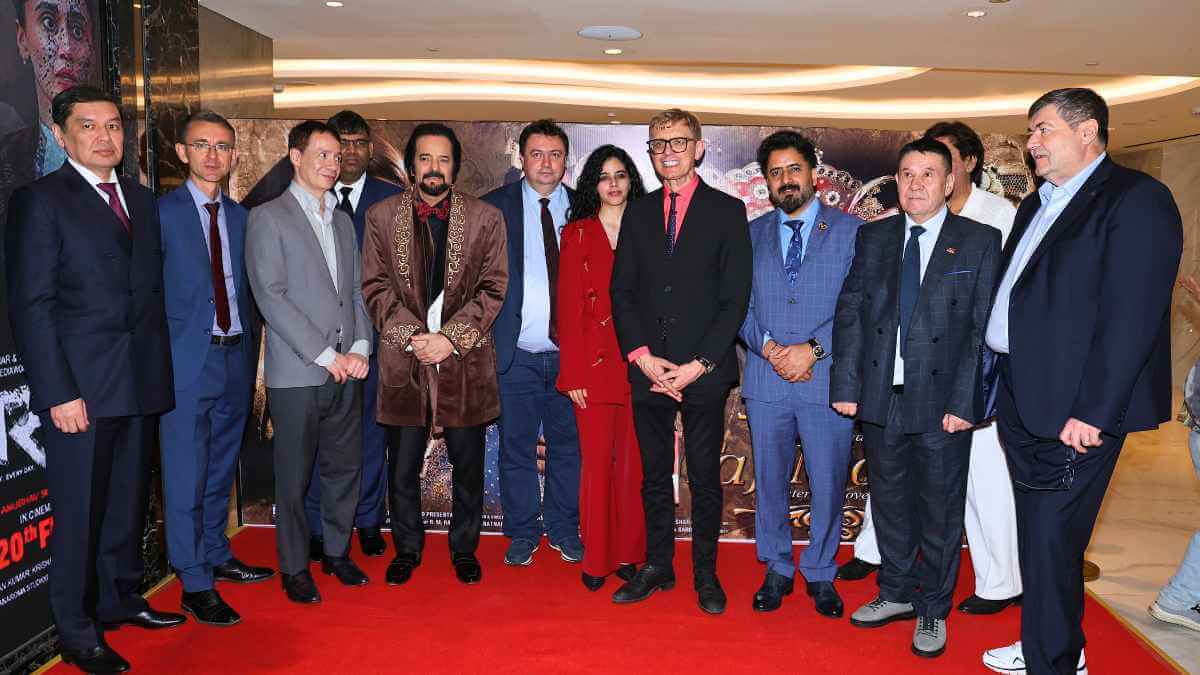
In this exclusive interview for Business Upturn, filmmaker Akbar Khan reflects on the special premiere screening of ‘Taj Mahal: An Eternal Love Story’ at Maison INOX, Jio World Plaza, Bandra Kurla Complex, Mumbai, held in collaboration with the BRICS Culture Media Forum. The evening was attended by ER Elie de Rothschild Jr.; Mr Zavaray Poonawalla and Mrs Behroze Poonawalla with family; H.E. Marat Mazhidovich Islamov; Dr Sergei Dvorianov, Vice President of the BRICS Culture Media Forum and originator of the opera ‘Mahabharata’; Dr Jaan Nissar Lone, Global President of BCMF; Alexey Davidovsky, Russian writer and analyst; Oleg Alexandrovich Vikhman, Coordinating Co-Chairman of WORLDBRICS; Askar Batyrkhanovich Mendybaev, Plenipotentiary Representative for Nationalities and Interstate Relations in Central and Southeast Asia; Grigory Pelman, Nobel Peace Prize 2022 laureate for the Memorial project; Gadzhimurad Omarov, Russian politician and public figure and initiator of the Russian-Indian cinema project ‘The Hero’s Path’; and Sofia Zolotova, correspondent of ‘The Times of Russia’. The evening also witnessed a ceremonial exchange with H.E. Marat Mazhidovich Islamov, Co-Chairman and Head of the BRICS Analytical Strategy and Security Coordination Council. Khan speaks about cultural diplomacy, the Kyrgyz honour bestowed upon him and his next epic, ‘Genghis Khan: The Dream of a Golden Age’.
The BKC screening brought together an extraordinary gathering of global leaders. How would you describe that evening?
It felt less like a premiere and more like a Renaissance of a golden era gone by, a moment of cultural alignment. When ER Elie de Rothschild Jr.; Mr Zavaray Poonawalla and Mrs Behroze Poonawalla with family; H.E. Marat Mazhidovich Islamov; Dr Sergei Dvorianov; Dr Jaan Nissar Lone; Alexey Davidovsky; Oleg Alexandrovich Vikhman; Askar Batyrkhanovich Mendybaev; Grigory Pelman; Gadzhimurad Omarov; and Sofia Zolotova gathered under one roof, the atmosphere naturally carried international weight. The venue of the screening got vibrant, resonating with words of praise from each one’s congratulatory hugs and words calling the film an all-time classic, a flawless film, that assured me that it touched everyone’s heart who was present at the premiere, that the story of the Taj Mahal belongs not only to India but also resonates in every heart across all boundaries.
The film was described as an all-time classic by dignitaries present. What did that acknowledgement mean to you?
It meant responsibility. The Taj Mahal itself has endured centuries because it represents something eternal in human emotion. If the film has been received in that spirit, then I consider that appreciation deeply humbling. An all-time classic is not created by scale alone. It is sustained by emotional truth.
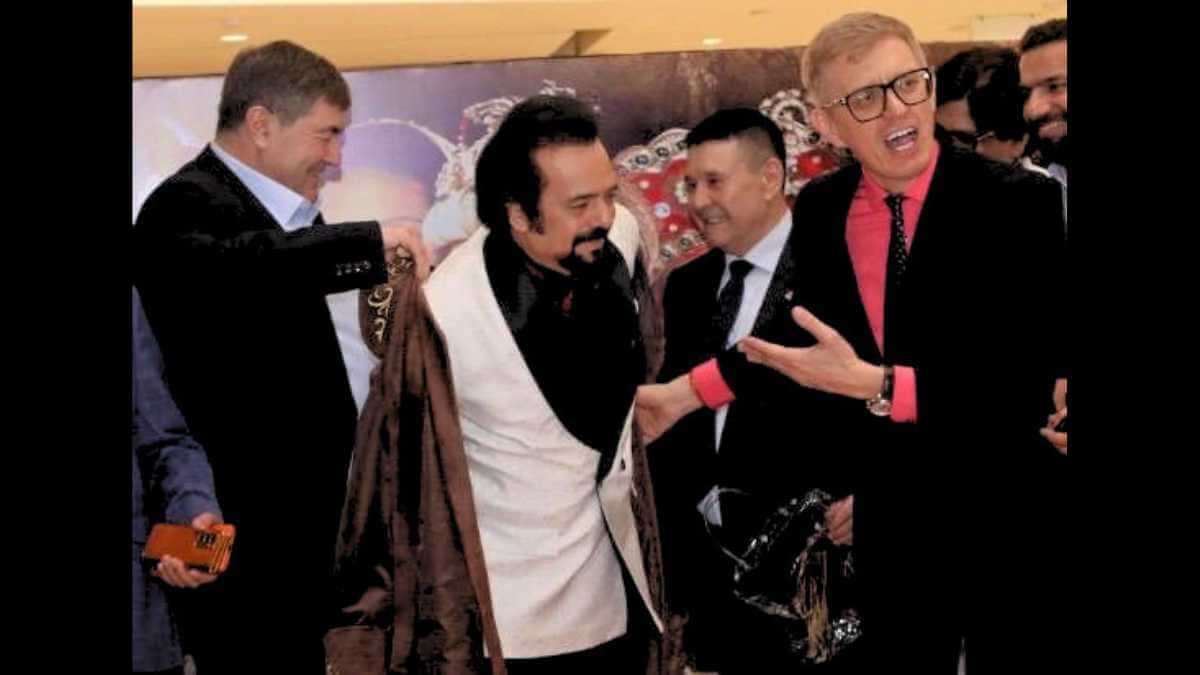
(LtoR) Famous Russian writer, visionary and analyst Alexey Davidovsky; filmmaker Akbar Khan; H.E. Marat Mazhidovich Islamov, Co-Chairman, Head of the Coordination Council for Analytical Strategy and WORLDBRICS; and Dr Sergei Dvorianov, Vice President of the BRICS Culture Media Forum and originator of the opera ‘Mahabharata’; help Akbar Khan put on the traditional Kyrgyz robe belonging to H.E. Marat Mazhidovich Islamov’s grandfather, symbolising heritage and honour.
A defining moment was your ceremonial exchange with H.E. Marat Mazhidovich Islamov. What did that experience represent to you?
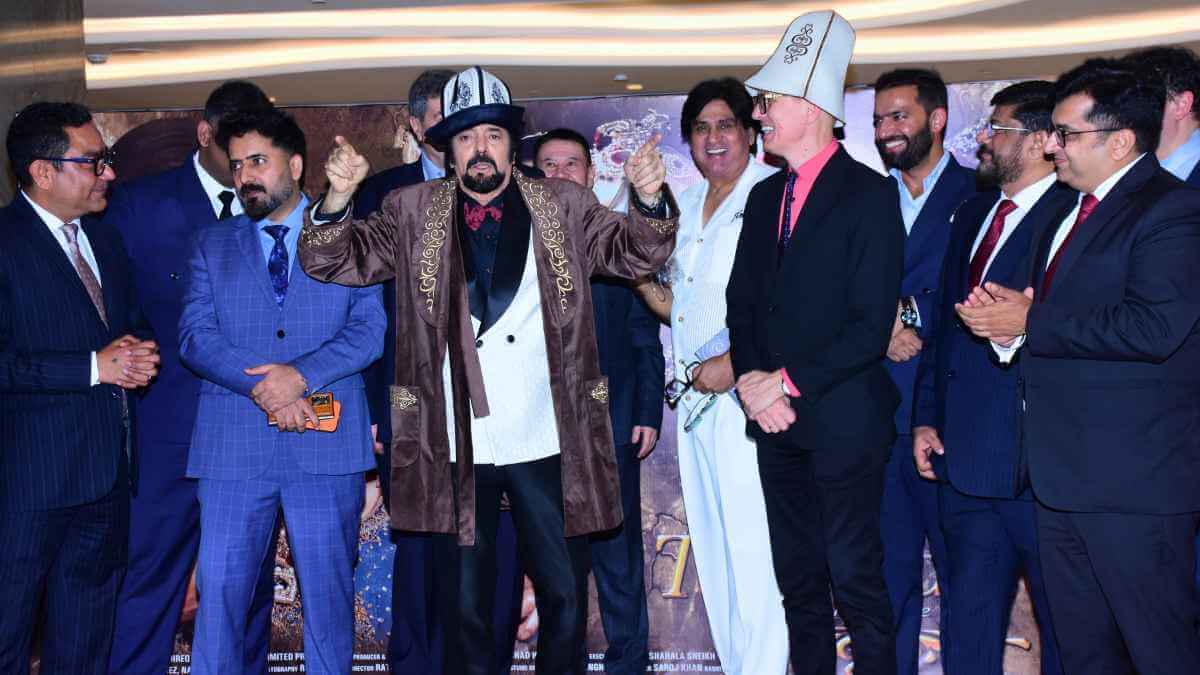
When H.E. Marat Mazhidovich Islamov, Co-Chairman and Head of the BRICS Analytical Strategy and Security Coordination Council, accepted the handcrafted miniature Taj Mahal, it symbolised a heart-to-heart connection between cultures. In reciprocation, he draped me in a traditional Kyrgyz robe belonging to his grandfather. That gesture carried generational meaning. It was not simply ceremonial fabric. It represented heritage, continuity and trust, that I will bring back through this film the great Genghis Khan vision of a new world order, a universal empire under one flag, as he strongly believed that was the only way to bring peace to the world. And how right he was, as we now witness a world on the brink of a 3rd World War; humanity is at risk. When he placed the symbolic Genghis Khan cap upon me, it felt like a reminder of responsibility and legacy. It was deeply emotional because the exchange was grounded in shared values of unity, peace and mutual respect.
How does this Kyrgyz connection now influence your upcoming film ‘Genghis Khan: The Dream of a Golden Age’?
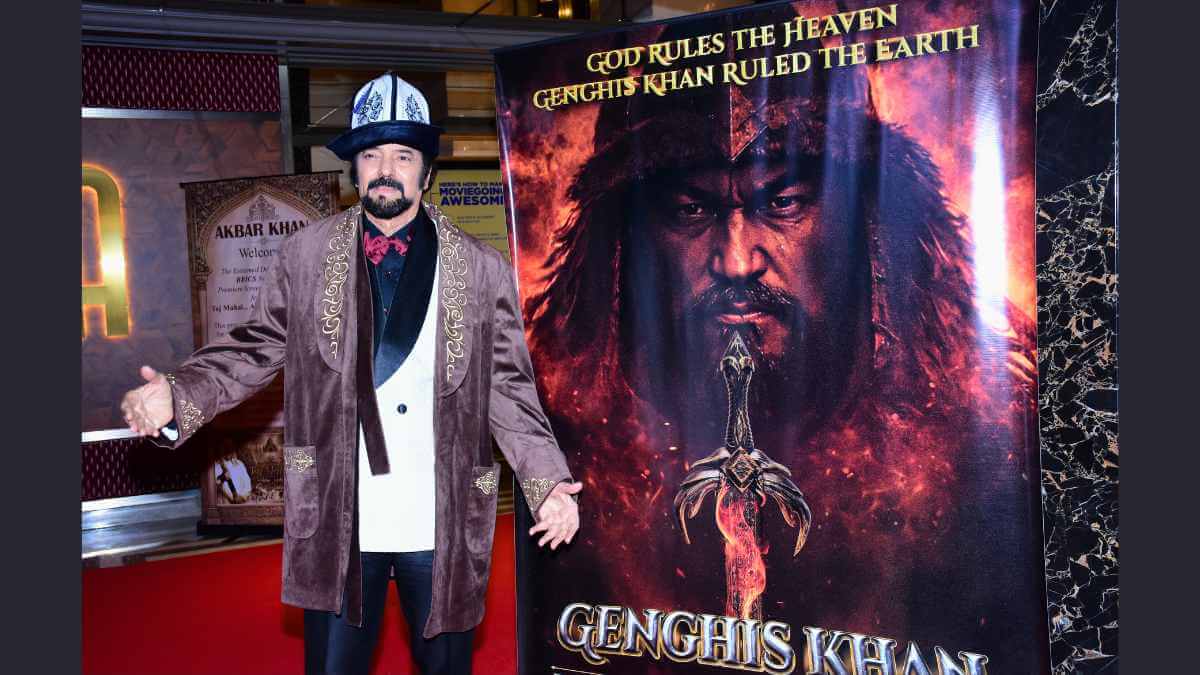
History often creates its own pathways. During the evening, H.E. Marat Mazhidovich Islamov offered collaboration by the Government of Kyrgyzstan for ‘Genghis Khan: The Dream of a Golden Age’. We are exploring filming significant portions there with the support of local studios, artists and technicians. There is also a proposal for a private screening of ‘Taj Mahal: An Eternal Love Story’ in honour of the President of Kyrgyzstan prior to its commercial release in Kyrgyzstan. Such cultural collaboration strengthens cinema’s international dimension.
After premieres in Malaysia and Indonesia, how does the Mumbai screening fit into the film’s global journey?
Malaysia marked the beginning of the film’s renewed international path. Indonesia reinforced that it would not be long before ‘Taj Mahal: An Eternal Love Story’ would touch the hearts of every citizen of every country, as it is planned that before the commercial release in each country, a private screening for the head of each country will be held. Our next destinations for heads of state are Russia, Kyrgyzstan and Uzbekistan. The plans are under way for the film to be screened in honour of President Putin, followed by the President of Kyrgyzstan and the President of Uzbekistan, before its commercial release in these countries. The BKC screening felt like a consolidation of that journey. The film had travelled outward and returned with broader resonance.
Do you believe cinema can serve as cultural diplomacy?
Yes, it has done so in the past, it is happening now and it will continue to be the only diplomatic tool to build cultural diplomacy. Cinema does not negotiate treaties like NATO; these are military alliances to hog power and suppress smaller countries. It is collapsing now due to its unholy institutions. Meaningful cinema that unites nations is the best cultural diplomacy that will never die. It builds understanding. When audiences from different nations respond emotionally to the same story, empathy emerges naturally. If ‘Taj Mahal: An Eternal Love Story’ contributes even modestly to that shared space, then it has served a purpose beyond entertainment.
What response from international audiences has stayed with you most?
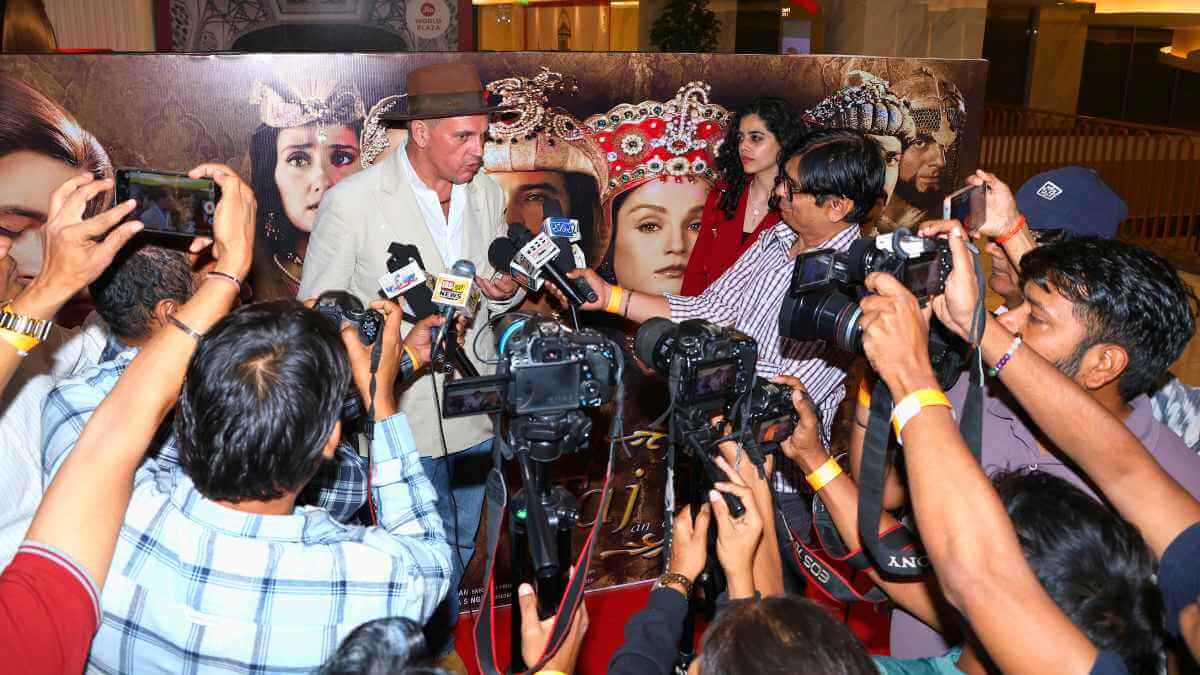
The sincerity. In Malaysia and Indonesia, young viewers spoke about how the story moved them and inspired them to visit India to witness the Taj Mahal. And once again, the premiere organised by BRICS Forum and the appreciation of the delegation, the business tycoons and consuls general, unanimously calling the film flawless, an all-time classic, this response affirmed that history, when told with authenticity, captures not only their hearts but also their minds. True history is embraced with heart, soul and mind.
What do you hope endures from the BKC evening?
I hope what endures is the image of shared respect. Representatives from different nations gathered in honour of a story rooted in love. The Taj Mahal was conceived as a monument of devotion. If the film continues to echo that spirit across cultures, then its journey carries meaning beyond cinema.


Comments are closed.