
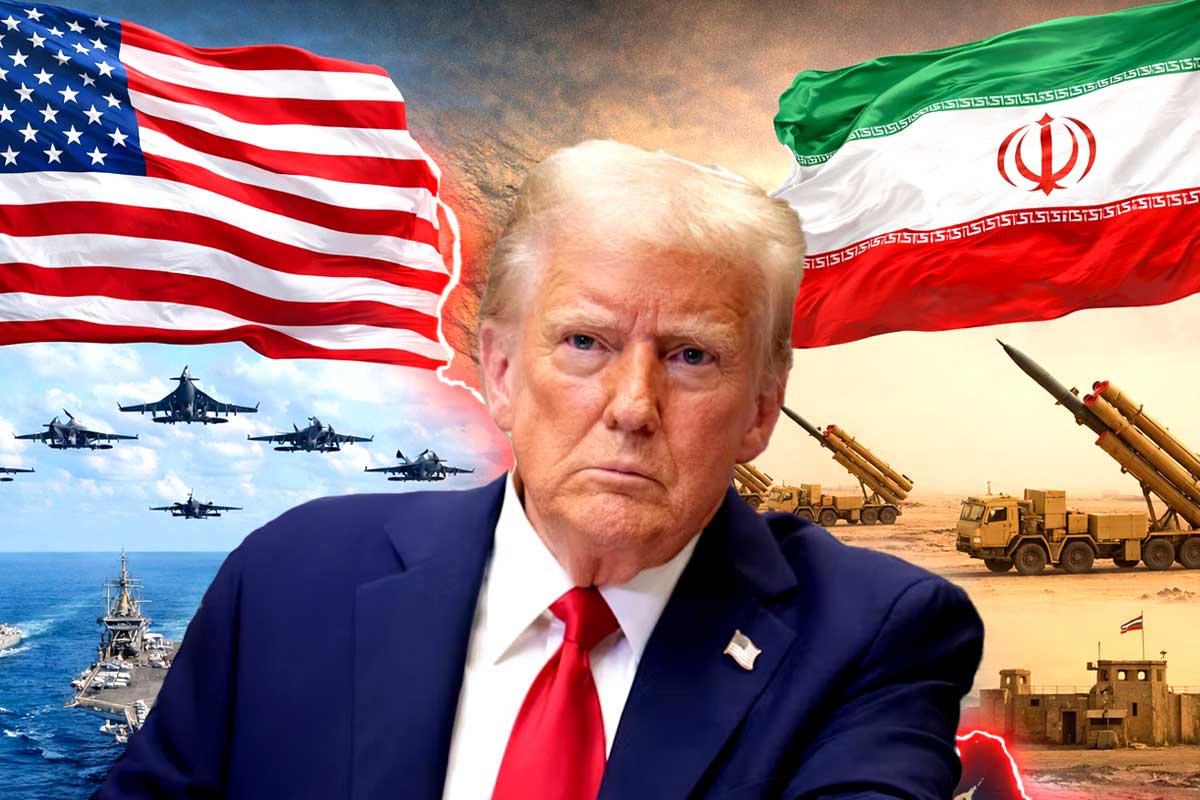

US President Donald Trump started Operation ‘Epic Fury’ to ‘teach’ Iran. But that campaign has now turned into ‘Economic Fury’. No more ammunition, now Trump has started an ‘economic war’ to kill Iran.
The US President extended the US-Iran ceasefire on Wednesday. Those close to Trump claim plans to impose tough new sanctions on Iran are aimed at weakening the country’s economy. US Treasury Secretary Scott Besant opened his mouth in the midst of all this. In fact, he exposed Trump’s conspiracy. He said the reason behind the extension of the ceasefire is to stop oil production on Kharg Island by continuing the naval blockade on Iranian ports. The US president wants to kill Iran with rice. The country’s main source of income is oil. That is where he wants to strike, so that the damage is permanent.
According to some experts, Iran has not been deterred from retaliating despite the bombardment for the past month. On the contrary, Tehran made the entire Middle East turbulent. Iran is like a wounded tiger. Trump now knows very well that Iran cannot be disciplined with ammunition alone. To teach Tehran a ‘fair lesson’, it will have to hit its heartstrings. That is oil. Because Iran’s entire economy depends on oil. So a blow here would break Tehran’s back, which would be difficult to repair at the moment.
According to some experts, Iran has not been deterred from retaliating despite the bombardment for the past month. On the contrary, Tehran made the entire Middle East turbulent. Iran is like a wounded tiger. Trump now knows very well that Iran cannot be disciplined with ammunition alone.
But according to some analysts, Trump’s conspiracy may have caught Khamenei’s country. That is why they are repeatedly urging Pakistan, the mediator, to lift the embargo before the second round of peace talks.
On the other hand, America is also aware that there are cracks in the current leadership of Iran. Trump made explosive comments about this on Tuesday. said, “Iran’s regime is now divided. Ahmad Vahidi, a fighter in Iran’s Islamic Revolutionary Guard Corps, is playing diplomatic games.” A sensation has spread after his comment. So are there any ‘traitors’ in the Iranian army? Who is secretly helping America? There is a lot of speculation about this. However, Tehran has not yet responded to this issue.
About 20 percent of the world’s oil is transported through Hormuz. Hence it is also known as ‘oil artery’. But the US blockade is disrupting the movement of Iranian oil tankers. Both the entry and exit sides of the port have been blocked. If the US blockade of Hormuz continues for a long time, it will have a direct impact on Kharg Island. According to experts, if Iran’s oil exports stop, the island will soon run out of oil storage space. Iran may then be forced to reduce or completely stop oil production. As a result, the main source of income of the country will take a big hit.
About 20 percent of the world’s oil is transported through Hormuz. Hence it is also known as ‘oil artery’. But the US blockade is disrupting the movement of Iranian oil tankers. Both the entry and exit sides of the port have been blocked.
In this context, Besant warned that if any country secretly helps Iran in oil trade, then US sanctions will be imposed on them. The situation has already become more complicated. The US claims that at least 27 ships have been sent back in the past week since the blockade began. Not only that, but recently, Washington also detained two Iranian-flagged cargo ships in the Gulf of Oman. All in all, instead of military conflict, America is now fully implementing the strategy of cornering Iran by creating economic pressure. International analysts think so.
According to a recent report, Iran now has around 50 to 55 million barrels of oil reserves. About 60 percent of the stock is filled. Another 20 million barrels are empty. But about 15 lakh barrels of oil per day remain in surplus. That is, Iran is selling much less oil than it is producing.
Shutting down an oil well is not easy. When production stops, the pressure in the oil level drops, allowing water to seep in. There is a risk of damage to the underground rock layer.
According to experts, shutting down an oil well is not easy at all. When production stops, the pressure in the oil level drops, allowing water to seep in. There is a risk of damage to the underground rock layer. Also, the oil extracted in Iran is heavy. Its appearance is thick and sticky. If this oil stands still for a long time, it solidifies and hardens. In that case, the oil well shuts off. Once these oil wells are shut down, it is extremely difficult to resume production. It may take several years. Moreover, the production capacity also decreases. As a result, Iran may face a loss of billions of rupees annually.
Comments are closed.