
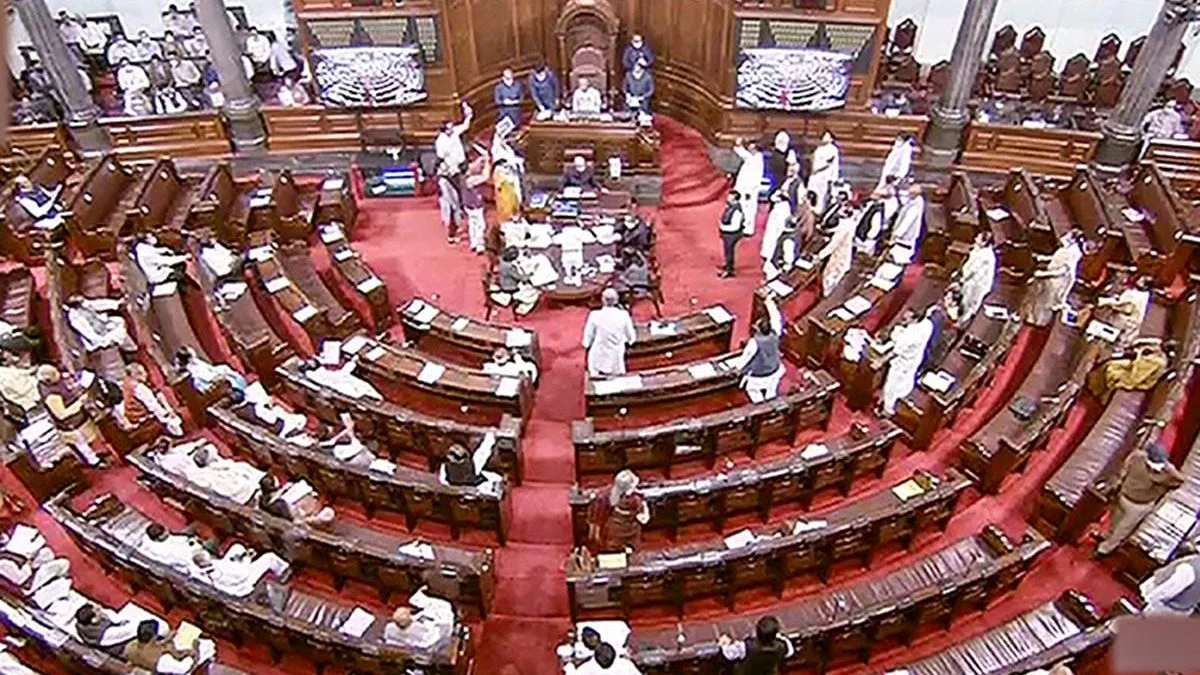

Bill No. 105 of 2026, The Andhra Pradesh Reorganisation Amendment Bill 2026, was introduced in the Lok Sabha on April 1, 2026, marking one of the most emotionally and politically significant legislative moments for Andhra Pradesh since the state’s painful bifurcation in 2014. The bill seeks to formally amend the Andhra Pradesh Reorganisation Act of 2014 to grant Amaravati legal recognition as the sole capital of Andhra Pradesh, settling through central legislation a debate that has convulsed AP politics for over a decade and driven tens of thousands of farmers who gave their land for the capital project to the edge of despair.
The bill is deemed to have come into force from June 2, 2024, the date on which the TDP-led NDA government returned to power in Andhra Pradesh under N Chandrababu Naidu, retroactively grounding the legal recognition in the political mandate that brought the Amaravati project back to life after years of suspension.
What the Bill Does
The Andhra Pradesh Reorganisation Amendment Bill 2026 amends the parent legislation that created Andhra Pradesh as a separate state following the bifurcation of united Andhra Pradesh and the creation of Telangana in 2014. The original 2014 Act left the question of AP’s capital unresolved in statutory terms, creating a legal vacuum that successive state governments exploited to shift, multiply, or abandon the capital project entirely depending on their political priorities.
The amendment fills that vacuum. By formally designating Amaravati as Andhra Pradesh’s capital through central legislation, the bill removes the ability of any future state government to unilaterally move, split, or relocate the capital without parliamentary approval. It converts what had been a state government administrative decision into a matter of national legislative record.
The Decade of Chaos That Made This Bill Necessary
To understand why this bill carries the emotional weight it does, you need to understand what the farmers of the Krishna delta went through between 2014 and 2024.
When the 2014 bifurcation gave Hyderabad to Telangana as its capital and left Andhra Pradesh without one, the newly formed state needed to build a capital from scratch. Chief Minister N Chandrababu Naidu conceived Amaravati, a greenfield capital city on the banks of the Krishna river in Guntur district. The project was ambitious, internationally planned with Singapore’s Surbana Jurong as the master planner, and built on a Land Pooling Scheme that was genuinely unprecedented in Indian capital-building history.
Approximately 29,000 acres of land was pooled from around 29,000 farmers across 29 villages in the Krishna riverbed region. The farmers did not sell their land. They pooled it, meaning they gave their agricultural land in exchange for smaller plots of developed land within the capital city once it was built. For farming families whose entire economic identity and generational wealth was tied to their Krishna delta paddy fields, this was an act of extraordinary faith in a government promise.
The TDP government began construction. Then in 2019 the YSRCP under Y S Jagan Mohan Reddy won the state election in a landslide and everything changed.
Jagan Reddy, with a political project to decentralise power away from the Kamma-dominated coastal Andhra belt that supported Naidu and toward his own base in Rayalaseema and north Andhra, proposed the Three Capitals Bill. Andhra Pradesh would have three capitals: Amaravati as the legislative capital, Visakhapatnam as the executive capital, and Kurnool as the judicial capital. The project to build Amaravati was effectively suspended. Construction stopped. The Singapore planners left. The capital region turned into a ghost town of half-built infrastructure and overgrown plots.
For the 29,000 land-pooling farmers, the suspension was a catastrophe. They had given up their agricultural land on the promise of developed plots in a thriving capital city. With construction stopped and the future of Amaravati uncertain, they received neither agricultural income from their pooled land nor developed plots from the capital project. Farmers protested for over 1,000 days. Suicides were reported. The human cost of the capital suspension was severe and documented.
The YSRCP government’s Three Capitals Bill was ultimately struck down by the Andhra Pradesh High Court and the Supreme Court upheld Amaravati’s status as the designated capital, but without the force of central legislation the debate remained politically alive and vulnerable to reversal by any future state government with a different vision.
The 2024 Election and the Return of Naidu
The 2024 Andhra Pradesh state elections saw the TDP-Jana Sena-BJP alliance under Chandrababu Naidu win a decisive majority. Naidu returned as Chief Minister on June 2, 2024. Reconstruction of Amaravati resumed. The farmers who had waited five years for their promises to be honoured began to see construction activity restart.
The Amaravati Bill introduced in Parliament on April 1, 2026 is the final act of that political restoration. By amending the central legislation that governs Andhra Pradesh’s existence as a state, the bill ensures that no future state government can do to Amaravati what the Jagan government did between 2019 and 2024. The capital is being written into national law, not just state policy.
The Symbolism of the Farmers
The statement that accompanies this bill’s introduction, that Amaravati is not just a capital but an idea central to identity, derives its meaning from the land-pooling farmers more than from any politician or planner.
In most capital building exercises in history, governments acquire land compulsorily, compensate farmers at market rates, and build. What happened in Amaravati was different. Farmers voluntarily pooled their most valuable asset, their agricultural land, based on a promise that the capital city would create prosperity for their families across generations. When that promise was suspended, the betrayal was not just financial but existential for communities whose identity was rooted in that land.
The bill’s deemed commencement date of June 2, 2024, Naidu’s swearing-in date, is a deliberate legislative statement. The legal protection for Amaravati is dated to the day the mandate to build it was restored.
What Happens Next
The bill will need to pass both Houses of Parliament to become law. Given the NDA majority in the Lok Sabha and the political significance of Andhra Pradesh to the coalition’s arithmetic in the Rajya Sabha, passage is widely expected. Once enacted, Amaravati’s status as Andhra Pradesh’s sole capital will be a matter of national law rather than state administrative preference, providing the permanence and legal certainty that the land-pooling farmers, the infrastructure investors, and the citizens of Andhra Pradesh have been waiting for since 2014.
For AP, it is not just a capital being legislated. It is a promise being honoured. Twelve years late, at enormous human cost to the farmers who made it possible, but honoured.
This article is based on Bill No. 105 of 2026, The Andhra Pradesh Reorganisation Amendment Bill 2026, introduced in the Lok Sabha on April 1, 2026. This article is for informational and educational purposes only.

Comments are closed.