


Highlights
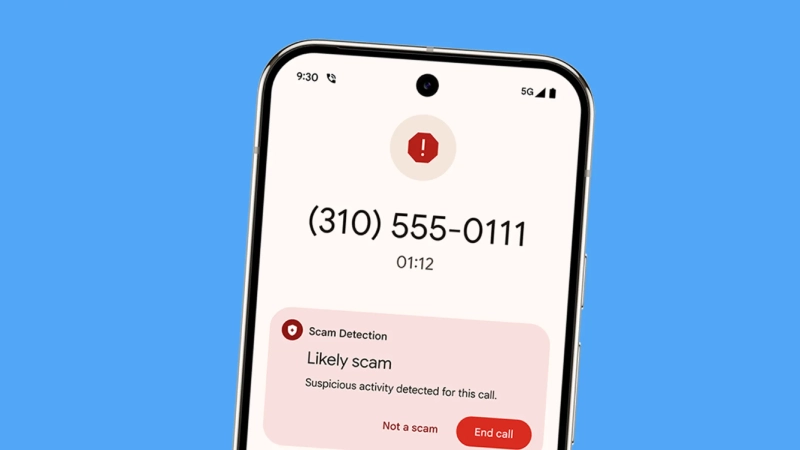
- Android Scam Shield now triggers a full-screen warning when an unknown caller + screen-sharing + banking/payment app usage coincide.
- Users get a one-tap “End call now” option and a forced 30-second pause to rethink before proceeding.
- The expanded pilot — after trials in UK, India, Brazil — now includes major U.S. banks and fintech apps like Cash App & JPMorgan Chase.
- The feature uses on-device protections (Android 11+) to disrupt social-engineering scams exploiting screen-sharing and banking transfers.
What’s Changing: How the Feature Works?
Screen-sharing + financial apps + unknown call = automatic alert
Smartphone scams have changed dramatically over the years. Fraudsters, who were once limited to phishing through SMS and masquerading as banks over the phone, now very often get their victims to screen-share first and then lead them to opening a banking or payment app where they attempt to deceive them into divulging sensitive information or approving the transfers.
To guard against these scams, the new and larger trial on Android detects the presence of a daring combination:
The user is engaged in a conversation with a number that is not stored in their contact list. Screen-sharing is taking place. The user opens a banking, fintech, or peer-to-peer payment app (currently limited to some banks and payment apps like Cash App, JPMorgan Chase) that has agreed to the terms of the agreement. As soon as all three conditions are met, Android takes action right away.
Warning popup + one-tap exit + a cooling-off period
Rather than allowing the user to go ahead without knowing, Android interrupts the transaction with a full-screen notification that elucidates the danger, offers a large and conspicuous “End call now” button (which also turns off screen sharing), and if the user continues enforces a 30-second wait before granting access.
This wait is not just a hold-up: it is meant to dismantle the psychological pressure that the scammer has been trying to create urgency, fear, panic and to give the user a little more time to reflect on what is happening.
Rollout & Background :From Pilot to Global Expansion
The first place where the new in-call scam protection was introduced did not the U.S. but the UK. The program was implemented in the U.K. as a pilot at the beginning of this year. It was a part of the exercise that has been reported to have saved thousands of users from falling into the trap of fraud over the phone.
The corporation was so confident about the success of the trial that it decided to increase the pilot scheme to include other countries like Brazil and India before the present-day U.S. rollout in collab with the top banks and fintech apps.
This U.S. roll-out is part of a more extensive strategy by Android to build in more than one layer of scam and fraud protection encompassing calls only and even going as far as text-message filtering, secure browsing, screen sharing warnings, etc.
Data & Claims Android vs. iOS Scam Protection
This only highlights one characteristic of a feature. Recent surveys reveal that, on average, Android devices could compete with iPhones in terms of prevention of scam texts and other spam/fraud attempts. The MNOs’ claims of no scam texts received in the last week were 58% stronger from Android users than from iOS users.
For certain Android users (specifically, the ones using Pixel products), the gap was even bigger. Security company analyses indicate that Android is currently delivering AI-driven safeguards for multiple threat categories (calls, messaging, web, app store, etc.), while iOS protection even though still strong is limited to fewer areas.
However, it is of vital importance to note that these figures are based on a combination of survey data and telemetry from the platform, not necessarily independent rigorous audits. Hence, they imply a trend, but not a final verdict.
What It Means for Users :Especially in India & Other Risk-Prone Markets
For users living in high-risk areas like India (where sometimes it happens that scams via phone call, banking-app scams, and social-engineering fraud are common), this type of protection can turn out to be a real lifesaver.
As the feature works automatically (no extra setup is required), it adds a layer of protection to the usual caution and alertness which is very beneficial especially when someone is surprised or frightened by a very convincing scam call.
However, it is not an infallible protection. Just like all security measures, it helps to lower the risk but does not completely remove it. User awareness and doubt are still very important. Even with automated measures, frauds are changing very fast, mostly taking advantage of people’s feelings and trust, not just technical vulnerabilities.

Final Thoughts : A Smart, Timely, and Valuable Move
The rolling out of in-call scam protection to financial applications is a smart, timely, and very practical addition to Android’s security toolset. As the fraudsters are getting more and more sophisticated screen-sharing scams, impersonation calls, social engineering a combination of a warning overlay + pause + a one-tap exit may ironically be the case where many people would not lose their money just because of impulsivity.
In case you rely on these new Android protections, treat every suspicious call especially those related to banking/finance with a good dose of skepticism.

Comments are closed.