
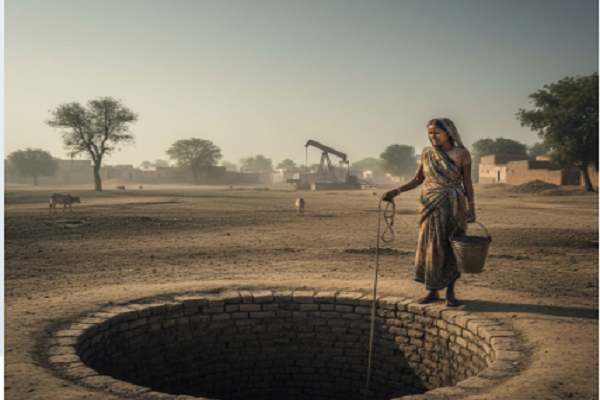

New Delhi : India is currently silently moving towards such a crisis. The groundwater figures presented by the government in Parliament are extremely worrying. According to the report, considering the speed at which water is being withdrawn from the ground in the country, a ‘dry day’ situation may arise in many areas in the future.
Approximately 448 billion cubic meters of water is added to the ground every year through rain and other sources. However, the amount of water that can be safely used is only 407 billion cubic metres. In the year 2025, India has taken out 247 billion cubic meters of water from the ground. Shocking details have emerged in the assessment of a total of 6,762 areas (blocks, talukas and divisions) of the country. There are 730 areas where more water is extracted than is absorbed into the ground. Whereas the situation in 201 areas is very critical. Apart from this, the water level has reached dangerous levels in 758 areas.
According to government figures, 73 percent of the areas are in the ‘safe’ category, but this is only in terms of quantity. In reality, the underground water in these areas is contaminated with toxic elements like arsenic, fluoride and nitrate. Fluoride is dangerous for bones, while nitrate can prove fatal for children. In short, there is water in the ground but it is not safe for human consumption.
The government has claimed that thousands of check dams and ponds have been built to conserve water. However, the fact is that only 54 percent of the wells in the country have seen improvement in water level. In the remaining half of the country, underground water is continuously going down. Bore wells for agriculture are getting deeper every year and the need for tankers for water in cities is increasing.

Comments are closed.