
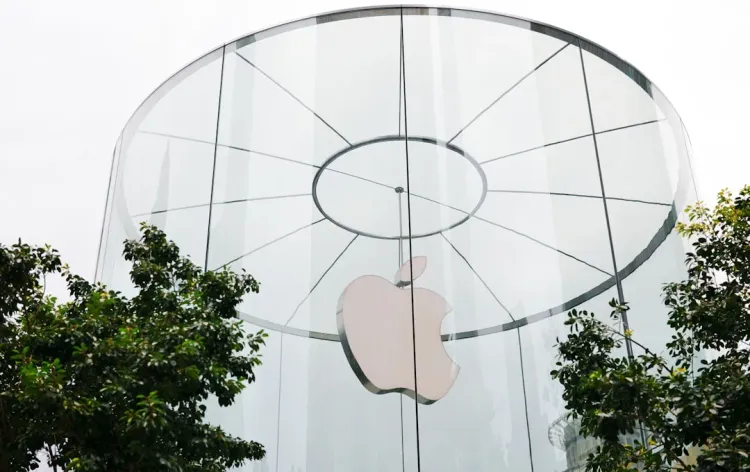

On April 1, 1976, Steve Jobs, Steve Wozniak, and Ronald Wayne founded a company in a suburban garage with the goal of making computers small enough for people to have in their homes. Fifty years later, that entity is no longer just a computer company; it is a global cultural and economic titan. As Apple approaches its Golden Jubilee on April 1, 2026, the tech world is witnessing a strategic pivot that balances historical reverence with a radical leap into the future of hardware and artificial intelligence.
To mark the milestone, CEO Tim Cook recently released a letter titled “50 Years of Thinking Different,” signaling that Apple’s celebration is less about nostalgia and more about momentum. While the company has launched a new “Hello Apple” Instagram account and hosted legacy-focused events including a surprise performance by Alicia Keys at New York’s Grand Central Store, the real celebration lies in the product roadmap. Apple is using this anniversary to define its identity for the next decade: a company built on “Ultra” performance, on-device AI, and a renewed focus on market democratization.
The Crown Jewel: The iPhone Fold and the Ultra Shift
The most anticipated announcement for the 50th year is the rumored “iPhone Fold.” After years of observation, Apple is expected to enter the foldable market with a device that solves the industry’s most persistent problem: the screen crease. Utilizing a specialized laser-drilled metal plate system to distribute stress, the iPhone Fold is rumored to feature a 7.8-inch internal display that is virtually indistinguishable from a flat iPad mini when unfolded.
Positioned at a premium $2,400 price point, the Fold represents a broader shift toward “Ultra” branding. This strategy involves creating a top-tier category above the “Pro” models, including a new MacBook Pro with a touchscreen Tandem OLED display and AirPods Pro equipped with infrared cameras for enhanced spatial awareness within the Vision Pro ecosystem.
The Future of Interaction: Siri 2.0 and iOS 27
The 50th anniversary also serves as the launchpad for a fundamental overhaul of Apple’s software. iOS 27 is expected to debut a completely reimagined Siri, colloquially referred to as Siri 2.0. This is not just an incremental update; it is a transition into a full-scale AI chatbot capable of cross-app reasoning.
Leveraging Apple Intelligence, the new Siri will be able to perform complex tasks such as summarizing a long thread of cybersecurity news or organizing a cross-functional project schedule entirely on-device. For the iPhone Fold, iOS 27 will reportedly introduce “hybrid” multitasking, allowing two apps to run side-by-side with iPad-style sidebars, effectively bridging the gap between mobile and desktop productivity.
The Home Ecosystem: homeOS and the HomePad
Apple is also set to conquer the one room where it has historically lagged behind competitors: the kitchen counter. The “HomePad” is rumored to be the flagship hardware for homeOS, a new operating system designed specifically for the smart home.
The HomePad will likely feature a 7-inch square touchscreen and a magnetic “snap-to-wall” mounting system. Unlike existing smart displays, the HomePad will use Face ID to recognize different family members as they walk by, automatically switching to their specific calendars, playlists, and communication preferences. This device marks Apple’s intent to make the smart home a proactive participant in daily life rather than a reactive tool.
Market Democratization: The $599 MacBook Neo
In a surprising move for a company known for premium pricing, the 2026 roadmap includes the MacBook Neo. Rumored to start at just $599, the Neo is designed to reshape the entry-level laptop market. Powered by a specialized A18 Pro chip, the Neo will come in vibrant colors like “Indigo” and “Blush,” targeting students and creative professionals who need Apple Intelligence capabilities without the MacBook Pro price tag. This move demonstrates that at 50, Apple is as interested in expanding its ecosystem footprint as it is in maintaining high-end margins.
As Apple moves past its 50th year, its focus is clear: the integration of custom silicon, user privacy, and transformative AI. The 2026 milestones from the crease-free foldable to the democratized MacBook Neo suggest a company that is not resting on its laurels. By combining the “Think Different” philosophy with a robust “Ultra” hardware strategy, Apple is ensuring that its next 50 years will be defined by the same disruptive spirit that began in that California garage.

Comments are closed.