
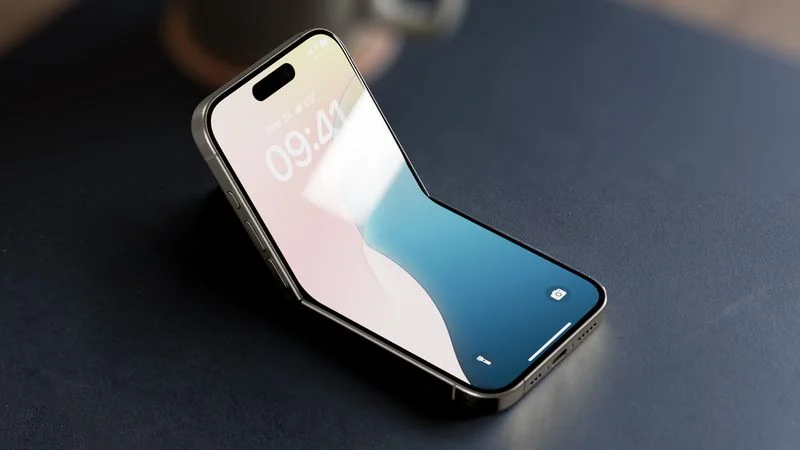

Apple is reportedly experimenting with a new type of flip-style foldable iPhone, marking a fresh twist in its long-rumored entry into the foldable smartphone market. According to credible supply chain leaks and industry insiders, engineers have been evaluating hardware for a “clamshell” design that folds vertically in a compact form, a concept similar to competitors like the Samsung Galaxy Z Flip and Motorola Razr. While it’s not yet clear whether Apple will ultimately produce this flip model, its testing shows that Apple is seriously exploring multiple paths for its foldable future beyond a single device concept.
Most reports about Apple’s foldable ambitions have focused on a “book-style” foldable device that opens horizontally into a larger tablet-like screen, similar to modern large foldables. That version is expected to be Apple’s first foldable iPhone release, likely targeting late 2026 alongside the iPhone 18 series. However, the idea of a flip-style iPhone, one that folds vertically like a classic clamshell represents a different direction in usability and portability.
A flip-style design is notable because it caters to users who prioritize pocketability and convenience. Rather than expanding into a larger display, a flip-style phone focuses on keeping the device compact when closed, while offering a full-screen experience when open. This could help Apple appeal to customers who want elegance and simplicity in a smaller form factor, rather than the larger footprint of a traditional foldable.
What the Leaks Say About Apple’s Testing
The recent leaks come from an Asia-based tipster with access to supply chain details, suggesting Apple has already built and tested prototypes of a clamshell foldable iPhone. These prototypes are reportedly part of internal hardware trials, though Apple has not confirmed plans to mass produce or publicly launch this variant. The company may still decide whether the flip design has strong enough potential to rival competitors and carve out its own space in the premium smartphone market.
It’s worth noting that Apple’s engineers have long been working on foldable technologies behind the scenes. Previous reporting from around the industry suggests that the first foldable iPhone, the book-style model is further along in development and expected to reach consumers first. The introduction of the flip-style concept appears to be a secondary exploration, possibly designed to follow the initial release in later years if the market demands it.
Apple’s Foldable Roadmap: Multiple Approaches
Apple’s investigation into flip and book foldables aligns with broader industry moves to offer devices in more than one form factor. Analysts believe Apple could adopt a strategy similar to what Samsung has done: launching one core foldable first, then expanding into additional styles once the technology and market have matured.
According to supply chain and analyst commentary, the flip version could be developed after the initial foldable’s success. Apple may want to see how consumers respond to its first book-style foldable before committing to a clamshell version, which is a distinct product with different design challenges.
Many other Apple watchers also point out that exploring multiple foldable designs could give the company flexibility in responding to market trends and consumer preferences especially if users show strong interest in one format over the other. A successful initial foldable might pave the way for a broader range of devices with unique benefits and use cases.
Developing a foldable phone is not just a matter of bending a screen, it requires overcoming complex engineering obstacles, including hinge durability, display longevity, and internal component layout. Apple has reportedly been building internal prototypes and testing out hinge technologies, durable flexible display materials, and software optimizations tailored to foldable use. Even so, the flip-style concept presents its own set of challenges.
For instance, making a clamshell device that is thin, lightweight, and structurally sound demands careful design choices, especially when balancing premium materials and performance components. Apple’s supply chain partners are likely assisting with exploratory testing, but only time will tell whether these prototypes mature into a sellable product. The company has historically shelved concepts that do not meet its standards or strategic priorities, so testing does not guarantee a public release.
Competition in the Foldable Space
If Apple does bring a flip-style iPhone to market either now or in the future, it would position itself directly against existing clamshell foldables from other manufacturers. Samsung’s Galaxy Z Flip series is one of the most successful examples of this form factor, offering users quick access and compact designs that fit easily in pockets.
Motorola’s Razr has also contributed to the resurgence of clamshell phones, separating them from the larger book-style foldable devices. Apple’s entry into this space could appeal to consumers who enjoy the nostalgic charm of flip phones but want modern smartphone performance and integration with Apple’s ecosystem.
A flip-style iPhone could also serve as a gateway product for users who are curious about foldable technology but hesitant to adopt larger, more expensive devices like book-style foldables. This diversification could broaden Apple’s footprint in the premium smartphone category and extend its reach into new segments of the market.
While the first foldable iPhone, the book-style type is expected to arrive in fall 2026 as part of the broader iPhone 18 lineup, the flip-style version remains more speculative. Apple may wait to see how the initial foldable performs before committing to a mass release of a clamshell model. Many industry insiders expect that if a flip-style iPhone ever reaches retail, it would likely follow in later product cycles, possibly in 2027 or beyond.
That strategy gives Apple more time to refine the design, iron out durability issues common to foldable phones, and evaluate consumer demand. It also offers flexibility in adjusting hardware specs, price points, and feature sets based on early feedback from the first foldable release.
For consumers, the idea of a flip-style iPhone adds excitement to Apple’s already busy product roadmap. Whether it’s the larger foldable that opens like a book or a more portable flip variant, Apple’s exploration of foldable phones shows the company hasn’t abandoned innovation in form factor design.
As the foldable category continues to evolve, Apple’s participation in multiple forms could help reshape how users think about mobile devices, blending portability, screen real estate, and intuitive interaction in new ways. If these prototypes ever become real products, the era of foldable iPhones may be closer than many expected, ushering in a new chapter for one of the world’s most iconic consumer technologies.

Comments are closed.