
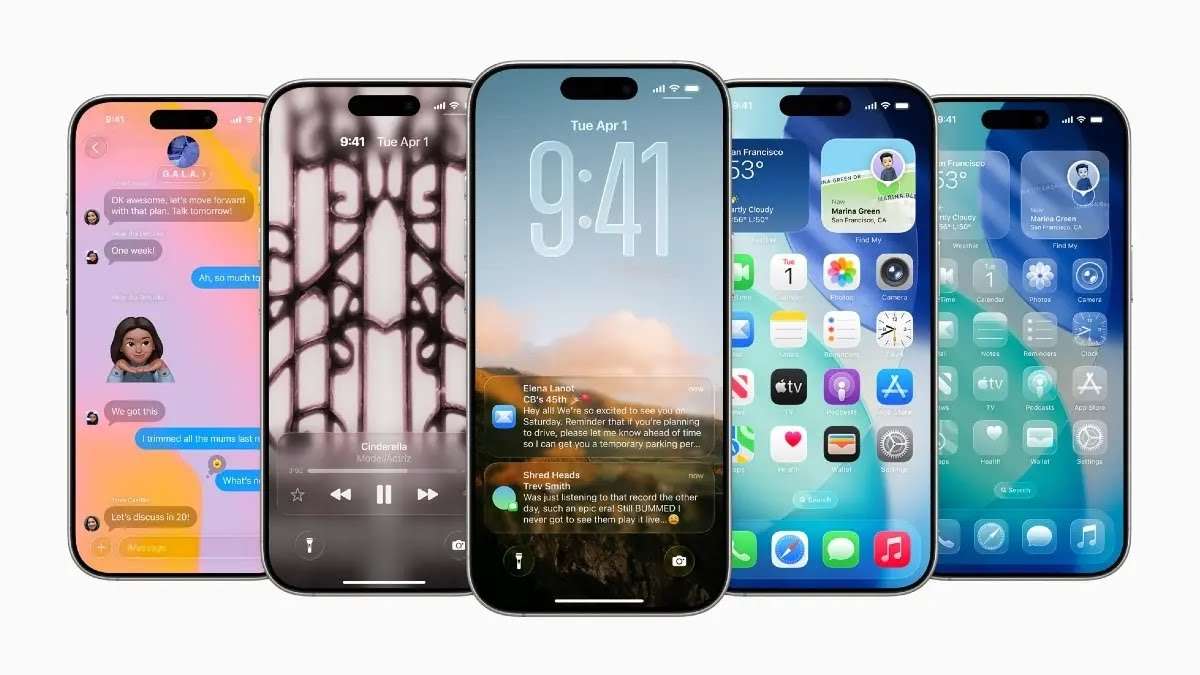

For years, the internet has operated on a “don’t ask, don’t tell” policy regarding age. Pop-up windows asking if you were over 18 were treated as minor speed bumps rather than actual barriers. However, with the release of iOS 26.4 on March 24, 2026, Apple has officially turned your iPhone into a digital bouncer. In a move that has sent shockwaves through the UK tech landscape, Apple is now requiring users in the United Kingdom to verify their age to maintain unrestricted access to the web, certain apps, and core communication features.
While Apple often tests new features in its home market of the U.S., the United Kingdom has become the primary testing ground for its most stringent safety protocols. This shift is a direct response to the Online Safety Acta piece of landmark legislation that has been tightening its grip on the “Wild West” of the internet.
Although the Act doesn’t strictly mandate age verification at the operating system level yet, Apple is clearly choosing to get ahead of the curve. By embedding these checks directly into iOS, Apple is moving the responsibility of “age assurance” away from individual websites and into the palm of your hand. Ofcom, the UK’s communications regulator, has already hailed the move as a “real win for children and families,” signaling that this UK-specific rollout is likely a blueprint for a global expansion.
How the “ID Check” Actually Works
For the average user, the verification process begins immediately after the 1.8GB update to iOS 26.4 finishes installing. A new prompt appears in the Settings menu: “UK law requires you to confirm you are an adult to change content restrictions.” Apple is providing three main pathways to prove you’ve reached your 18th birthday:
The “Legacy” Pass: For many, the check will be invisible. Apple is using “account signals” such as the age of your Apple ID and a long history of successful credit card transactions to automatically verify users. If you’ve been buying apps since the iPhone 4, you’re likely already in the clear.
The Credit Card Scan: If your account is new or lacks a paper trail, you must add a valid credit card (not a debit card) to your Apple Wallet. The pre-authorization check serves as a proxy for age.
The Physical Scan: In a move that has raised eyebrows, users can also scan a UK Driving Licence or National ID. While UK Passports are reportedly seeing “high failure rates” in the initial rollout, the driving licence scan uses the iPhone’s TrueDepth camera to verify the authenticity of the document in real-time.
The “Safe by Default” Protocol
The most controversial aspect of iOS 26.4 is its “Safe by Default” stance. If a user is under 18 or simply refuses to verify their age, the operating system automatically applies a suite of restrictions that were previously optional.
This includes Communication Safetya feature that uses on-device AI to scan incoming and outgoing messages in iMessage, FaceTime, and AirDrop. If the AI detects nudity, the image is blurred with a warning. Furthermore, the Web Content Filter is locked into “Limit Adult Websites” mode. For adults who value their privacy and choose to skip the ID scan, these filters cannot be toggled off, effectively treating an unverified adult the same as a 12-year-old in the eyes of the software.
Privacy via the Secure Enclave
To counter the “mass surveillance” narrative, Apple is leveraging its Secure Enclave technology. When you scan your ID, Apple claims the raw data is verified and then promptly deleted. In its place, a “cryptographic token” is stored on your device’s security chip.
When an R18+ app or an adult website (via Safari) requests proof of age, the iPhone doesn’t hand over your name or birthdate. Instead, it sends a simple “Yes/No” signal that is digitally signed by Apple. It’s an elegant technical solution to a messy social problem: proving you are an adult without revealing which adult you are.
The “Ransomware” Backlash
Despite the praise from regulators, not everyone is a fan. Privacy advocacy groups and some users on forums like Reddit have labeled the update “regulatory ransomware.” The primary complaint is the lack of a “middle ground.” By tying the ability to disable content filters to a government-issued ID or credit card, critics argue that Apple is forcing users to trade their anonymity for basic device functionality. There are also concerns about “verification loops,” where users without credit cards or driving licences find themselves permanently locked into a “child-safe” version of the internet.
The rollout of age verification in the UK represents the end of the anonymous iPhone. We are moving toward a future where our digital identities are as verified and “official” as our physical ones. As other nations watch the UK experiment, it’s only a matter of time before the “ID required” prompt becomes a standard feature of every new smartphone setup worldwide.

Comments are closed.