


For a company known for carefully spaced product launches, Apple packed an unusual amount of hardware news into a single week. Over three days, the company rolled out seven new devices, ranging from a budget smartphone and a low-cost laptop to refreshed tablets, upgraded Mac notebooks, and two new displays. The burst of announcements marks one of the busiest product stretches Apple has delivered in recent years.
The timing was not accidental. Apple had already posted strong sales for its latest iPhone lineup and appears to be using that momentum to widen its product lineup at both the lower and higher ends of the market. The week’s announcements suggest a company trying to reach more price points while still updating its premium hardware.
One of the most talked-about introductions was the MacBook Neo, a new entry-level laptop that starts at $599. The machine represents Apple’s most direct attempt to enter the lower-priced laptop category while staying within its own design language. The MacBook Neo uses the A18 Pro chip, a processor originally developed for the company’s smartphone lineup.
That decision marks an unusual step for Apple. While the company has moved its computers to its own chips in recent years, those chips have generally been designed specifically for Macs. The MacBook Neo instead relies on technology from the iPhone family.
The laptop includes a 13-inch display, two USB-C ports, and a battery Apple says can last up to sixteen hours. The base model includes 256 gigabytes of storage and eight gigabytes of memory. Unlike many other Macs, that memory cannot be expanded. A higher-priced version includes 512 gigabytes of storage and a fingerprint sensor for unlocking the device.
The relatively low price places the MacBook Neo far below Apple’s other laptops. The MacBook Air begins at $1,099, and MacBook Pro models cost considerably more. Apple is offering an extra discount for students and educators, bringing the price of the entry model down further.
Alongside the MacBook Neo, Apple updated its MacBook Air lineup. The new Air models now use the company’s M5 processor and come with more storage in their base configuration. The 13-inch version begins at $1,099, while the larger 15-inch model starts at $1,299.
The machines retain the familiar thin aluminum design and liquid retina display used in earlier versions. Apple also updated wireless connectivity, allowing support for newer networking standards. Battery life remains a central selling point, with Apple saying the device can run for up to eighteen hours under certain conditions.
Apple’s MacBook Pro line also received updates, this time focused on computing power. The new models introduce M5 Pro and M5 Max processors. These chips are built for heavier tasks such as video editing, software development, and machine learning workloads.
The base 14-inch MacBook Pro now starts with 24 gigabytes of memory and one terabyte of storage. Prices begin at $2,199 for that configuration. A larger 16-inch model starts at $2,699. Buyers who need additional computing power can choose higher configurations that include the M5 Max processor and larger memory capacities.
Although the new MacBook Pro models include upgraded processors, the physical design of the machines remains largely unchanged. The displays, keyboard layout, and camera system follow the same pattern introduced in earlier models.
Apple also introduced a new version of the iPad Air. The tablet now runs on the M4 processor and includes more memory than its predecessor. The device comes in two sizes, an 11-inch model starting at $599 and a 13-inch model starting at $799.
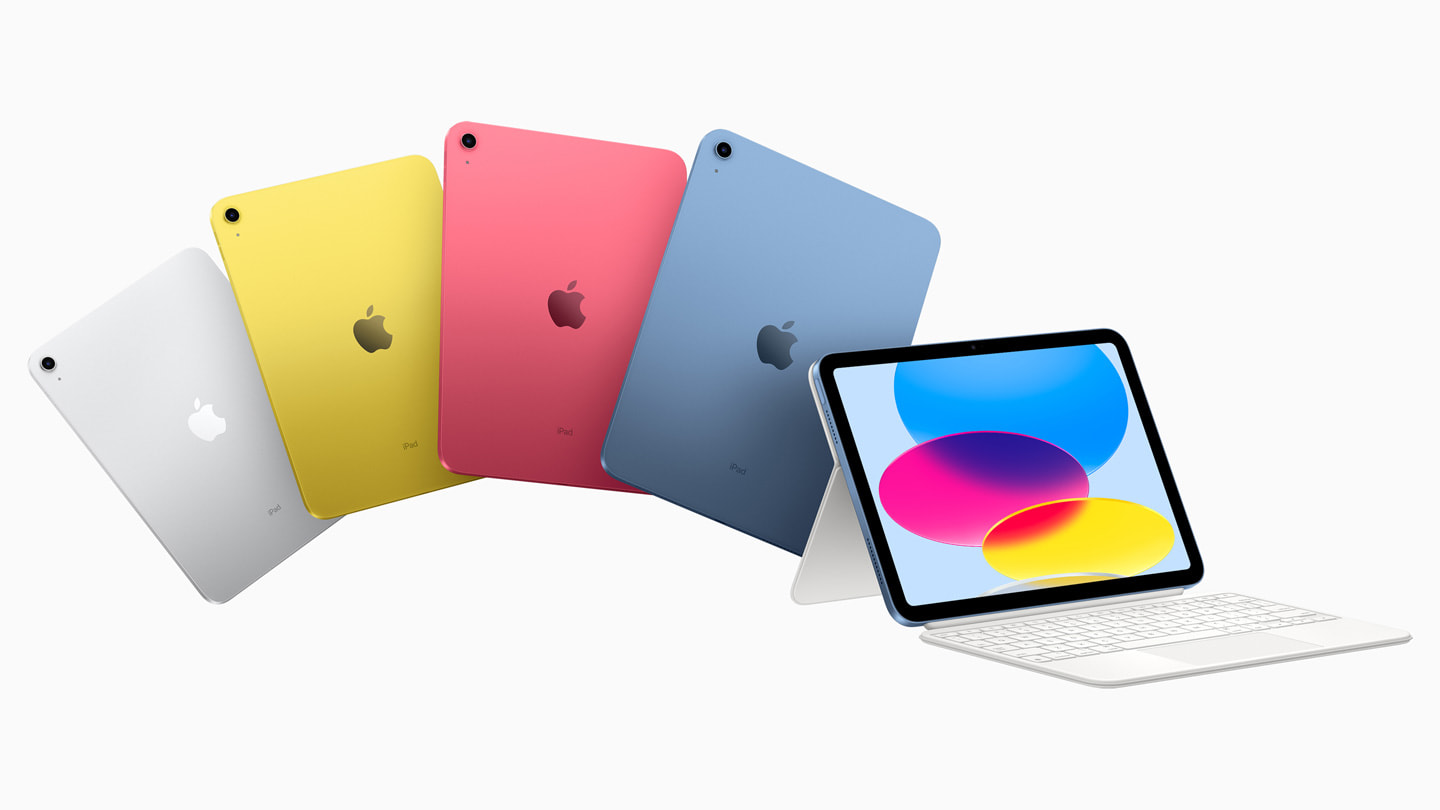
The tablet continues to sit between Apple’s entry-level iPad and its more expensive iPad Pro lineup. Apple said the new chip should allow the device to handle video editing, multitasking, and graphics-heavy tasks more comfortably than earlier versions.
Connectivity has also been improved. Cellular models include a new modem that promises faster mobile data speeds. The tablet is offered in several color options and can be paired with Apple’s keyboard accessories and stylus.
While tablets and laptops filled much of the announcement week, Apple began the rollout with a smartphone aimed at a different audience. The iPhone 17e is positioned as a lower-priced entry in the company’s current phone lineup.
The device starts at $599 and includes the same A19 processor used in the base iPhone 17. Storage begins at 256 gigabytes, double the starting capacity of the earlier iPhone 16e model.
The camera system includes a 48-megapixel main sensor, and the phone now supports MagSafe accessories and wireless charging. Apple also added a new modem intended to improve mobile network speeds.
In terms of design, the phone resembles other devices in the iPhone 17 family, though the display has slightly lower brightness and refresh rate compared with higher-priced models. The device is available in black, white, and a light pink finish.
Beyond phones and computers, Apple also refreshed its display lineup. The company introduced two monitors: a new Studio Display and a higher-end Studio Display XDR.
Both models include a 27-inch screen with a resolution of 5,120 by 2,880 pixels. Each also includes a built-in camera with automatic framing, a six-speaker sound system, and multiple ports for connecting other devices.
The more expensive Studio Display XDR includes mini-LED lighting and a 120-hertz refresh rate, which can provide smoother motion for video playback and graphics-heavy work. The standard model remains limited to a 60-hertz refresh rate.
Prices start at $1,599 for the base display and $3,299 for the XDR version.
All of the products announced during the week are scheduled to ship on March 11. Pre-orders opened shortly after the announcements.
Taken together, the new devices show Apple expanding its hardware lineup in several directions at once. Lower-priced products such as the MacBook Neo and iPhone 17e push the company into more accessible price ranges. At the same time, upgraded processors in the MacBook Pro and refreshed displays maintain the company’s push toward high-end computing tasks.

Comments are closed.