
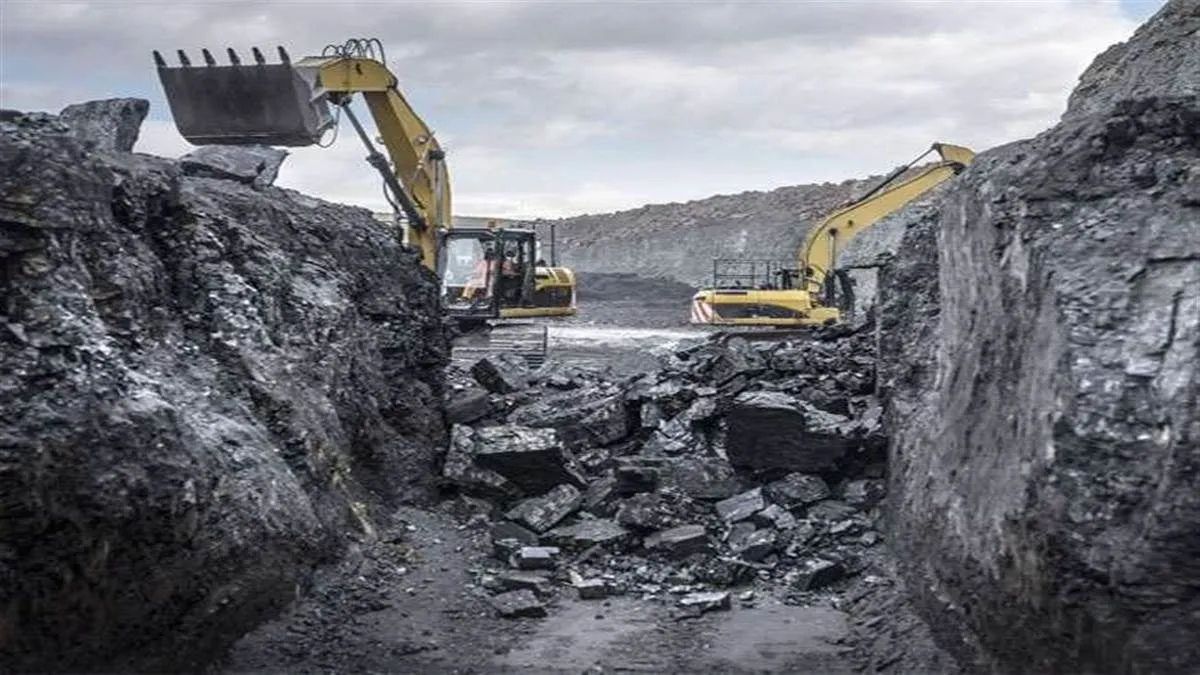

In the direction of increasing coal production in the country (Coal Mining Approval Process) Center The government has made an important and far-reaching reform and simplified the process of opening a coal mine.
By amending the Colliery Control Rules, 2004, the Coal Ministry has abolished the system which was considered to be the biggest obstacle in the path of coal production for a long time. After this change, coal companies will no longer need to obtain separate prior permission from the Coal Controller Organization to open a mine.
According to the notification issued by the government on 23 December 2025, Rule-9 has been amended under the Colliery Control (Amendment) Rules, 2025. Earlier, to open any coal or lignite mine – whether new or old allotment – approval from the Coal Controller Organization was required.
Even a mine that had been closed for more than 180 days had to obtain permission to restart it. Now this process has been abolished and companies have been given the right to take decisions from their boards.
This decision is being considered a big step towards speeding up the Coal Mining Approval Process. However, government regulatory oversight has not been completely eliminated. The company board must ensure that all necessary approvals are already obtained from the Central and State Governments and relevant statutory bodies.
Apart from this, it will be mandatory to inform the Coal Controller Organization within 15 days of opening the mine, for which only a prescribed form will have to be filled. The system of prior permission for non-company units will continue as before.
Coal Ministry officials say that this improvement will save time of about two months in the operation of mines. With this, coal production, which has already reached record levels, will be further accelerated.
The total coal production of the country in the year 2024-25 was 104.77 crore tonnes, which was 11.71 percent more than the previous year. This figure is expected to reach 111 crore tonnes in the current financial year, in which captive and commercial mines will play an important role.
The requirement of coal is continuously increasing due to the demand of growing electricity, steel and cement industries. In the year 2024-25, the demand for coal for the power sector alone had reached 94 crore tonnes. The Government believes that the simplified approval process will strengthen energy security and ensure timely availability of coal to industries, while maintaining a balance with renewable energy.
Mining approval easy, possible saving of two months in mine operation
Coal Ministry officials say that this improvement is expected to save up to two months in the operation of the mines. It is expected that coal production, which has already reached record levels, will increase further. The country’s total coal production in the year 2024-25 was 104.77 crore tonnes, which was 11.71 percent more than the previous year.
Coal production in Coal India Limited (CIL) and its subsidiaries has continuously increased and the production is expected to reach 111 crore tonnes during the current financial year. According to the Coal Ministry, the highest growth in production is being recorded from captive and commercial mines.
The present government has already implemented the policy of ‘single window clearance’ regarding coal mining. Coal production has increased at an average rate of 10 percent every year in the last five years.
Sharp jump in demand for coal from power, steel and cement sectors
In India, the need for coal is continuously increasing due to the increasing demand of power generation, steel and cement industries. In the year 2024-25, the demand for coal for the power sector had reached 94 crore tonnes.
According to an estimate, the demand for coal in the country’s thermal power plants will continue to grow at a pace of three to four percent for the next five years. However, due to the increasing use of renewable energy sources, the share of coal in electricity generation is expected to decline from about 70 percent by 2025 to 60 percent by 2030.

Comments are closed.