
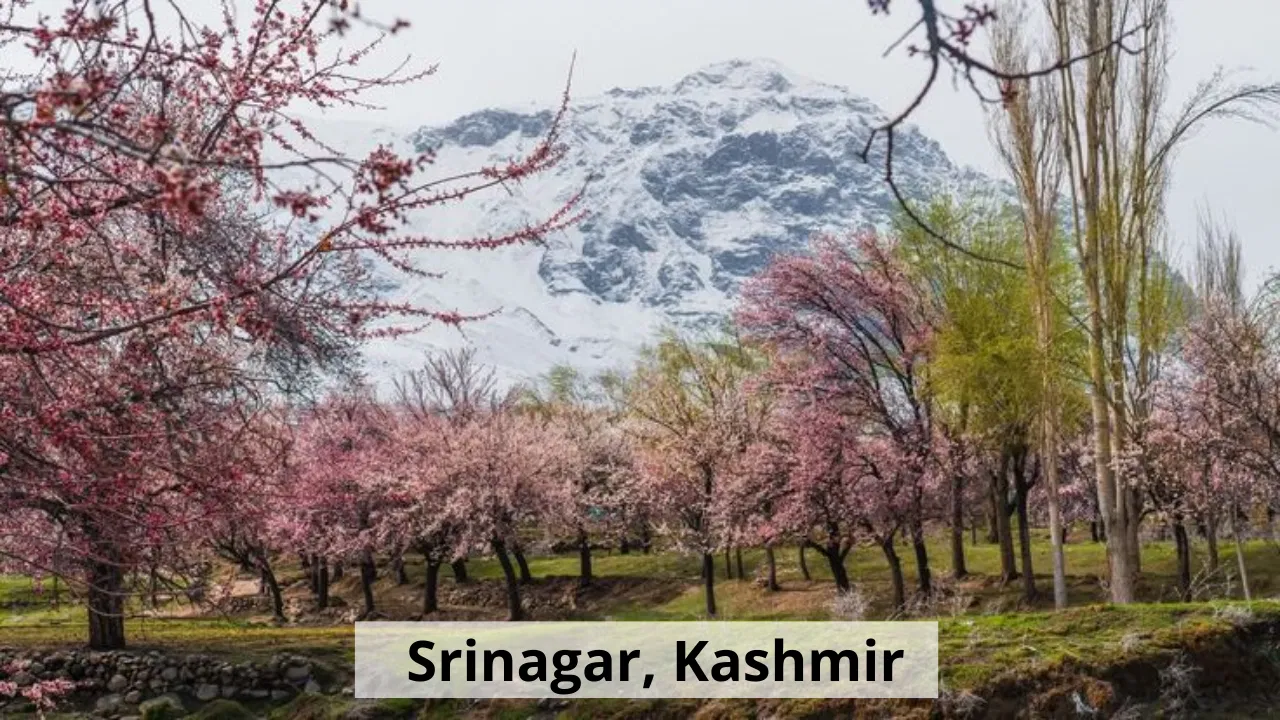
‘April in February’: Kashmir shatters century-old heat records as winter fades into early bloom

Srinagar: The winter landscape of Kashmir has been replaced by an unprecedented heatwave, as the region recorded its hottest February day in history. On Saturday, the mercury in Srinagar surged to a staggering 21 degrees Celsius, marking a climatic anomaly that has left both meteorologists and locals stunned.
The record-breaking temperature is more than 11 degrees Celsius above the seasonal normal, effectively skipping the end of winter and plunging the Valley into weather conditions typically reserved for mid-April.
Historical records toppled
The previous all-time high for Srinagar in February was 20.6 degrees Celsius, recorded on February 24, 2016. Before that, the mercury hit 20 degrees Celsius as far back as 1940. By crossing the 21 degrees Celsius mark, this year has officially set a new benchmark for late-winter heat.
The heat was not confined to the plains. Even high-altitude retreats like Gulmarg, known for its world-class skiing and heavy snow, witnessed a bizarre rise in temperature. The temperature there reached 11.5 degrees Celsius, narrowly eclipsing the previous record of 11.4 degrees Celsius set in February 1993. Under normal circumstances, Gulmarg struggles to reach a maximum of 2 degrees Celsius during this time of year, with lows typically plummeting to minus 6 degrees Celsius.
A missing winter pulse
Meteorologists attribute this “feverish” spike to the complete absence of Western Disturbances, the moisture-laden weather systems from the Mediterranean that usually bring snow and rain to the Himalayas.
“It was the hottest February day in recorded history in Kashmir,” confirmed Mukhtar Ahmad, Director of the Meteorological Department. “We expect temperatures to rise another one or two degrees in the coming days.” He added that no significant rainfall is forecast through the end of the month, which has remained exceptionally dry.
Environmental and agricultural alarms
The sudden warmth is sending shockwaves through the region’s delicate ecosystem. In the orchards of the Valley, almond trees have begun to bloom early, a phenomenon that usually occurs in the first week of March. While visually stunning, this premature spring is a major cause for concern for farmers and environmentalists.
Faizan Arif, an independent weather expert, noted the extraordinary nature of the deviation. “Today’s temperature was a massive +10 degrees Celsius to +11 degrees Celsius above normal. This is not just an isolated spike but part of an intensifying warm spell,” he said. Arif emphasised that the current maximums are strikingly similar to the long-term averages observed in the middle of April.
More heat ahead
The MeT department has issued a forecast suggesting the warm, dry spell will persist for at least another week. With no rain or snow in sight, temperatures are predicted to climb by another 1-2 degrees Celsius across many parts of Kashmir over the next six days.

Comments are closed.