
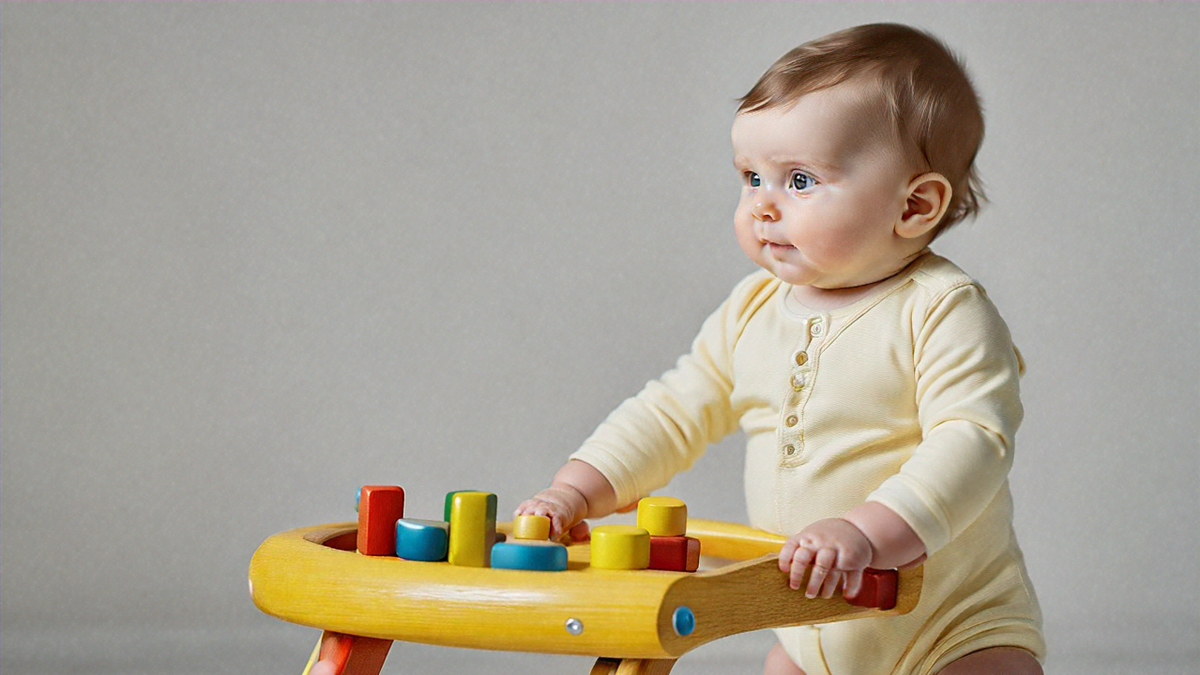

CLAIM:
Baby walkers are unsafe for infants as they increase the risk of injuries and interfere with natural walking development, and therefore should not be used.
FACT:
True. Using baby walkers is unsafe for infants and does not help them learn to walk faster. Multiple studies show that walkers increase the risk of serious injuries and may delay natural motor development. Experts recommend allowing infants to develop walking skills naturally through floor play and supported standing rather than using walkers.
In a viral Instagram reel posted by Dr Imran Patel, a paediatrician with over 1 crore followers on the platform, the doctor strongly discourages the use of baby walkers, warning parents about the potential risks associated with them.
According to his website, Dr Imran is “one of the most influential medical educators and content creators of the digital era,” known for simplifying medical concepts for parents and caregivers through social media.
In the reel, Dr Imran is seen interacting with a mother (who is with her eight-month-old baby). Introducing the child, he says, “Hello everybody, this is 8 months hero.” He then shares that the mother approached him with a common question. “Her mother has asked a question,” he explains, before reenacting the conversation.
The mother asks, “Can we get a walker for the baby?” To this, Dr Imran responds plainly, “No.” He goes on to acknowledge a frequent concern he hears from families. “When I asked her earlier, she said my family members say doctors always says no to everything,” he says, adding, “But our work is to inform, as we treat every child as our own child and don’t want them to get hurt.”
Explaining his reasoning, Dr Imran lists several hazards linked to baby walkers. He notes that when a child is learning to walk, their confidence level is generally low, and walkers can increase the chances of injury. He explains that walkers may twist or topple when babies move quickly, increasing the risk of falls. He also warns about toe-walking, saying that babies may “learn to walk on their toes,” which can interfere with proper walking posture later.
Emphasising natural development, he explains that proper walking is learned when a child stands, takes a few steps, falls, and stands again. “This is a natural way,” he says, adding that it helps children build confidence and balance. “That’s why using a baby walker is wrong,” he concludes, urging families to trust medical advice. “We have studied all these things. After so many years of experience, we are telling you,” he appeals.
The reel has garnered over 3 lakh views and 98,000 likes, and has been shared over 51,000 times, sparking widespread discussion among parents about the safety of baby walkers.
Is using a baby walker safe for infants?
According to Harvard Health Publishingmany parents purchase baby walkers believing they help infants learn to walk faster. However, “the opposite is true.” Harvard explains that walking is not simply about leg movement but about learning to pull to stand, balance, and take unsupported steps. “When babies are plopped into walkers, they don’t learn any of that,” the publication notes. Instead, infants develop walking skills naturally through floor play and supported standing using furniture or caregivers.
The publication also addresses why walkers remain popular – babies enjoy them. “Starting at around 6 months, babies love to be upright — and love to be mobile,” it states. However, it warns that walkers may give caregivers a false sense of security, increasing the risk of accidents. “Not only do babies need to learn mobility by themselves, they need constant supervision as they do,” the article emphasises, recommending safer alternatives such as stationary activity centres.
Injury risk remains significant despite safety standards
Concerns about physical harm are supported by a large epidemiological study published in 2018, which analysed data from the US National Electronic Injury Surveillance System between 1990 and 2014. The study examined infant walker-related injuries among children younger than 15 months and assessed the impact of the 2010 federal mandatory safety standard introduced in the United States.
The researchers estimated that over 2.3 lakh children under 15 months were treated in US emergency departments for walker-related injuries during the 25-year period. Most sustained head or neck injuries (90.6 per cent), and 74.1 pc were injured after falling down stairs while using a walker. Among children admitted to the hospital, 37.8 pc had skull fractures.
While the study found that injuries declined after the 2010 safety standards — with a 22.7 pc reduction in the four years following implementation — the authors cautioned that the risk had not been eliminated. They concluded that “despite the decline in injuries, infant walkers remain an important and preventable source of injury among young children,” supporting the American Academy of Paediatrics’ call for a ban on their manufacture and sale.
Importantly, falls are not the only danger. Infants in walkers can reach hazardous objects, pull heavy items onto themselves, get fingers trapped, or access hot liquids and sharp objects. Serious incidents, including drownings, have also been documented when infants moved into pools or spas using walkers.
Despite strengthened US safety rules, including designs to prevent stair falls, tipping, and entrapment, as well as requirements for braking systems and safer wheels, injuries persist. As late as 2014, around 2,000 toddlers were treated in US emergency rooms for walker-related injuries.
Impact on motor development
Concerns extend beyond injuries to infant motor development. A 2020 clinical study examined trunk control and motor skills in typically developing infants who used baby walkers compared with those who did not. Using the Alberta Infant Motor Scale and Segmental Assessment of Trunk Control, researchers found that infants who used walkers had significantly lower motor development and trunk balance scores. The authors concluded that “the use of baby walkers might adversely affect the motor development of infants,” possibly due to impaired trunk control.
Another 2023 survey-based study explored the association between baby walker use and motor milestones. Among 6,874 parents surveyed, infants who used walkers were three times more likely to skip crawling compared with those who did not. While gait disorders occurred at similar rates in both groups, the researchers noted that “use of baby walkers may be associated with infant motor development,” particularly by altering early mobility patterns.
What doctors recommend
Dr Amit Gupta, Senior Neonatologist and Paediatrician at Motherhood Hospitals, Noida, also advises against the use of baby walkers, citing both safety and developmental concerns. “We do not recommend baby walkers for children anymore,” he says, adding that despite pressure from elders at home, his advice remains unchanged. “Many parents tell me that a grandmother has brought one and ask whether they should use it. My answer is clearly no.”
Explaining the risks, Dr Gupta says that falls are the most common and serious concern associated with baby walkers. According to him, walkers significantly increase the risk of injuries such as head and neck trauma. “If a child is in a walker without constant supervision, even for a short while, anything can happen. The child may fall, cut their hands, injure themselves, or pull objects down,” he explains.
Dr Gupta also addresses the long-held belief that baby walkers help infants learn to walk faster. “Earlier, it was thought that baby walkers improved walking, but many cohort studies now show that they may actually lead to a slight delay,” he says. He emphasises that walking is a natural motor milestone that develops best through free movement. “A child’s motor development happens naturally when you allow them to move freely on the floor,” he explains.
He further warns that walker use may lead to toe-walking and reduced development of balance and core muscle strength. “When walkers are used, children miss out on developing natural balance and core muscles. Several studies indicate that this can delay multiple developmental milestones,” he adds, noting that Canada has banned baby walkers altogether due to safety concerns.
Addressing alternatives, Dr Gupta distinguishes between traditional circular walkers and newer push-style walkers. While discouraging circular walkers, he says push walkers may be considered, but only at an appropriate developmental stage. “Once a child is already standing and cruising naturally by holding on to furniture and moving around confidently, straight push walkers can be introduced,” he explains.
This story is done in collaboration with First Checkwhich is the health journalism vertical of DataLEADS.

Comments are closed.