
Are you also eating poison? Before buying mangoes from the market, follow these 5 magical tricks: – ..

News India Live, Digital Desk: If there is one thing that is most awaited during the scorching heat, it is the ‘king of fruits’ mango. Its sweetness and fragrance make everyone crazy. But, do you know that the shining yellow mangoes available in the market can prove to be dangerous for your health? To meet the huge demand, many traders are selling mangoes. calcium carbide Like cooking with deadly chemicals. In such a situation, it is very important to identify whether the mango you are bringing home is ripe naturally or with the help of chemicals. Let us know the easy ways by which you can identify adulterated mangoes.
Don’t get trapped in the brightness of color, recognize the real mango like this
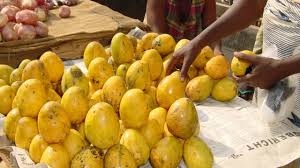
Often we get attracted towards mangoes that look very yellow and blemish-free. But this is the biggest mistake. Naturally ripe mangoes are not completely the same color; Greenness or slight yellowness is visible at some places. On the contrary, if the mango looks uniformly dark yellow from all sides, then understand that it has been cooked using chemicals. White or black spots can often be seen on mangoes ripened with chemicals, seeing which you should immediately become alert.
Do ‘water test’ by immersing it in water.
The most accurate and easiest way to identify mangoes containing chemicals is ‘water test’. Fill a bucket with water and put the purchased mangoes in it. If the mangoes are completely submerged in water, it means they are naturally ripe and juicy. But, if mangoes start floating on the surface of water, be careful. Mangoes cooked with chemicals are soft and lack natural juice, due to which they do not sink in water.
Fragrance and taste will reveal the truth
Mango is known for its sweet and strong fragrance. When you smell a naturally ripe mango, there will be a sweet aroma coming from near the stalk. At the same time, mangoes ripe with chemicals either do not have any smell or they smell like a strange medicine (like phosphorus). Talking about taste, eating natural mangoes gives a feeling of sweetness in the mouth, whereas eating mangoes made with chemicals may cause a slight burning sensation in the throat and their taste may also be bland or tasteless.
hard to touch and white inside
Another important identification is that naturally ripe mangoes feel soft and flexible to the touch. At the same time, mangoes cooked with carbide look yellow on the surface, but when pressed, they can be very hard at some places and very flabby at others. When cut, the pulp of a real mango will appear dark yellow or saffron, whereas mangoes that are forcibly ripened with chemicals appear white or light yellow from inside.

Comments are closed.