

Nasa is getting ready for a historic moment as it prepares to send astronauts back toward the Moon for the first time in more than five decades. The Artemis II mission will be the space agency’s first lunar crewed flight under the Artemis programme, and if all goes according to plan, the spacecraft could lift off as early as February 6.
This mission is a major step for Nasa’s goal of returning humans to the Moon and building a long-term presence on the Luna. Artemis II will consist of a moon landing, but rather a vital test run. Four astronauts will spend about 10 days travelling around the Moon and safely back to Earth, putting key systems through their paces before future missions attempt a landing.
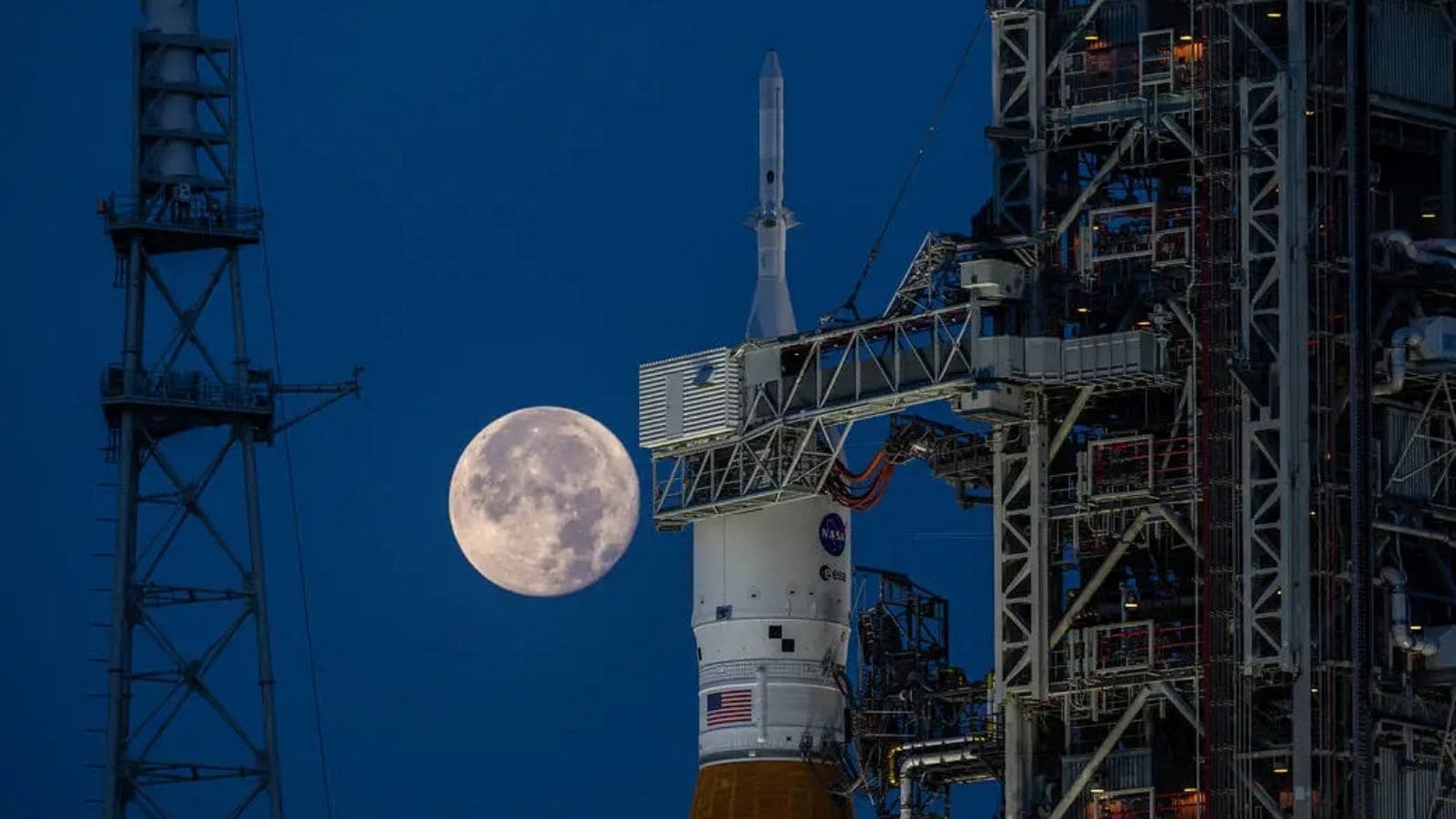
Final preparations are underway at the Kennedy Space Centre in Florida. Nasa plans to roll out the giant Space Launch System rocket along with the Orion crew spacecraft to Launch Pad 39B no earlier than January 17.
The fully assembled rocket stands taller than the Statue of Liberty, and even though the pad is only about four miles away, the slow and careful journey can take up to 12 hours, according to Live Science
In a statement issued on January 9, Lori Glaze, the acting assistant administrator for Nasa’s Exploration Systems Development Mission Directorate, said, “We are moving closer to Artemis II, with rollout just around the corner. We have important steps remaining on our path to launch, and crew safety will remain our top priority at every turn, as we near humanity’s return to the Moon.”
The Artemis II crew includes astronauts Reid Wiseman, Victor Glover, and Christina Koch, joined by Jeremy Hansen from the Canadian Space Agency. Together, they will make a return to space exploration as the first humans in the 21st century to travel outside of low Earth orbit since the Apollo missions.
Wet dress rehearsal this month
Teams will start many inspections as soon as the rocket arrives at the launch pad. The wet dress rehearsal, which is set to happen later this month, is one of the most significant inspections. NASA will practise the entire launch countdown and fully fuel the rocket with over 700,000 gallons of supercooled propellants during this test. Engineers will also practise draining the fuel and reviewing safety procedures, making sure everything works as expected.
Nasa officials have stressed that safety remains the top concern. Engineers have already been resolving technical issues, including work on ground systems that supply oxygen to the Orion spacecraft. If weather conditions or technical concerns arise, the agency is prepared to delay key steps rather than rush the process.
After the rehearsal, Nasa will hold a flight readiness review to decide whether the mission is cleared for launch. Only then will a final launch date be confirmed. For now, the launch window remains open from early February through April.

Comments are closed.