
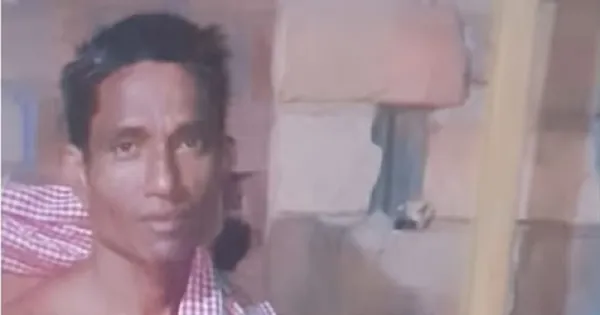

Shribhoomi. Shyambabu Sinha had been mourned and his last rites had been performed. But suddenly when Shyambabu Sinha knocked on the door of his house in Ratabari of Shribhoomi district, people were surprised. It is noteworthy that the coal miner who was killed in the dynamite blast that took place on February 5 at Thangku in East Jaintia Hills of Meghalaya was standing alive in front of his shocked relatives, although the relatives had performed his last rites.
After his return, officials are finding it difficult to trace whose body was handed over to Sinha’s family and whose last rites were performed in his name.
Shyambabu is one of over 30 workers who were trapped in the blast at the illegal coal mine, which continues almost a decade after the National Green Tribunal (NGT) banned rat-hole mining in Meghalaya in 2014. The latest death to be confirmed came days after the blast, when an injured worker died in a hospital in Guwahati.
There is an atmosphere of relief and celebration in the family and village due to the sudden return of Shyambabu Sinha, but it is also raising serious questions on the identity of the body which was cremated by Sinha’s family.
The incident took place in Lenterpar village under Ratabari police station in Sribhoomi district. It is believed that local resident Shyambabu Sinha died in the coal mine blast that took place in Meghalaya on February 5. Based on information received after the blast, his family identified one of the bodies as his and cremated him with full religious rituals.
According to family members, Sinha had gone to Meghalaya in search of work about a month ago. He worked as a laborer in a coal mine in Chutunga area of Thangskuk. On February 5, a massive explosion occurred in the mine, killing several workers and injuring many others. After this, Sinha went missing.
When there was no trace of him for several days, and based on inputs reportedly given by local sources and officials, the family assumed that he had died in the blast. One body was identified as that of Sinha and was cremated.
But, a dramatic twist came when Sinha reached back home while the post-cremation rituals were still going on. The villagers were initially shocked and could not believe what they were seeing. When it was confirmed that he was indeed alive, the atmosphere of disbelief turned into immense relief and happiness.
This incident has now raised a big question, whose last rites were performed in his place? There is increasing pressure on the administration to find out the real identity of the deceased and find out how such a huge mistake happened. Calls for a full investigation are growing as authorities seek to determine the circumstances behind the mistaken identity and identify the real victim of the blast.
Meghalaya Police has now formed a Special Investigation Team of 9 people which will investigate how the mine was running despite the long-standing ban. Meghalaya Director General of Police (DGP) Idashisha Nongrang announced the formation of the team in an official order, stressing the need for an “impartial, non-discriminatory and expeditious investigation into the circumstances of the incident”.
Deputy Inspector General Vivekananda S. Rathore will lead the team, which has been tasked with finding out the cause of the blast, identifying violations of court and tribunal directions and completing the investigation within a stipulated time. The order states that the SIT will ensure that the investigation is conducted on time so that the case can be taken to its logical conclusion and justice can be provided as per law.
The search and rescue operation ended on 9 February, when assessment teams concluded that no survivors were trapped underground.
Four arrests have been made in the case and authorities have seized several thousand metric tons of illegally extracted coal, removed labor camps and intensified raids in coal mining areas. Chief Minister Conrad K. Sangma has announced a judicial inquiry commission to determine responsibility for the accident.
The tribunal’s 2014 ban cited serious environmental damage and serious safety risks, including the lack of ventilation and structural safeguards that make rat-hole mining particularly dangerous. This blast has once again raised questions on the enforcement mechanism and the chain of permissions due to which the Thangku operation continued without any hindrance for years.

Comments are closed.