
Attacks on Iran intensify, threat of war in the Gulf, Israel-Iran conflict continues for the eighth day

- Explosions near Tehran airport, Israel starts new round of attacks
- Iran’s allegation – death of 1332 civilians, issue raised in United Nations
New Delhi/Tehran/United Nations. The growing military conflict between America, Israel and Iran has now reached a dangerous turn. The conflict entered its eighth day on Saturday, as Israel launched a new round of attacks on Iran. Meanwhile, explosions near a major commercial airport in Tehran have further increased tension in the entire region. This conflict, which started with an attack in Tehran on 28 February, is gradually taking the form of a wider regional conflict.
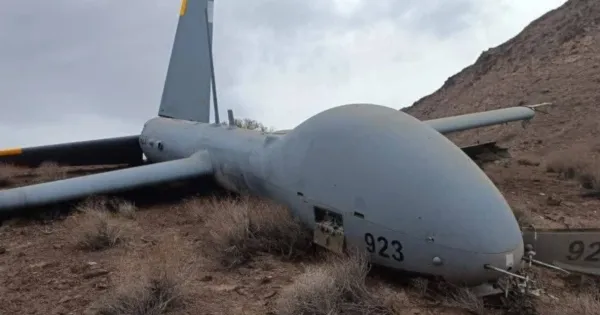
In the initial days, the conflict was mainly limited to air strikes and retaliatory actions, but now the situation has become more serious with incidents of drone and missile attacks in the Gulf region. US President Donald Trump has taken a tough stance regarding this crisis. He said that no agreement will be made with Iran until it surrenders unconditionally. Trump also indicated that after such a situation is created, Iran may have to move towards the election of a new leadership, which the US administration should accept.
On the other hand, Iranian President Masoud Pejeshkian has apologized for the attacks on neighboring countries and said that the security forces have been instructed not to attack any neighboring country in future. He also reacted to US President Donald Trump’s statement in which he said that Iran will have to surrender unconditionally. The President of Iran said that his country will never surrender.
Meanwhile, the effect of tension in the Gulf region is becoming visible in many countries.
Kuwait’s military said on Saturday that its air defense system had foiled several possible attacks. According to the military, 12 Iranian drones and 14 ballistic or cruise missiles were shot down in the air in several waves of attacks that began in the morning. The explosions during these interceptions were heard in many parts of the country, although officials said there was only minor property damage caused by falling debris from the missiles. On the other hand, the Israel Defense Forces (IDF) allowed residents of northern Israel to come out of bomb shelters for some time.
According to the Army, there was no direct threat to the northern region at that time from the ballistic missiles fired by Iran and warning sirens did not even sound. However, the army later issued a new alert for residents of Tel Aviv, large parts of central Israel and the West Bank. According to the army, another missile launch from Iran has been detected, adding to the already volatile regional situation and the possibility of further flare-up. The White House has said that the ongoing US military campaign against Iran is rapidly moving towards its goal.
White House Press Secretary Carolyn Levitt told reporters that the operation, named ‘Operation Epic Fury’, is progressing at a fast pace and its major goals can be accomplished in the next few weeks. Levitt said that President Trump has already made it clear that it may take about four to six weeks to achieve the goals of this military operation and the US military is moving rapidly in that direction. According to him, during this campaign, huge damage has been caused to Iran’s military capabilities, especially its navy. According to the White House, more than 30 ships and naval vessels of Iran have been destroyed so far, after which its navy is almost no longer in a position to fight a war.
On the other hand, Iran has made serious allegations against America and Israel. Iran’s Ambassador to the United Nations, Amir Saeed Iravani, said at least 1,332 Iranian civilians, including women and children, have been killed and thousands injured in airstrikes by the two countries. He said that more than 180 children have died and more than 20 schools have been damaged. The Iranian ambassador described these attacks as war crimes and crimes against humanity and said that Iran will continue to exercise its right to self-defense under Article 51 of the United Nations Charter.
He said Iran does not want war, but it will take every necessary step to protect its sovereignty and its people. Irawani has also appealed to the UN Security Council to immediately intervene and take clear steps to stop this conflict, as it is becoming a serious threat not only to regional but also to international peace and security.

Comments are closed.