
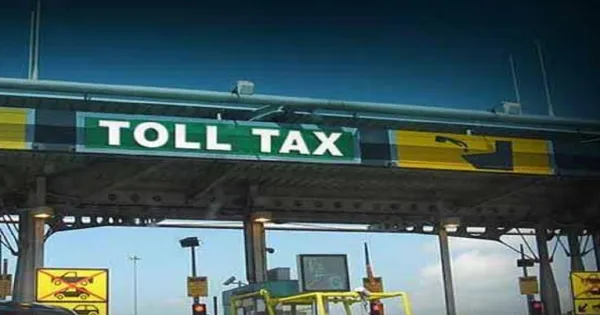

- Still no 40% reduction in toll
- Revenue loss worth crores due to negligence in Gujarat-Maharashtra
- Delay in payment affected toll collection system
New Delhi. The latest report of the Comptroller and Auditor General (CAG) has revealed serious irregularities regarding toll collection on national highways. According to the report, non-adherence to the rules laid down by the National Highway Authority (NHA) resulted in an additional burden of Rs 180.44 crore on road users.
In this report presented in the Parliament, it has been said that even after taking control of toll collection in projects where the concession period had ended, NHAI did not reduce the toll fee by the mandatory 40 percent. This provision is applicable under the National Highway Fee Rules, 2008. Due to its violation, more than the prescribed rate was collected from the common people.
The CAG audit report has also revealed that there was a lack of effective implementation of the guidelines of the Ministry of Road Transport and Highways and internal policies of NHAI. During a review of toll operations, particularly in Gujarat and Maharashtra, it was found that this negligence resulted in a loss of revenue of Rs 9.60 crore.
Another serious aspect also mentioned in the report was that NHAI suffered an additional toll revenue loss of Rs 9.68 crore due to delay in settlement of payment to a private company (concessionaire) involved in road construction and maintenance. This delay reflects administrative inefficiency and lack of coordination. The CAG in its findings also pointed out technical flaws in the toll operation system.
According to the report, transparency and efficiency in toll management was affected due to lack of a uniform system, data migration problems between different platforms and operational inefficiencies. This not only affected the revenue but also affected the interests of the consumers. The auditor has suggested that the Toll Management System (TMS) be standardized to improve coordination between different system integrators and address data issues. Besides, there is also a need to strictly enforce the rules and strengthen the monitoring mechanism.
This report has come out at a time when questions are being raised across the country regarding toll collection and its transparency. CAG’s observations have once again made it clear that lack of effective implementation of policies directly impacts the pockets of the general public. However, it is worth noting that the CAG report is an audit observation, which highlights the flaws in the functioning of the concerned departments.
It is the responsibility of the concerned ministries and agencies to take further corrective action based on these findings. Overall, this case not only indicates financial irregularities but also shows that if timely monitoring and corrective steps are not taken, such lapses will continue to impose economic burden on the public in future also.

Comments are closed.