
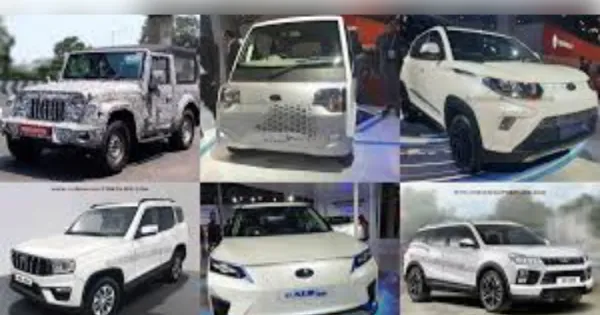

India-UK: The Free Trade Agreement (FTA) between India and Britain is expected to create new and big opportunities for Indian auto companies in the UK electric vehicle (EV) market. Companies like Tata Motors, Mahindra & Mahindra and Maruti Suzuki are assessing the possibilities of exporting electric vehicles to Britain under this agreement. The free trade agreement between the two countries is expected to double bilateral trade to $100 billion by 2030. This agreement will come into effect from July 15.
The agreement will be implemented for the auto sector from the sixth year.
According to the India-UK Comprehensive Economic and Trade Agreement (CETA), India will get the facility of tariff-free exports to the UK electric, hybrid and hydrogen passenger vehicles market in a phased manner. This arrangement will come into effect from the sixth year of the agreement and will operate under the prescribed quota system.
Opportunities will open in Britain for electric vehicles made in India
Tata Motors Passenger Vehicles described the agreement as an important step to strengthen trade relations between India and the UK and promote sustainable transportation. He said the phased and quota-based system would provide new export opportunities to the UK for electric vehicles made in India.
Mahindra & Mahindra Chairman Velusamy R. Said that this agreement can create new opportunities for electric vehicles made in India. He said the UK is a ‘right-hand-drive’ market and the company will study this opportunity as part of the global expansion of its electric SUV portfolio.
Maruti Suzuki’s Rahul Bharti said the company has already started exporting its electric SUV e-Vitara to Europe and Britain is one of its key markets. According to him, this agreement will prove to be a positive step towards ‘Make in India for the World’.
What is there in the agreement regarding export of vehicles
Under the agreement between India and Britain, Indian electric, hybrid and hydrogen passenger vehicles priced up to £ 80,000 will get tariff-free entry into Britain under the prescribed quota. A total of 17,600 vehicles will be allowed to be exported in the sixth year, while by the 15th year this quota will increase to 88,000 vehicles. However, electric, hybrid and hydrogen passenger vehicles manufactured in India worth more than £80,000 will not get any tariff concession under the FTA.
What did the experts say?
Experts believe that this agreement can play an important role in increasing the global competitiveness of the Indian auto industry as well as in including India among the major exporting countries of electric vehicles. According to the CETA document, from the 15th year of the agreement, the quota for tariff-free exports in the ‘less than 20,000 pounds’ and ‘20,000-40,000 pounds’ categories will be 34,000-34,000 vehicles annually, while for the ‘40,000-80,000 pounds’ category this limit has been capped at 20,000 vehicles annually.

Comments are closed.