
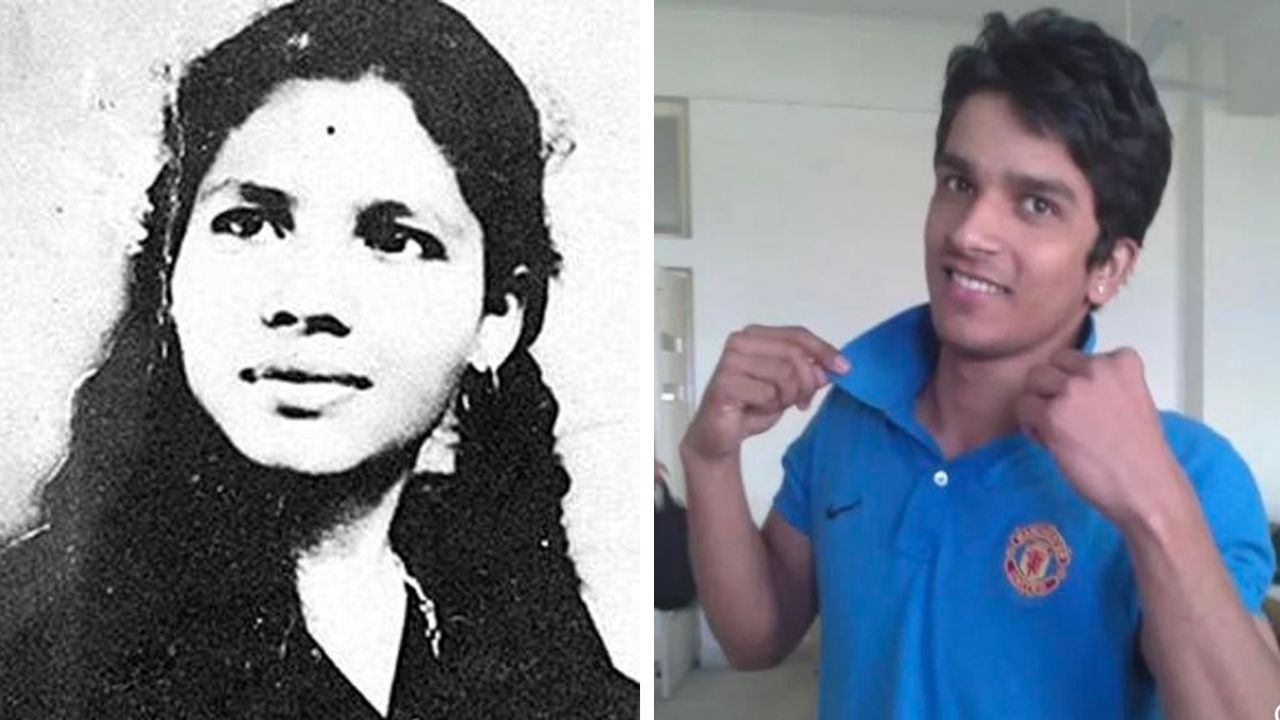

The debate that is being seen today in India regarding ‘Euthanasia’ i.e. Right to Die With Dignity, has its roots in a painful story. Story of Aruna Shanbaug. On March 11, 2026, the Supreme Court gave permission to Harish Rana for passive euthanasia and he died on March 24. But this decision did not come suddenly, rather there was a case behind it which changed the law of the country.
On one side was Harish Rana. In a coma for 13 years, whose family pleaded to free him from pain. On the other side was Aruna Shanbaug – remained in coma for 42 years, but the court did not allow death in her case. This contradiction makes it important to understand this story.
Who was Aruna Shanbaug and how did her life change?
The life of Aruna Shanbaug, who worked as a nurse at KEM Hospital in Mumbai, changed forever on the night of 27 November 1973. A ward boy of the same hospital attacked him and strangled him with an iron chain. Due to this attack, oxygen stopped reaching her brain and she went into Permanent Vegetative State (PVS). The body was alive, but consciousness was gone.
How did Aruna live like a ‘living corpse’ for 42 years?
Aruna Shanbaug remained lying on the hospital bed for the next 42 years. They were dependent on others for everything – food, water, cleanliness. The most surprising thing was that not his family, but the nurses of KEM Hospital took him as their responsibility and served him. This became an example of humanity.
Why did the demand for euthanasia arise and what happened in the court?
In 2009, journalist Pinky Virani filed a petition for euthanasia for Aruna in the Supreme Court. His argument was that Aruna has been in an unbearable situation for years and she should be freed. But the nurses of the hospital opposed this. He said, ‘Aruna is our own, we are taking care of her, no one has the right to kill her.’
What decision did the Supreme Court give?
On March 7, 2011, the Supreme Court rejected Aruna Shanbaug’s plea for euthanasia. The court accepted that he is not completely dead and he is getting care. But in this decision, Passive Euthanasia was given legal recognition for the first time in India. This means that life support of incurable patients can be removed. But for this, permission of the court and medical board will be necessary.
How did Aruna Shanbaug die?
Even after the 2011 verdict, Aruna survived for about 4 years. In 2015, he developed pneumonia and breathed his last on May 18. His last rites were also performed by the hospital staff. Which was a symbol of the fact that he did not fight the longest struggle of his life alone.
What was Harish Rana case?
Harish Rana went into coma after an accident in 2013. The family treated him for 13 years, but there was no improvement. Ultimately the family demanded euthanasia from the Supreme Court. The court gave permission on 11 March 2026 on the basis of the report of the medical board. After this, life support was gradually removed in AIIMS in a 10-day process and he died on March 24.
What is the real difference in the two cases?
Aruna Shanbaug case
This was a law making case. The court did not allow euthanasia. But Passive Euthanasia was made legal
Harish Rana case
This was the use of the same law. The court gave permission on medical grounds. Life support was removed and a ‘dignified death’ was given.

Comments are closed.