
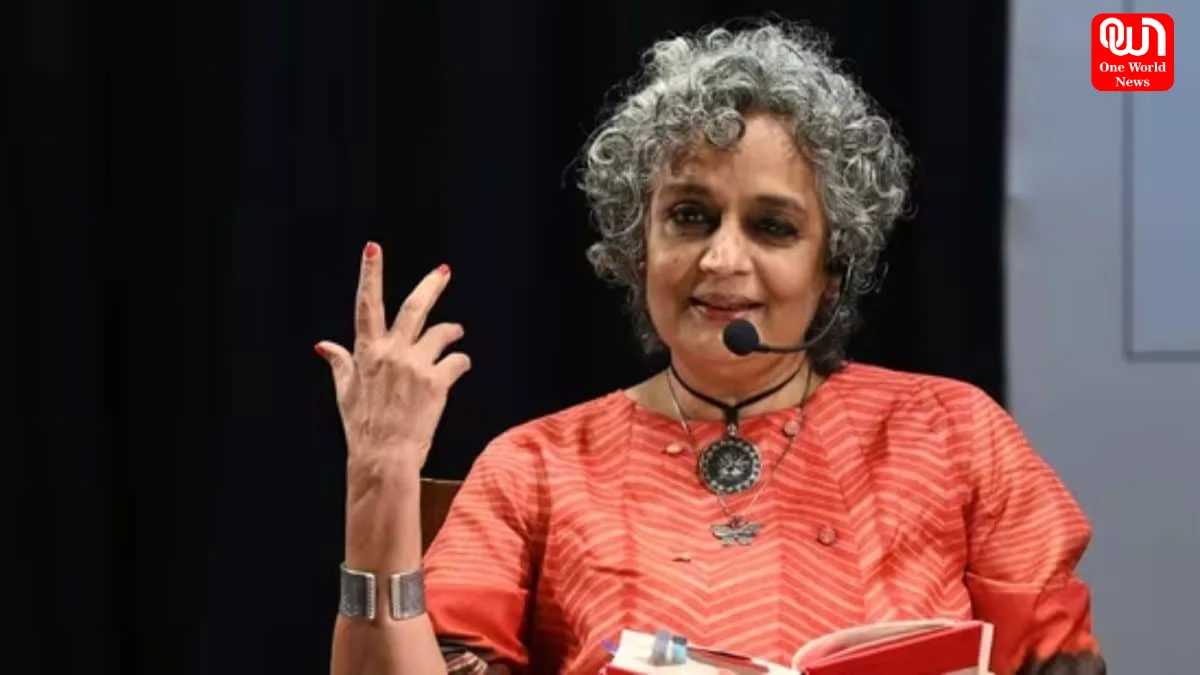
Arundhati Roy Boycotts Berlin Film Festival 2026, Says Silence on Gaza Will Be Judged by History

Arundhati Roy Boycotts Berlin Film Festival 2026 to Protest Silence on Gaza — Warns That Cultural Institutions and Global Voices Will Be Judged by History
Arundhati Roy Boycotts Berlin Film Festival 2026, making international headlines with a firm and uncompromising stance. The acclaimed author and political activist has refused to participate in the prestigious cultural event, stating that silence on Gaza is unacceptable. Her decision has sparked intense debate across literary, cinematic, and political circles worldwide.
Roy, known for her fearless commentary on global injustice, declared that history will judge those who remain silent during humanitarian crises. With this announcement, she has once again positioned herself at the intersection of art and activism.
Why Arundhati Roy Is Taking a Stand
Arundhati Roy Boycotts Berlin Film Festival 2026 as a protest against what she describes as the festival’s failure to take a clear moral position on Gaza. In her statement, she emphasized that cultural platforms are not neutral spaces detached from global realities. Instead, they shape narratives, amplify voices, and influence public discourse.
Read more: Mumbai Musical Road: India’s First Singing Highway Explained
According to Roy, remaining silent during a humanitarian crisis sends a message — and that message, she argues, aligns with indifference. Her words have resonated strongly among activists who believe art must reflect moral courage.
The Berlin Film Festival and Global Cultural Responsibility
The Berlin Film Festival, often referred to as the Berlinale, is one of the world’s most respected film festivals. It is known for showcasing diverse voices and socially relevant cinema. However, Arundhati Roy Boycotts Berlin Film Festival 2026 to highlight what she perceives as a gap between artistic celebration and ethical accountability.
Her stance raises an important question: Should international cultural institutions publicly address global conflicts? While some believe festivals should remain focused solely on art, others argue that art itself is inherently political. Roy firmly belongs to the latter view.
Silence, Complicity, and Historical Judgment
A key part of Roy’s message is her warning that “silence on Gaza will be judged by history.” This statement underscores her belief that neutrality in times of crisis amounts to complicity. Throughout her career, Roy has spoken against war, displacement, and systemic injustice, consistently urging institutions and individuals to examine their moral positions.
By choosing to boycott rather than attend, she transforms absence into protest. Arundhati Roy Boycotts Berlin Film Festival 2026 not merely as a symbolic gesture, but as a call to conscience for the global artistic community.
Reactions to the Boycott
The announcement has drawn mixed reactions. Supporters praise her courage and consistency, calling her decision principled and necessary. Critics argue that film festivals should remain platforms for open dialogue rather than political declarations.
Regardless of opinion, Arundhati Roy Boycotts Berlin Film Festival 2026 has ensured that discussions about cultural responsibility and global ethics remain at the forefront. Her action has reignited debate over whether art can ever truly be separated from politics.
Read more: Air India Flight 171 crash: Italian Report Says Fuel Switch Shutdown ‘Almost Certainly’ Intentional
A Continuing Legacy of Activism
Arundhati Roy’s legacy extends far beyond literature. From her Booker Prize-winning novel The God of Small Things to her outspoken political essays, she has consistently challenged authority and questioned dominant power structures. Her decision regarding the Berlin Film Festival 2026 is part of a broader pattern of activism rooted in moral conviction.
Arundhati Roy Boycotts Berlin Film Festival 2026 as a reminder that influence carries responsibility. Her message is clear — cultural silence in moments of crisis is not neutrality, but a choice that history will remember.
As global audiences reflect on her words, one thing is certain: the intersection of art, activism, and accountability has once again taken center stage.

Comments are closed.