
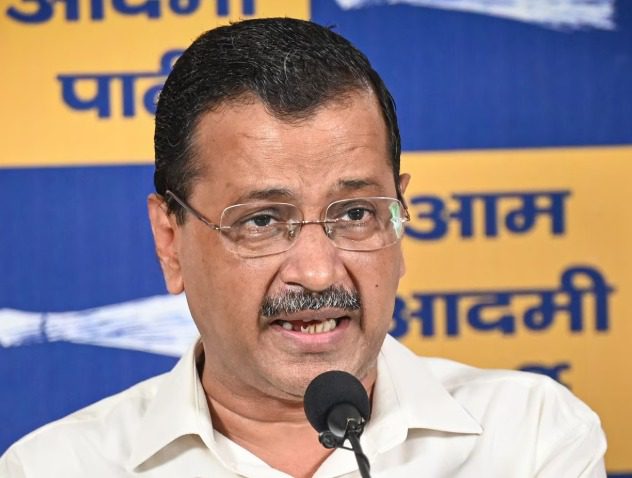
Arvind Kejriwal’s big step in the excise case, recusal petition against the judge in the High Court; I will debate myself

The stir has once again intensified in the political and legal circles of Delhi. Aam Aadmi Party (AAP) chief and former chief minister Arvind Kejriwal Taking a big step in the Excise Policy case, has filed a petition for recusal (separation from the case) against the judge in the Delhi High Court. The special thing is that Kejriwal himself has decided to represent himself in the court in this matter.
The matter came into limelight when the Delhi High Court had earlier on March 16 given additional time to Kejriwal and other accused to file their reply to the appeal of the Central Bureau of Investigation (CBI). The court had fixed the next hearing of this case on April 6.
Actually, CBI has challenged the decision of the trial court, in which Arvind Kejriwal Including 22 other accused were acquitted in the excise policy case. The trial court had said in its decision that CBI does not have any concrete evidence which can prove the allegations even prima facie.
Now in this case, Kejriwal has filed a recusal petition before Delhi High Court judge Justice Swarn Kanta Sharma. In the petition, he has expressed the apprehension that he may not get a fair trial. Even before this, Kejriwal and other accused had demanded to transfer the case to another bench, which was rejected by the Chief Justice of the High Court.
According to AAP’s statement, Kejriwal himself will present his views in the court on Monday and will argue the case. This step is also considered important because usually senior lawyers advocate in such cases, but Kejriwal himself has decided to come forward.
Meanwhile, Bharatiya Janata Party (BJP) has reacted sharply to this entire incident. Delhi BJP spokesperson Praveen Shankar Kapoor said that Kejriwal’s move shows lack of respect for the judiciary. He raised the question that when the transfer petition was rejected, is it a matter of respect for the judicial process to demand recusal from the judge himself?
If we look at the background of this case, on February 27, the trial court in a detailed order directed Kejriwal, Manish Sisodia And while giving relief to other accused, it was said that the investigating agency does not have enough evidence. The court had even said that the investigating officer framed charges without any solid basis, which could be considered as an abuse of his rights.
The CBI then filed an appeal in the High Court, saying that the trial court’s decision was “wrong” and based on “ignoring evidence”. The agency claimed that it has collected evidence such as numerous documents, statements of witnesses, emails and WhatsApp chats, which cannot be ignored.
While issuing notice on CBI’s appeal in the March 9 hearing, the High Court judge had termed the trial court’s order as “prima facie flawed” and had also imposed a temporary stay on it. Also, instructions were given to postpone the hearing of the ED case related to money laundering for the time being.
Now Kejriwal’s recusal petition and decision to represent himself has made this case more sensitive. This matter has become very important from both political and legal point of view, because it can have an impact on Delhi and national politics in the future.
At present, all eyes are on the hearing on April 6, where it will be decided what stand the court takes on this recusal petition and in which direction the case moves forward.

Comments are closed.