

Ather Confirms Its Next Electric Scooter Will Be Cheaper, But Do Not Expect A Sub Rs 1 Lakh Price

Ather Energy is planning to expand its electric scooter line-up with a more affordable offering, but buyers hoping for a budget friendly city commuter are going to be disappointed. The company has officially drawn a line in the sand regarding its pricing strategy.
According to Ravneet Phokela, Chief Business Officer at Ather Energy, while upcoming models will be positioned below their current premium range, the brand will absolutely not introduce any product priced under the Rs 1 lakh mark.
For a manufacturer that has always operated at the higher end of the electric two-wheeler space, this decision is a clear refusal to participate in the aggressive price wars currently playing out in the entry level segment.
The logic behind staying out of the lowest price bracket is rooted in recent market data. Several electric vehicle manufacturers previously operated under the assumption that drastically lowering prices would trigger a massive explosion in sales volume.
Phokela noted that this hypothesis has effectively been shattered. When competitors dropped prices to as low as Rs 70,000 or Rs 80,000, the market continued to grow organically, but it did not witness the exponential boom that many predicted.
This indicates that while buyers appreciate a good deal, a low sticker price alone is not enough to force a massive shift from petrol to electric. Consumers are showing a willingness to pay more for a product they perceive as reliable, well-engineered, and backed by a solid charging network.
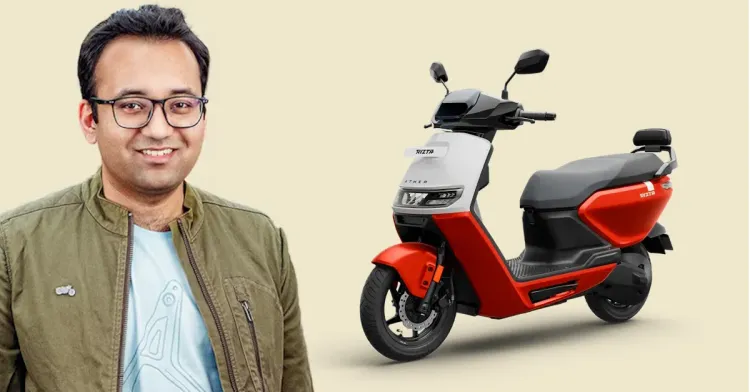
Ather’s recent sales performance supports this higher pricing strategy. The company’s family oriented scooter, the Rizta, has been a major volume driver since its retail launch.
Despite carrying a starting ex showroom price of around Rs 1.10 lakh and stretching up to Rs 1.49 lakh for the larger battery variants, the Rizta recently crossed the one lakh sales milestone in less than a year.
The Rizta is offered with two battery choices, a 2.9 kWh pack and a 3.7 kWh pack, delivering enough range for daily urban duties. This model accounts for a significant chunk of total monthly volume, proving that families will spend over Rs 1 lakh if the scooter offers practical space, a wide seat, and usable real-world range. By refusing to strip down their engineering just to meet a psychological price barrier, the company has managed to protect its brand image while capturing a larger share of the commuter market.
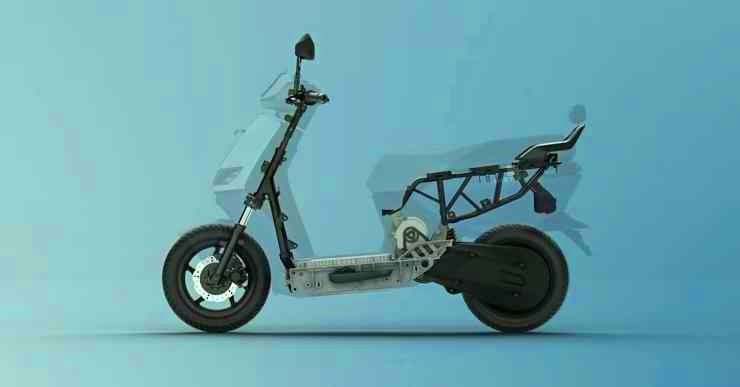
Since Ather is still promising a more affordable scooter without breaking the Rs 1 lakh floor, buyers can expect a carefully calculated product. The upcoming model will likely sit just above the Rs 1 lakh threshold, acting as the new entry point into the line-up.
To achieve this cost reduction, the company might utilise a smaller battery pack, a basic digital display instead of the full colour touchscreen, and fewer smart connectivity features.
However, the core mechanical components, such as the chassis, suspension, and overall build quality, are expected to remain intact. This approach allows the brand to offer a slightly cheaper alternative without compromising on safety or basic riding dynamics.
It also keeps them fundamentally separated from aggressively priced entry level rivals like the base variants of the Ola S1 X series, reinforcing their position as a premium player in a rapidly crowding electric vehicle space.
Comments are closed.