
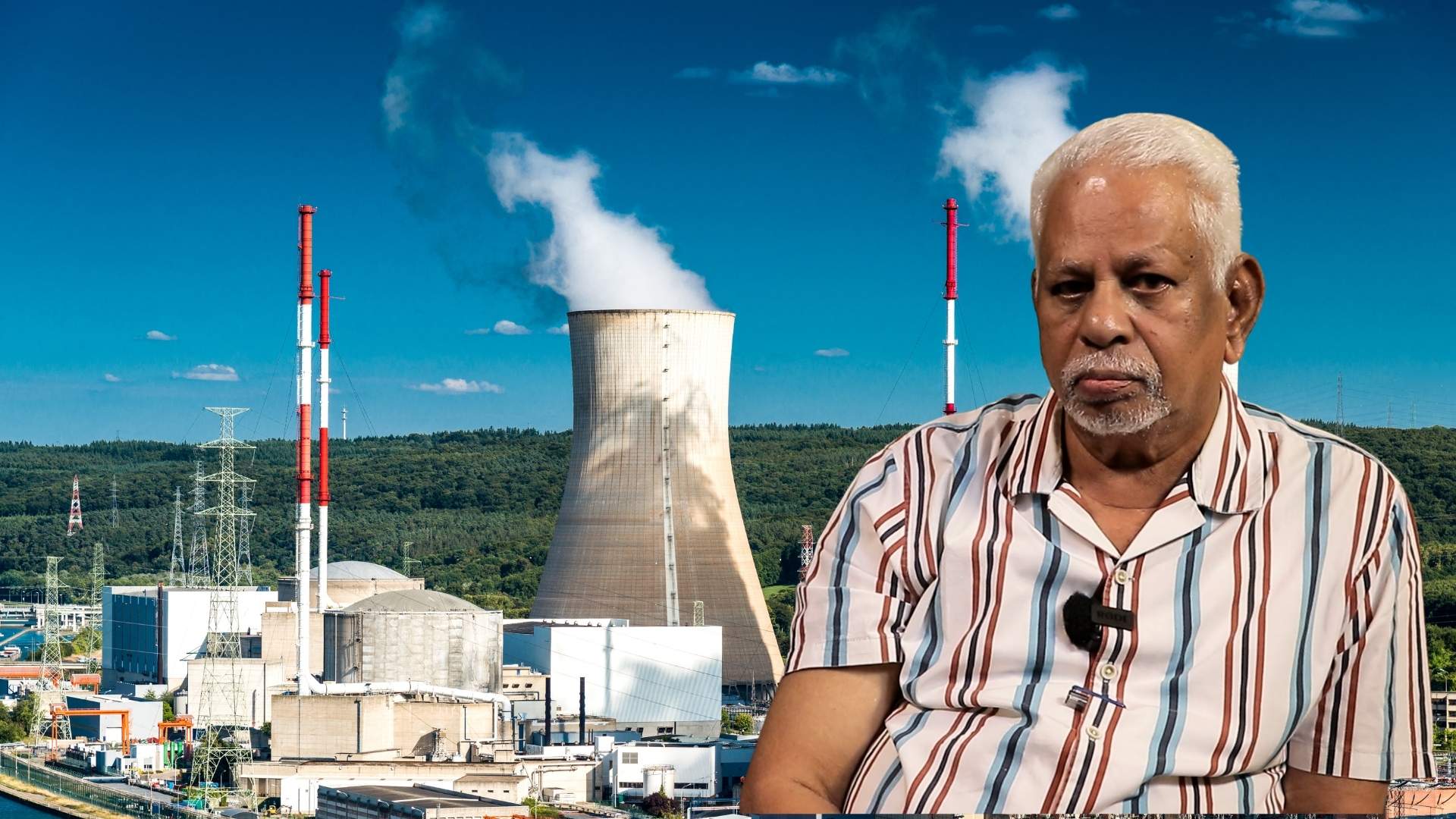

India is preparing for a major policy shift as the Atomic Energy Bill 2025 moves to allow private participation in nuclear power generation for the first time. The Federal spoke to TR Govindarajan, former Dean of the Homi Bhabha National Institute, to understand the implications of opening the sector, the technological and safety challenges, and whether India is ready for this transition in its nuclear programme. This interview appears as part of The Federal’s “Capital Beat” series.
The government says private participation is essential because the Nuclear Power Corporation of India alone cannot achieve the target of producing 100 GW by 2047. Is this projection realistic?
The projection of 100 GW is more of a vision than an achievable target. Even with private players, I do not think we will reach that figure. India has made similar projections before – like the one in 1985 that promised 10 GW by the year 2000 – but even today, in 2025, we are only at around 7 GW.
Also Read: Atomic Energy Bill: What it means to allow private firms into India’s nuclear sector
So, while the intention is good, the cost of building 100 GW of nuclear capacity is enormous. Today, 1 GW costs about Rs 40,000–50,000 crore. That means 100 GW would require around Rs 50 lakh crore. We should view this target with caution.
How much nuclear energy does India generate now, and how does it compare to other sources of electricity?
India is still heavily dependent on coal-based thermal plants, which provide around 70–75 per cent of our electricity. Hydroelectric and oil-based power contribute about 10 per cent. Nuclear energy currently accounts for only 4–5 per cent.
Earlier, it was even lower – around 1–2 per cent in 2000. One reason is that India’s nuclear programme was deeply affected by sanctions following the 1974 and 1998 nuclear tests. These limited access to uranium and international collaborations, slowing our capacity addition.
The Atomic Energy Act, 1962 bars private ownership due to security and proliferation risks. If private companies start building and operating reactors, what new risks emerge? Why is the government allowing this shift now?
The 1962 Act was designed to ensure all nuclear activities remained in the public sector, given national security concerns. For decades, India imported reactor technology only through government-to-government agreements. Even Tarapur, built by General Electric, operated under US government authorisation.
Also Read: India’s nuclear energy push: Will it be high on promises but low in delivery?
Today, the government is separating research activities – still under the Department of Atomic Energy – from power generation, which sits with Nuclear Power Corporation of India Limited (NPCIL).
Private involvement will still require collaboration with NPCIL because private firms lack manpower, experience, and technology. However, the private sector expects quick returns – within 7–8 years – which is unrealistic in nuclear energy. This could push companies to cut corners, especially on safety, which is a major concern.
India has limited uranium reserves. Should private companies be allowed to participate in uranium mining, importing and processing? Would this expose a strategic resource to foreign influence?
India’s uranium reserves are indeed small – mainly in Jaduguda (Jharkhand), with some in Meghalaya and Andhra Pradesh. This caused serious shortages earlier.
However, post–123 Agreement, uranium imports are no longer restricted. Countries like Australia and Kazakhstan are willing to sell to India. As long as India does not conduct further nuclear tests, there will be no barriers to imports.
So, uranium availability is not a concern today, and private participation in mining is unnecessary. The real question is whether India has the money to import, not whether uranium is available.
What is the current status of India’s reactor technology, including the three-stage programme using thorium?
India has about 22 reactors and nearly 8 GW capacity. Technology has improved significantly – from the early 235 MW reactors at Kalpakkam to the newer 700 MW reactors operating well in Gujarat.
Thorium-based reactors remain the long-term goal because India has abundant thorium along the Kerala and Tamil Nadu coasts. But the fast breeder reactor, which is essential for the second stage of the programme, has been repeatedly delayed.
Also Read: Oliver Stone’s Nuclear Now: How nuke energy could help cool a warming planet
For over 10 years, the Department of Atomic Energy has been announcing that it will go critical “next year”. Even last year, when the Prime Minister visited Kalpakkam and symbolically loaded fuel, the Atomic Energy Regulatory Board had not yet cleared the operation.
Until we demonstrate a functioning breeder reactor, the three-stage programme cannot progress.
The new Atomic Energy Bill promotes small modular reactors (SMRs) and next-generation technologies through private R&D. Is India technologically ready?
Globally, SMRs are advancing rapidly, with operational units in Russia and China, and commercial models being developed in the US.
India claims to have several SMR designs, but we have not yet demonstrated even one. Demonstration is crucial because SMRs must be inherently safe – nobody is expected to operate them directly once installed.
Also Read: Budget: Modified UDAN scheme, ₹20K cr nuclear energy mission launched
If NPCIL can successfully demonstrate an SMR, it will be a major milestone. Until then, it is premature to say India is ready for large-scale SMR deployment.
As private players enter the sector, is India prepared to manage safety and regulatory oversight?
India does have a regulatory authority – the Atomic Energy Regulatory Board (AERB) – which monitors even NPCIL plants. Private reactors, if allowed, will also fall under AERB’s jurisdiction.
But regulation must be strong and independent. Private operators may look to reduce costs, and safety cannot be compromised. This requires robust systems, regular inspections, and refusal to dilute safety standards under any circumstances.
Under the Civil Liability for Nuclear Damage Act (CLND), Section 17(b) gives the operator the right to sue suppliers in case of an accident. Will this discourage private investment?
This is one of the most contentious issues.
The CLND law was created after the India–US nuclear agreement, with political pressure from both the BJP and the Left to ensure liability was not diluted.
Today, compensation is capped at 300 Special Drawing Rights – around Rs 2,500 crore. This is too low, considering a single 1 GW reactor costs Rs 50,000 crore.
Also Read: Goodbye nuclear power! Germany shuts down its last atomic energy plants
The liability should be revised upward, not removed. Ideally, compensation should be around 7 per cent of the reactor cost.
Operators – whether NPCIL or private companies – can insure themselves, but insurance premiums will be high. This is why many foreign companies have hesitated to enter India’s market.
(The content above has been transcribed from video using a fine-tuned AI model. To ensure accuracy, quality, and editorial integrity, we employ a Human-In-The-Loop (HITL) process. While AI assists in creating the initial draft, our experienced editorial team carefully reviews, edits, and refines the content before publication. At The Federal, we combine the efficiency of AI with the expertise of human editors to deliver reliable and insightful journalism.)

Comments are closed.