
Attention Wanting to look ‘young’, his liver might get damaged, 42 year old man took himself to hospital due to social media obsession – ..

In today’s time, there is a flood of health related remedies on social media, but trying them without medical advice can prove fatal. One such shocking case has come to light from Indraprastha Apollo Hospital in Delhi. Dr. Chatterjee, Senior Consultant, Department of Internal Medicine of the hospital, has narrated a case of overdose of Vitamin B3 (Niacin), which left a healthy person on the verge of death.
Case study: Liver starts getting damaged due to ‘anti-aging’
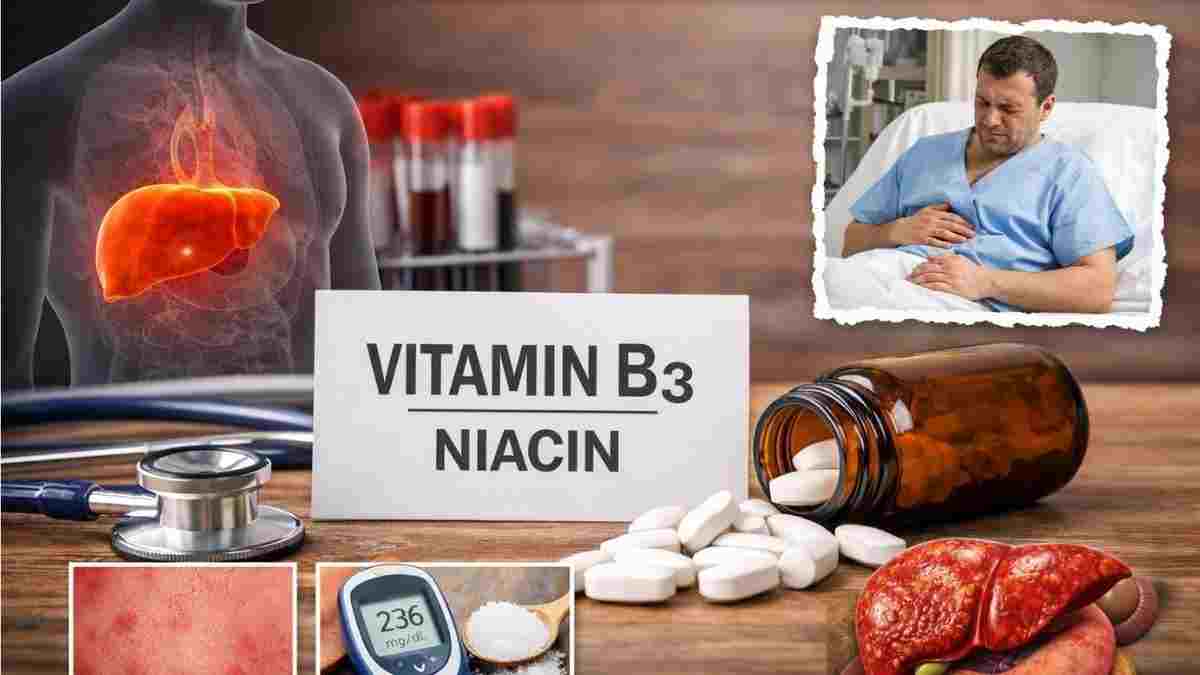
The case is of a 42-year-old man, who read on the internet that Vitamin B3 (Niacin) helps in reducing cholesterol and gaining longevity. Due to his greed for this ‘magic pill’, he started taking high doses of it without consulting any doctor. Within just two weeks his condition deteriorated so much that he had to be rushed to the hospital. She was experiencing skin rashes, unbearable itching, nausea, stomach pain and extreme fatigue. Tests revealed that his liver enzymes and blood sugar levels were dangerously high and he was on the verge of liver failure.
What is Vitamin B3 and its role in the body?
Vitamin B3 is a water-soluble vitamin, which is very important for the body. It helps in converting food into energy, repairing DNA of cells and keeping the nervous system healthy. It is the basis of a molecule called NAD+ in the body, which gives strength to keep cells young and fight stress.
Truth or Myth: Does Niacin Really Prevent Aging?
These days, niacin is being heavily promoted as an ‘anti-aging’ supplement. Although there have been some positive indications in research conducted on animals, there is no concrete evidence on humans that these supplements can increase lifespan. According to Dr. Chatterjee, aging is a complex process that cannot be stopped with just one pill. Taking it without need can act as ‘poison’ instead of ‘nectar’.
Horrible side effects of overdose
The daily requirement of Vitamin B3 is only 14-16 milligrams (mg), whereas the supplements available in the market contain 500 to 3000 mg. Consuming such large quantities may have the following risks:
Liver Toxicity: If taken in excessive amounts, the liver is unable to process it and gets damaged.
Skin flushing: Redness of the skin and severe itching.
Metabolic risk: sudden increase in blood sugar and insulin resistance.
Danger to the heart: According to some research, its excessive consumption can cause swelling in the heart veins.
Who needs supplements?
Doctors believe that 90% of people who eat a balanced diet do not need any additional supplements. Its deficiency is easily compensated by peanuts, whole grains, meat, fish and dairy products. Take supplements only if your doctor has prescribed them for a specific disease (such as pellagra).

Comments are closed.