
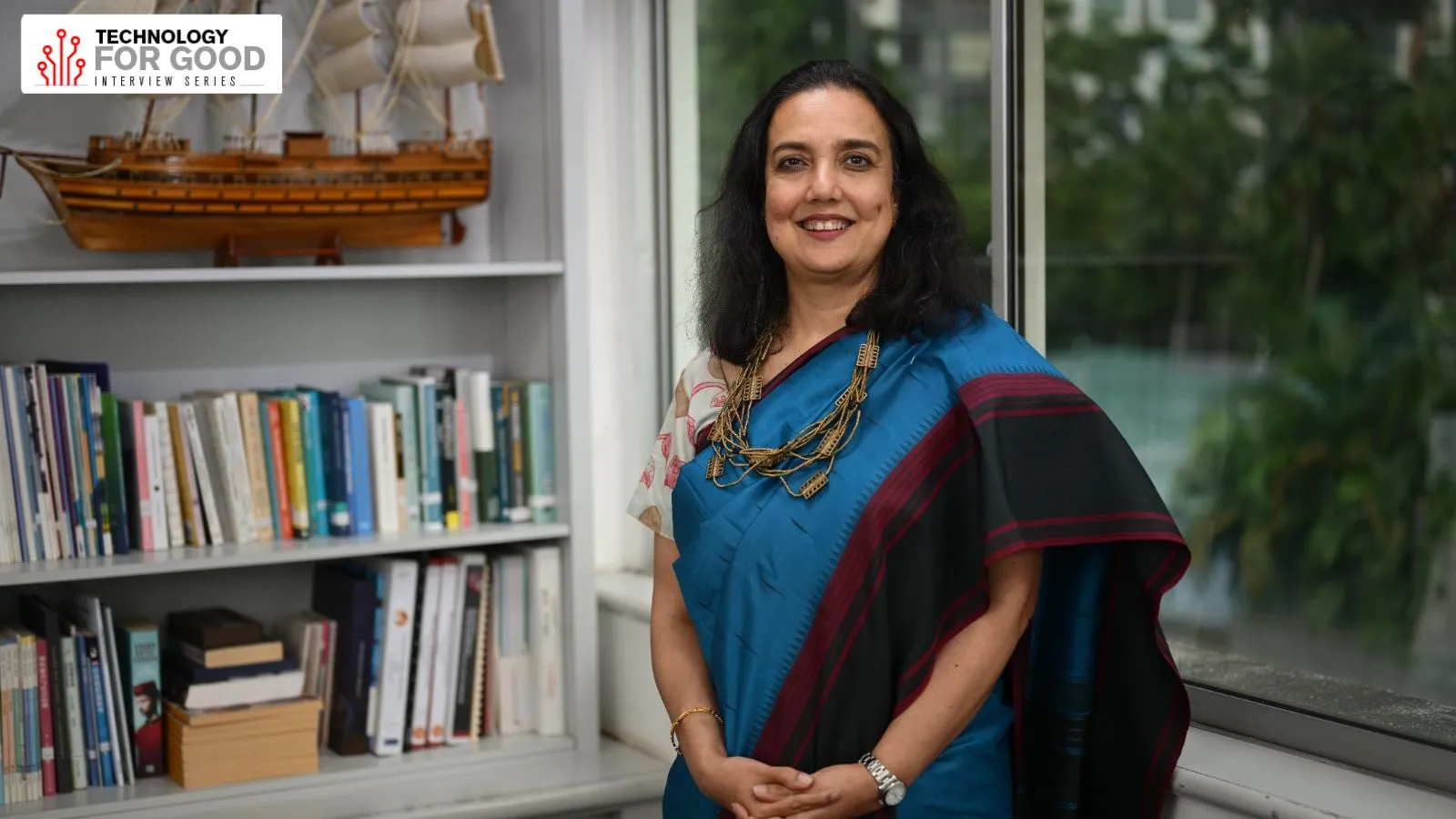

Naina Subberwal Batra is the Chief Executive Officer of AVPN, Asia’s largest network of social investors, which works to increase the flow of capital towards impact initiatives in Asia.
Headquartered in Singapore, AVPN (formerly the Asian Venture Philanthropy Network) is a network of 700 member organisations, including foundations, corporates, family offices, government-linked institutions, venture funds, and intermediaries. It has grown from focusing primarily on venture philanthropy to supporting the entire ecosystem of social investors, from catalytic philanthropists to impact investors and corporate CSR professionals.
Naina has led the organisation since 2013 and has served on the boards of several philanthropic and impact-focused organisations.
She is currently a Board Director at the Blue Earth Foundation and a Board Member of the Menzies Foundation and Blue Planet Environmental Solution Pte Ltd.
She holds a bachelor’s degree from Mount Holyoke College and a master’s degree from Cornell University.
In a conversation with indianexpress.com, Naina spoke about the journey and impact of AVPN, where tech sits in their impact perspective, the programmes that remain underfunded, and AVPN’s innovations that are using tech to create impact. Edited excerpts:
Venkatesh Kannaiah: Tell us about AVPN and its role in the grant-making/impact investing ecosystem?
Naina Subberwal Batra: When AVPN was founded in 2012, much of the thinking around institutional philanthropy and impact investing came from Western models.
Philanthropy has always existed across generations in Asia, but we haven’t had the same kinds of institutions that exist in the West. As a result, many of the prevailing approaches did not fully reflect Asia’s realities, whether that’s the region’s diversity, the different stages of development across countries, or the way capital actually moves across Asia.
Today, AVPN is the largest network of social investors in Asia with more than 700 member organisations across 43 markets and countries, including around 130 organisations based in India.
Some of our members are organisations such as Reliance Foundation, Google.org, Temasek Trust, Rockefeller Foundation, Gates Foundation and Adani Foundation.
We focus on areas such as climate, gender, health, and increasingly AI.
Our role is to deploy capital in a coordinated and measurable manner. We establish single-donor funds and pooled funds, support pipeline development, build capacity, and convene stakeholders.
Venkatesh Kannaiah: Give us some idea of your reach and impact.
Naina Subberwal Batra: AVPN has aggregated more than US$200 million over the last four years in philanthropic funding through grant-making.
We are a fund-channelling organisation, and we do not directly implement programmes. Instead, we work with local organisations on the ground, which we appoint as our implementation partners.
The key difference between the grants we support and many others is that our focus has largely been on organisational strengthening.
The grants we provide are designed to build institutional capacity rather than support only specific programmes. India is one of AVPN’s most active and strategically important markets.
For instance, with the AI Opportunity Fund, we are focused on building skills in the use of AI with a focus on workers in MSMEs and SMEs in Asia. It is a US$35 million-plus programme supported by Google.org. To date, it has reached more than 500,000 workers in MSMEs and SMEs, with 365,000 from India alone and 20,000 small businesses across Asia-Pacific. Many of these beneficiaries are women, rural workers, and first-time technology users.
Venkatesh Kannaiah: Where does tech sit in your impact perspective? Tell us about some of your programmes from a Tech for Good perspective.
Naina Subberwal Batra: The issues we are trying to solve are complex, but also interconnected. So we need solutions that are innovative, scalable, and, importantly, data-driven.
For us, tech improves how we design interventions, measure outcomes, and connect capital to impact more effectively. Rather than looking at how many projects are technology-centric, we focus on how technology can strengthen outcomes across our priority areas.
For example, our APAC Sustainability Seed Fund supports organisations that are using tech to address climate challenges across Asia. We then took this a step further by launching the APAC Sustainability Solutions Lab, which, in addition to providing grant funding, offers technical capacity-building support to grantees to help them scale their solutions through technology.
Our Impact Platform, supported by the Monetary Authority of Singapore, uses tech to verify and conduct due diligence on more than 1,000 impact organisations. This allows us to connect them with capital providers through private banks, financial advisers and asset managers so that funding can be deployed more effectively.
We are also exploring how AI can accelerate impact, both by making programmes more efficient and by reducing the administrative burden that non-profits face today. Whether it is reporting to funders or monitoring and evaluation, we are asking how AI can help make these processes more efficient.
I would say technology runs through much of what we do, but we also have programmes that are explicitly technology-centred.
Our AI Opportunity Fund is a good example. It focuses on AI skilling and is, at approximately US$35 million, one of our largest funds
We also have the Social Impact Action in Asia Dashboard, which allows users to compare, in real time, how our members are deploying capital and where those investments are being made. The platform is built using AI and other technologies, and helps identify potential partners for collaboration.
We have also launched the Lighthouse Fund, which focuses on the intersection of climate and health. It examines how rising temperatures and heat stress affect health outcomes and seeks innovative solutions to address these challenges. We are using technology for diagnosis, data collection, and community health delivery, particularly in hard-to-reach areas.
This year, we launched the AI for Good Fellowship as part of our academy. While much of today’s AI training focuses on tools and technical skills, this programme is designed for leaders who need to make informed decisions about when, where, and whether AI should be adopted within their organisations.
Venkatesh Kannaiah: How is tech being used to quantify impact on the ground?
Naina Subberwal Batra: The APAC Sustainability Seed Fund, through which we support technology-driven solutions addressing climate challenges across Asia-Pacific, has supported 21 non-profits across the region.
One of the grantees, the Gujarat Mahila Housing SEWA Trust in India, uses an AI-enabled model to map areas in their towns and predict flood risks. It combines geospatial data with climate data and local community data to identify vulnerable areas, support early interventions, and generate evidence on the effectiveness of resilience measures.
The model has now served as an archetype for more than 310 fast-urbanising small towns across India in terms of predicting flood risks.
If you look at our SIAA Dashboard, it uses data and technology to pull together information on who has invested where, what impact has been achieved, and, where reports are publicly available, the associated monitoring and evaluation findings. This allows users to see whether a particular intervention has been successful before embarking on a similar initiative that may already have been tried elsewhere.
We need more publicly available data from grant-makers. Everybody asks grantee organisations for monitoring and evaluation reports, but those reports are not necessarily made public.
If more of that information were publicly available, it would be much more useful for funders. Before trying something new, they could see whether a similar approach has worked in the past and what factors contributed to its success or otherwise.
That’s where AI can be particularly helpful. It can collate and analyse large volumes of data in a very short period of time, enabling better-informed decisions.
Venkatesh Kannaiah: Tell us about impactful rural/local innovations which caught your eye.
Naina Subberwal Batra: In many of India’s informal settlements, we see poor housing conditions, with tin roofs that expose residents, particularly women, to significant heat stress. One of our grantees is tackling this challenge through a programme called HeatWise Women, which combines AI-powered heat mapping with community-led action to identify and support high-risk households.
They have also analysed more than 1,500 heat illness cases to better understand the underlying vulnerabilities and stress factors, while using those insights to train self-help groups and strengthen community resilience.
One of our grantees has developed a heat-repellent paint that can be applied to surfaces, providing insulation and reducing the direct conduction of heat into homes. It is important to move beyond mapping and actually focus on solutions.
Another example is Sambodhi, one of our grantees. They have developed a WhatsApp-based chatbot called SehejAI for grassroots workers. It provides interactive, multilingual support and helps users leverage technology in their day-to-day work.
Whether it’s supporting a small business, helping draft a letter, translating content into local languages, or identifying relevant government schemes and programmes, SehejAI helps make information more accessible.
Villgro has developed a carbon-credit initiative in Punjab in partnership with an agritech startup called Cultyvate. The initiative helps farmers in Punjab and Kerala adopt the Alternate Wetting and Drying (AWD) technology by covering the upfront cost of AWD sensors.
These sensors are connected to a centralised platform that alerts farmers when indicators exceed optimal thresholds, whether related to soil moisture, energy consumption, or pesticide usage. Based on this real-time data, farmers can make more informed decisions and adjust their irrigation practices or input use accordingly.
The challenge is that many organisations want to support initiatives that they themselves have created, rather than looking across the ecosystem and backing solutions that already exist and have proven potential.
Venkatesh Kannaiah: What are the promising social impact applications of AI that you see in Asia?
Naina Subberwal Batra: The applications with the greatest impact potential are often not the most visible ones. There’s a lot of conversation around large language models and enterprise AI, but where AVPN is seeing AI make a real difference is in learning, livelihoods, and small-enterprise productivity at the community level.
What we have seen is that AI can be particularly powerful in education, especially for teachers. It’s not just about students becoming familiar with AI-enabled learning. When educators and teachers learn how to use AI tools effectively, they can transform the classroom experience, tailor learning more effectively to individual students, and improve outcomes for the entire class. That multiplier effect is what has attracted us to the education focus that we are now incorporating into the AI Opportunity Fund.
Another area where we are seeing impact is among small businesses that are adopting AI to improve productivity, customer outreach, and decision-making. The challenge is that many of the available AI tools are designed for well-resourced, English-speaking, digitally connected users.
Through the AI Opportunity Fund, we have been working with intermediary organisations that can translate, adapt, and contextualise these tools for local businesses. That kind of work is critical, but it is not funded nearly as much as it should be.
One example is the work of the ASEAN Foundation. Given the diversity of languages across Southeast Asia, they have created a publicly available resource platform where information can be translated immediately into different languages. Users can access resources and undertake training courses in their own languages.
Venkatesh Kannaiah: Which tech theme/sector with social impact potential do you think is currently underfunded?
Naina Subberwal Batra: Climate adaptation technology, particularly at the intersection of climate and health, is an area that I think deserves much greater attention.
You see a lot of capital flowing towards renewable energy and electric mobility, but not as much towards technologies that help communities respond to the climate impacts they are already experiencing.
Issues such as extreme heat, flooding, air pollution, vector-borne diseases, and growing food and water insecurity are increasing. These are not just climate issues; they are public health issues. We need more funding directed towards solutions that address them.
Venkatesh Kannaiah: Tell us about the impact of the investment ecosystem in India, and what needs to change?
Naina Subberwal Batra: I think India has a strong foundation. It probably has one of the most robust civil societies among Asian countries. Mandatory CSR has unlocked significant capital, and we have also seen innovations such as development impact bonds, social impact bonds, and now the Social Stock Exchange.
India’s billionaire population is also growing, and with that, we are seeing an increase in private philanthropy, which is projected to exceed US$16 billion, according to the Bain India Philanthropy Report.
CSR, philanthropy, and private investment still largely operate in silos. They do not talk to one another enough. There is limited co-investment and limited alignment around shared outcomes.
The next challenge for India is to move from compliance-driven deployment towards a more integrated approach that brings together different forms of capital for long-term impact. We need stronger co-investment platforms and better coordination mechanisms that can align and mobilise these different pools of capital.

Comments are closed.