
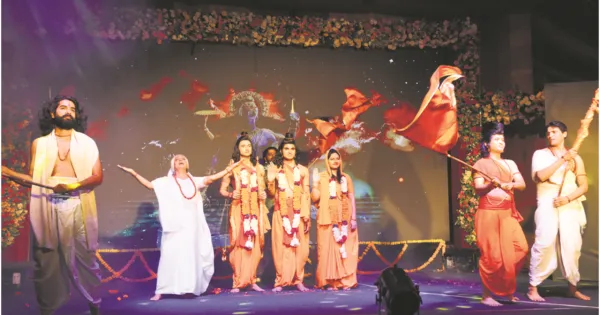
Ayodhya has landed in Delhi! The sounds of Shri Ramcharitmanas echoed for three days, Ayodhya Parv 2026 created a cultural grand yagya.

On the morning of 3rd April, with the sacred sounds of Shri Ramcharit Manas resonating in the courtyard of Indira Gandhi National Center for the Arts, Janpath, New Delhi, it seemed as if Ayodhya had descended on Delhi’s soil. This was not just the inauguration of any program, it seemed to be the re-establishment of that eternal feeling which has been alive in the soul of this country for ages. Amidst the metropolitan busyness of the capital, the complex was transformed for three days into a vibrant cultural pilgrimage that covered Ayodhya, Uttar Pradesh to Gujarat, Maharashtra to Assam and Madhya Pradesh to Delhi. Messages started resonating from this cultural Mahayagya.
-Presentation-Rajendra Kumar Pandey and Vimal Kumar Singh
What happened in this historical complex for three days in the main event of Shri Ayodhya Trust, co-organized by Indira Gandhi National Center for the Arts and Pragya, does not fit into the definition of any one program. This was a great sacrifice, in which the sacrifice of thought, the energy of art and the beauty of literature were at its center. That invisible glory of Ayodhya which binds the whole of India in one thread. This festival raised that question and also searched for its answer. Will Ayodhya be able to keep its soul safe in the fast pace of modernity? Ayodhya Parv 2026 was neither a celebration of any one class, nor a platform for any one ideology. The active participation of every section of the society, scholars, artists, saints, administrative officials, journalists, youth, students, housewives made it a public festival in the true sense and at the center of it all was a belief that Ram does not belong to any one class only, Ram belongs to everyone.
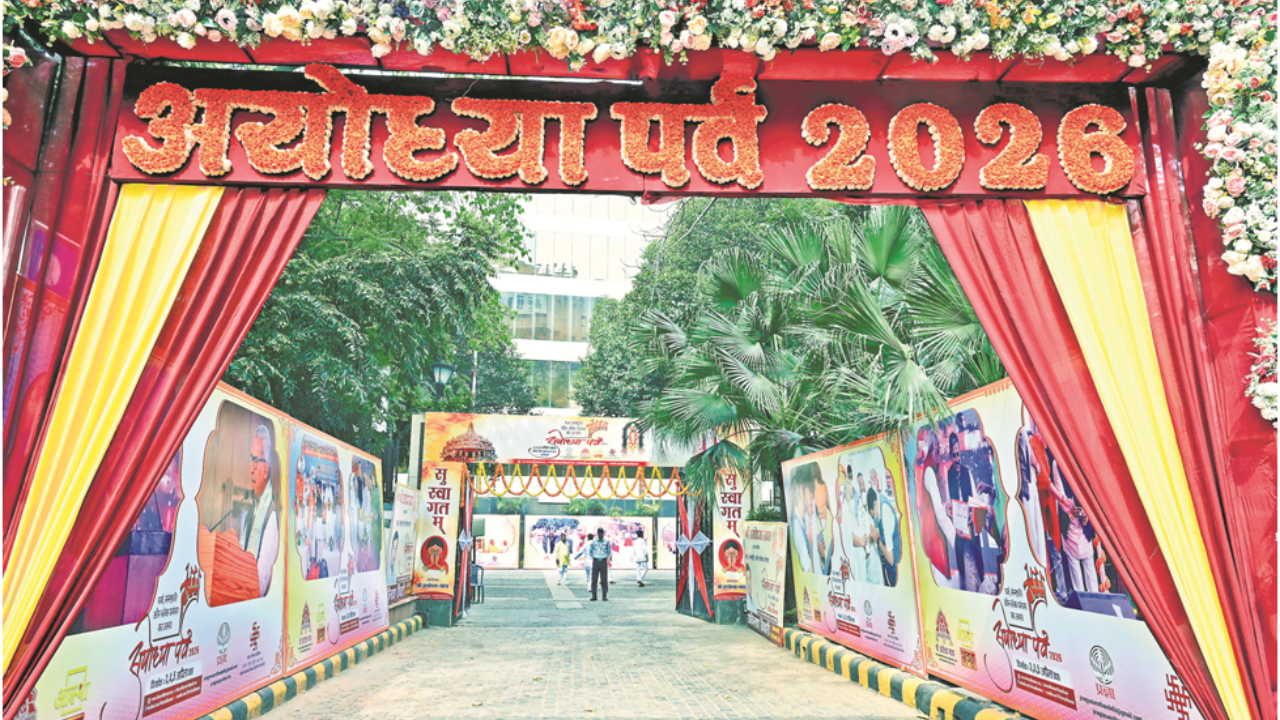
Inauguration: Confluence of dignity and emotion
The official inauguration of ‘Ayodhya Parv’ took place on the afternoon of April 3. The list of dignitaries present was proof of the height of this event. The presence of respected Mahant Kamal Nayan Das Ji Maharaj of Shri Maniramdas Cantonment of Ayodhya filled the atmosphere with divinity. In his address, senior campaigner of Rashtriya Swayamsevak Sangh, Suresh Bhaiyyaji Joshi, described Ayodhya as not just a city but the center point of India’s cultural consciousness. Deputy Chief Minister of Rajasthan Diya Kumari said that the responsibility of all of us towards Ayodhya is not limited only to reverence, its development is also our national responsibility. He also invited to organize the next Ayodhya festival in Jaipur. Invitations to organize Ayodhya festival have already been received in Uttarakhand state of the country and Mauritius country. Jammu and Kashmir Lieutenant Governor Manoj Sinha described Ayodhya as a symbol of unity of entire India. The poetic expressions of Rajya Sabha MP Ashok Bajpai gave a special color to the ceremony. Padma Vibhushan Ram Bahadur Rai, President of Indira Gandhi National Center for the Arts, described the event as an important milestone in India’s cultural renaissance journey. Before all this, Sachchidanand Joshi, Member Secretary of Indira Gandhi National Center for the Arts, gave the welcome address on behalf of the institute. In the morning before the inauguration, the first conceptual session was organized on the topic ‘Future Ayodhya, City Planning’. In this session, Yamuna Authority Chief Executive Officer Rakesh Singh, Gaur Sons India founder BL Gaur and senior journalist Dr. Shailesh Shukla gave detailed views on the future town planning of Ayodhya. The question of how Ayodhya should be developed as a grand pilgrimage city so that it can fulfill modern needs while preserving its ancient soul, made the listeners ponder deeply.
Central idea of the event: conflict of tradition and progress
The central idea of Ayodhya Parv 2026 was very important ‘Ayodhya should be developed, but its uniqueness should not be lost.’ This question is as relevant for today’s India as it is for Ayodhya. Along with the construction of the new temple, the pace at which the infrastructure of Ayodhya is changing gives rise to a subtle concern whether the spiritual fragrance and cultural uniqueness of that ancient city will disappear in this rush of modernity? This same concern was expressed with different expressions in the words of each speaker in each session of this festival, but along with this concern there was also an unwavering faith. The soil on which Maryada Purushottam himself was born has a power which itself has been removing deformities. This belief was not an empty sentiment, it stemmed from the history in which Ayodhya has kept its soul safe while facing challenges from Babar to modern urbanization. ‘Ayodhya Parv 2026’ was also a public declaration of this belief. A total of six ideological sessions were organized in three days, in which deep brainstorming took place on every dimension of the physical and spiritual progress of Ayodhya, from city planning to social harmony, from the concept of Ramrajya to the mutual responsibilities of governance and society.
Creation of literature and launch of books
During three days, five important books of Prabhat Prakashan were launched. ‘Aho Ayodhya’, ‘Milli Ram Modiiyai’, ‘Santon Mein Dhruv Taare’, ‘Aakash Pushp’ and ‘Chaurasi Kos Ki Ayodhya’ – these five works emerged as the intellectual and literary wealth of this festival. Each book highlights some aspect of Ayodhya and Ramatattva. ‘Chaurasi Kos ki Ayodhya’ is especially important for those readers who want to understand the geography of Ayodhya, its pilgrimages and its cultural scope in its entirety. ‘Aho Ayodhya’ gives language to that feeling of awe towards Ayodhya, which is naturally present in the mind of every Indian regarding this city. During this time, the souvenir of Ayodhya Parv 2026 was also released, which is a collectible publication in itself.
The release of books from the stage of Ayodhya festival was not just a formality. It was a public declaration of the belief that the journey of thought and knowledge does not end with a single event. These books will reach the hands of those who will read them and then think about Ayodhya with a new, deeper and richer vision.
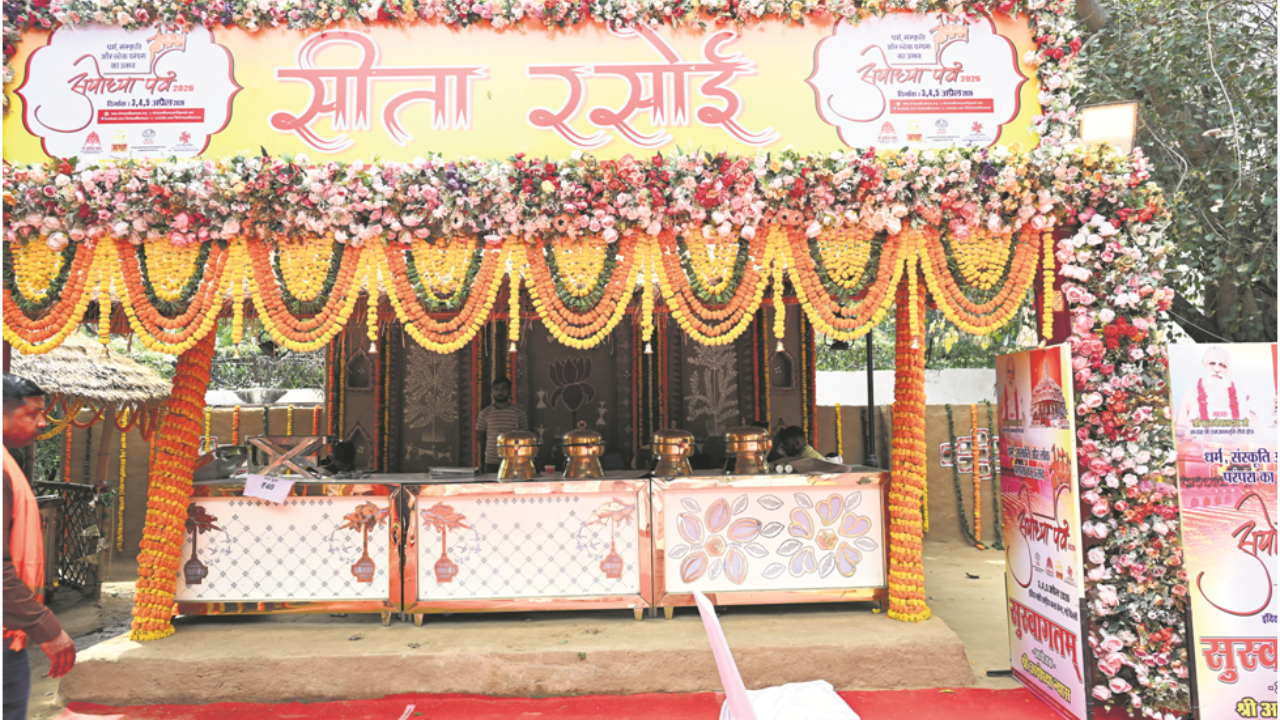
Sita Rasoi and Taste of Awadh: A tactile experience of culture
A very easy and direct way to understand any culture is to taste its food. The organizers of ‘Ayodhya Parv 2026’ understood this very well. Fara, special chaat and traditional sweets at the Awadhi food festival organized under the name of ‘Sita Rasoi’ immersed the visitors with the taste of Sondhi Mati of Awadh. This experience was not just one of sensual satisfaction, it was an experience of the food culture of a civilization. The exhibition and sale of local products of Awadh region gave this festival the appearance of a mini Ayodhya. Ram Prasad, puja material, art paintings and products of cottage industries, all this together created an environment in which souls tired of the busy routine of Delhi were transported to Ayodhya for a moment. It was a simultaneous celebration of faith and self-reliance.
The sound of Akhand Ramayana recitation continued to echo in the campus for all three days. This was the spiritual heart of this festival, where words, voice and devotion became one. Parallel to the ideological churning, artistic expression and worldly joy, this spiritual stream continued to flow and this gave the event the character of a true Yagya.
 ।
।
The great sacrifice of governance, society and closure
The topic of the morning session of April 5 was – ‘Future Ayodhya: Governance and Society.’ Acharya Mithileshnandini Sharan, Acharya Gyanesh Gaur and Dr. Chandrashekhar Pran laid special emphasis on the fact that building the future of Ayodhya is not the responsibility of the government and industry alone. Without the active and conscious participation of the society, this work will remain incomplete. On this occasion, Acharya Mithilesh Nandini Sharan, as the representative of Ayodhya, raised many serious questions on the government machinery and its functioning in his pithy and powerful statement.
The closing ceremony was the most emotional moment of this festival. Champat Rai, General Secretary of Shri Ram Janmabhoomi Teerth Kshetra Trust, gave such an address on the journey of construction of Ram temple and the future of Ayodhya, which brought tears to the eyes of the audience. Said that this temple is not just a building of stones, it is the embodiment of the struggle, devotion and sacrifice of crores of Indians. The statements of former Ayodhya MP Lallu Singh and senior journalist Rajendra Pandey as cultural ambassadors made this Mahayagya more meaningful. This Mahayagya concluded with the presidential address of Ram Bahadur Rai.
series of parallel sessions
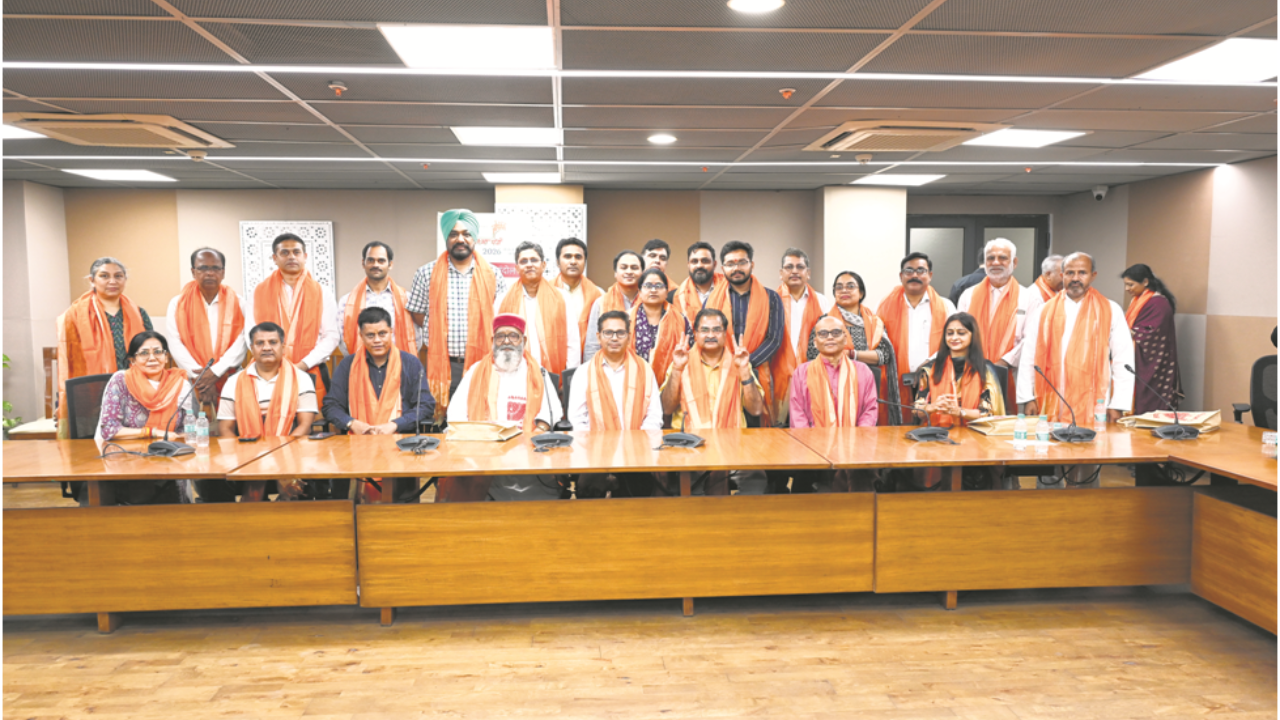
Apart from six main sessions, three parallel sessions were also held over three days. The dedicated advocates of the Indian Language Movement reiterated their resolve in their session that the struggle for the establishment of Indian languages in the courts will take the form of a widespread mass movement, on the banks of which the offering of offerings to the ancestors and the session led by Sanjay Sajjan Singh, convener of the Niranjana-Phalgu River Recharge Mission, which brought enlightenment to Lord Buddha, paved the way for environmental consciousness and revival of river culture. In the poetry symposium, 21 poets including renowned poet Balswaroop Rahi presented the ideals of Ram in contemporary contexts.
‘Ayodhya Parv 2026’ proved that Ram is not just a historical or mythological figure, he is the center point of Indian consciousness, around which the social, cultural and spiritual life of this country revolves even today. When the devotion of Shabari and the philosophy of Ramkinkar come alive on a stage, Ayodhya ceases to be just a city – it becomes a living civilization.
Cultural evenings: Raghav settled in tunes and expressions
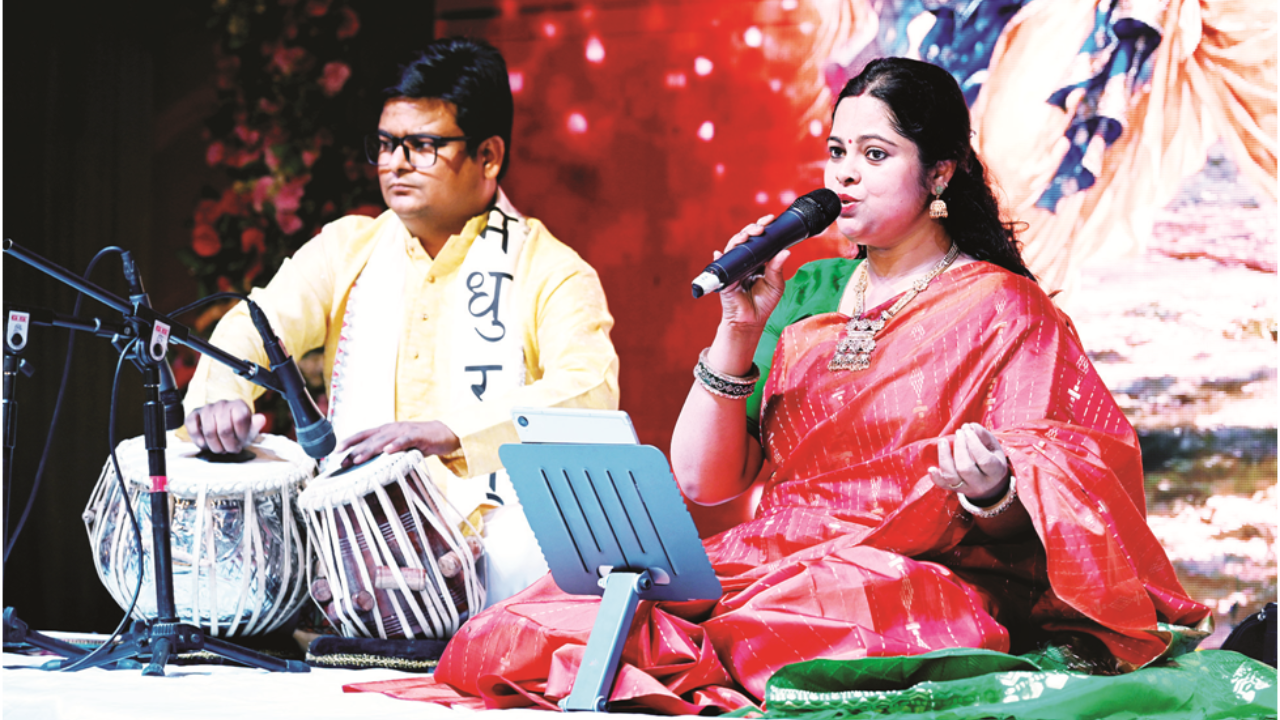
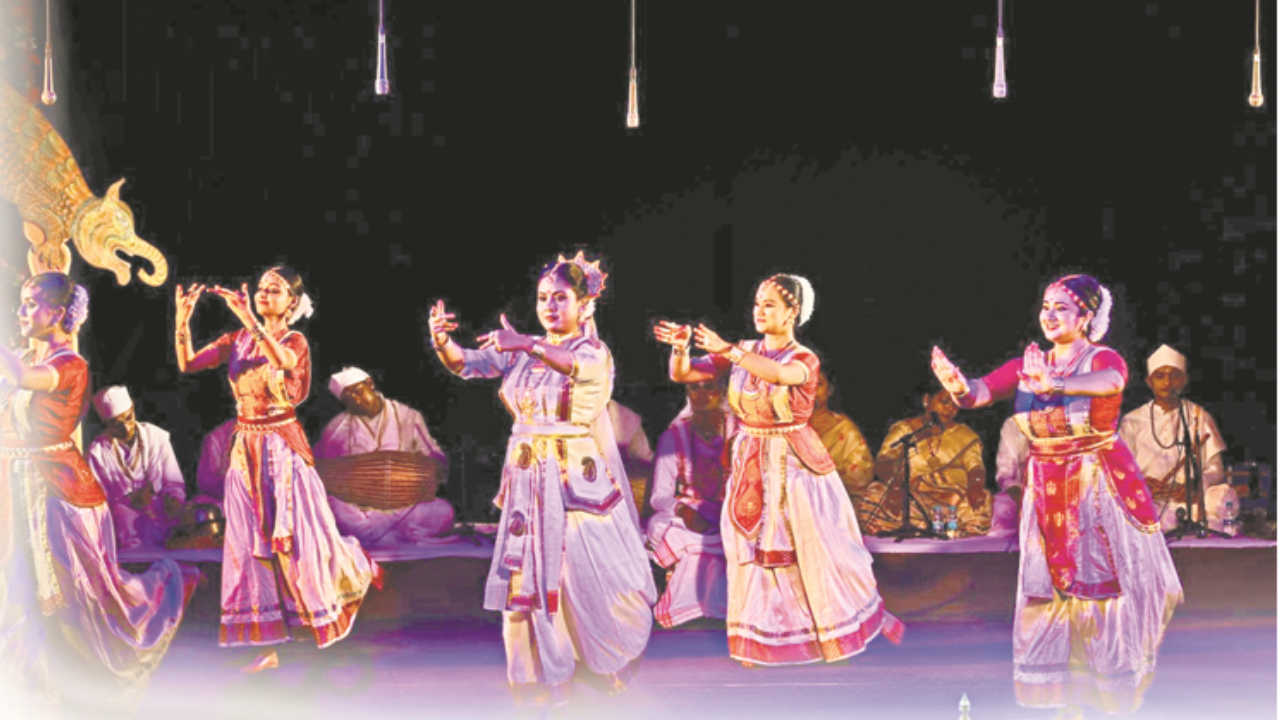
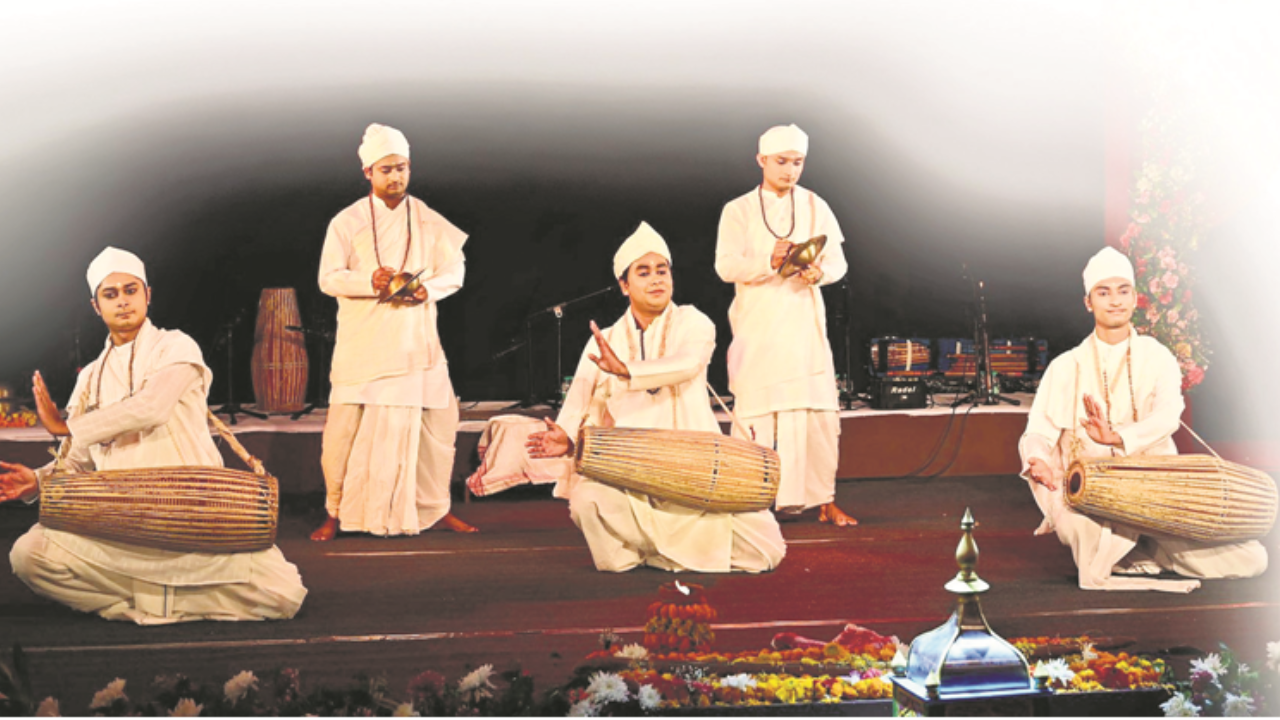
Along with the conceptual sessions, there were art rituals on all three evenings, which made the festival a complete celebration. On the evening of 3rd April, Pandit Dr. Abhay Manke presented ‘Geet Ramayana’. When the Hindi version of this world famous Marathi composition, originally composed by Govind Damodar Madgulkar and composed by Sudhir Phadke, resonated in Manke ji’s voice, it seemed as if the boundaries of languages were erased and only the feeling of Ram remained. On April 4, Madhavi Madhukar’s soulful singing made the atmosphere joyful. His rendition of Hindi bhajans along with Sanskrit shlokas filled the atmosphere with divine aura. The play ‘Shabari Ke Ram’ was staged in its garden, which was written by Prerna Agarwal and directed by Naveen Agarwal. Shabari’s wait, her love and her unwavering devotion towards Ram in the play touched the audience so deeply that many eyes became moist. The evening of 5th April started with flute playing by Shubham, Anuj and Manish. After that, the theatrical presentation ‘Shri Ram Bijay’ of Satriya Kendra Guwahati brought alive the splendor of the Bhakti tradition of North-East India in front of the Delhi audience. It was presented with the courtesy of Sangeet Natak Akademi and Ministry of Culture.
Exhibitions: A World of Visual Memories
Two special exhibitions in the campus were the center of attraction for the visitors. In the exhibition organized by Chitranjali Society, Jabalpur, a glimpse of the historical moments of the consecration of Ayodhya and Indian festivals was presented through more than 250 pictures. It was not just a collection of pictures, it was a visual narrative of Indian culture and its festivity, watching which the supernatural moment of Ayodhya, when Ram Lalla was consecrated, came alive in the minds of the viewers.
The second exhibition was dedicated to the life and sadhana of Pandit Ramkinkar Upadhyay. This exhibition was especially valuable for those viewers who were not familiar with Ramkinkar ji’s thoughts. This attempt to present together the pictures of his life’s journey, his precious letters and the pages of his diary, went beyond the biography of a single scholar and was a remembrance of an ancient stream of Indian spiritual tradition.
service and dedication
The invisible fabric behind this huge event is also remarkable in itself. This joint effort of Shri Ayodhya Trust and Indira Gandhi National Center for the Arts was supported by hundreds of volunteers from Delhi University with their selfless service. This festival was for everyone and whoever came, three meals a day was arranged free of charge. This spirit of service was not limited to just the facilities of the event. In the planning of programmes, in the selection of speakers, in the planning of cultural presentations, a subtle sensitivity was visible at every level. The effort was that every spectator, no matter what background he comes from, should feel a sense of belonging in this festival. This attempt was successful. From laborers to industrialists, children to old people, artists to administrative officers, every section of the society participated in this festival. This inclusivity was the biggest feature and biggest achievement of ‘Ayodhya Parv 2026’.
Epilogue: A lamp that will keep burning
On the evening of April 5, when the curtains of ‘Ayodhya Parv 2026’ closed with the final presentation of Satriya dance, there was a wonderful silence in the campus. It was not a silence of emptiness, it was a silence of satisfaction, of completeness. The energy, the feelings, the thoughts that were there in this campus of Delhi for three days – it will not be the memory of any regular event. He has been planted like a seed in every heart.
The sound of the recitation of Akhand Ramayana, which echoed continuously for three days in the campus, may have stopped with the conclusion of this festival, but it remained imprinted forever in the hearts of those who heard it. ‘Ayodhya Parv 2026’ is proof that Ayodhya is not just a geographical place, but a living consciousness, which can establish its pilgrimage even in the middle of the capital.
This festival leaves a question and also an inspiration, will we be able to save the soul of Ayodhya in the race of modernity? Perhaps this event gave the answer that as long as the mind of India continues to connect with Ayodhya through such festivals, this city will never lose its speciality.

Comments are closed.