
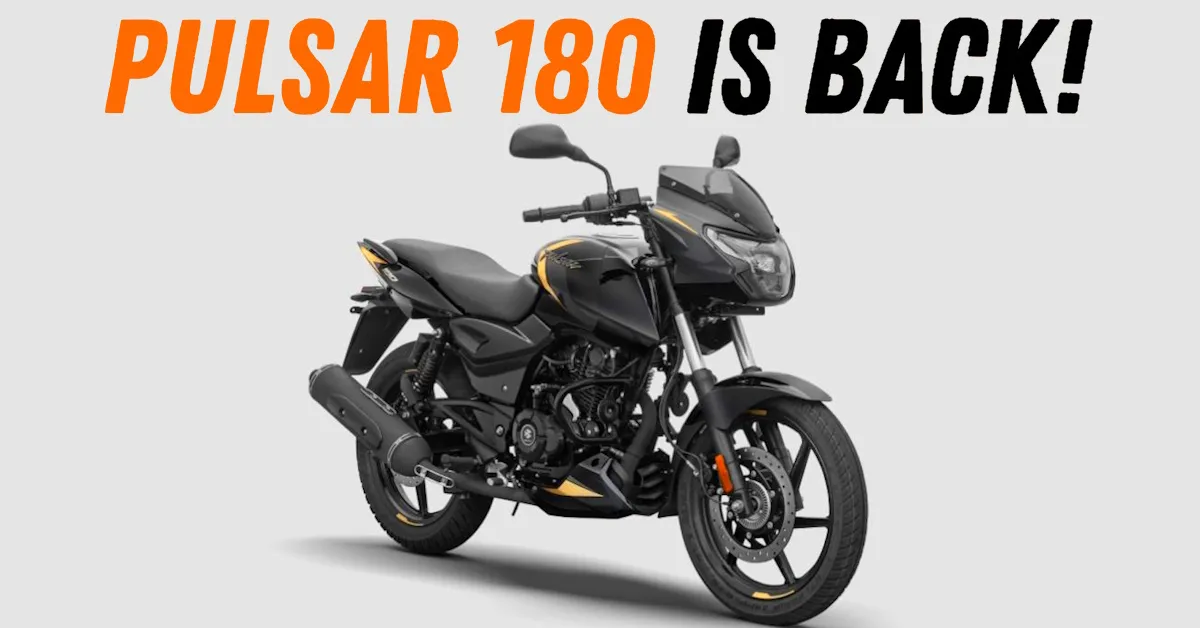

Bajaj Auto has relaunched the Pulsar 180, a motorcycle it quietly discontinued in 2022, at Rs 1.22 lakh ex-showroom. The return fills a specific gap in Bajaj’s own line-up: between the Pulsar 150, priced around Rs 1.12 lakh, and the Pulsar 220F at Rs 1.42 lakh. For buyers who found the 150 slightly underwhelming and the 220F a stretch, the 180 gives the mid-point option back.
The engine is the same 178.61cc single-cylinder air/oil-cooled DTSi unit that powered the original Pulsar 180. Output is 17 PS at 8,500 rpm and 15 Nm at 6,500 rpm. The gearbox is a five-speed unit. Kerb weight is 156 kg and the fuel tank holds 15 litres. Ground clearance is 165 mm.
These numbers keep the bike in familiar Pulsar territory, but they also show why the 180 still has a place. At this weight and output, it offers a power-to-weight ratio of roughly 109 bhp per tonne, which is healthy for a commuter-sport bike in this price bracket and enough to preserve the brisk mid-range feel that helped build the Pulsar brand in the first place.
The updates Bajaj has made are visible rather than mechanical. The 2026 Pulsar 180 gets an all-LED lighting setup across headlamp, tail lamp, and turn indicators. The older version had halogen units throughout. This is the most functionally meaningful change: better night-time visibility and a more modern appearance without any additional operating cost.
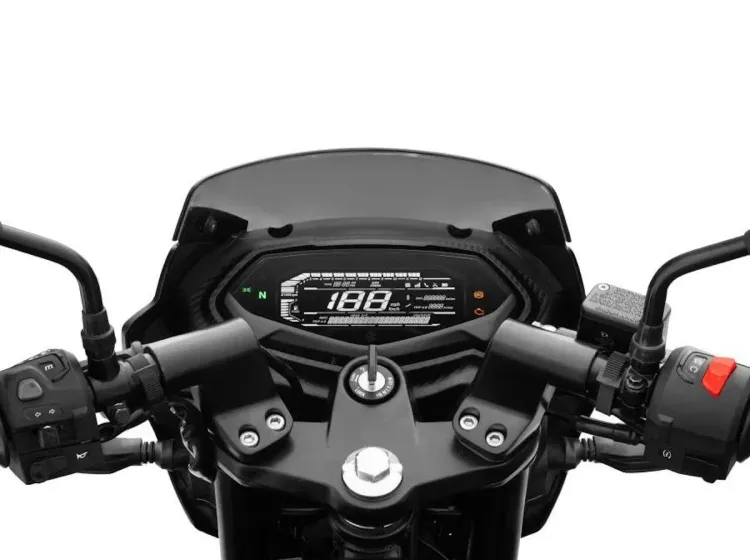
The instrument cluster is a fully digital reverse-monochrome LCD display with Bluetooth connectivity. The Bluetooth function allows connection to the Bajaj Ride app for call and message alerts on the cluster. The display shows speed, trip meters, fuel level, and service reminders.
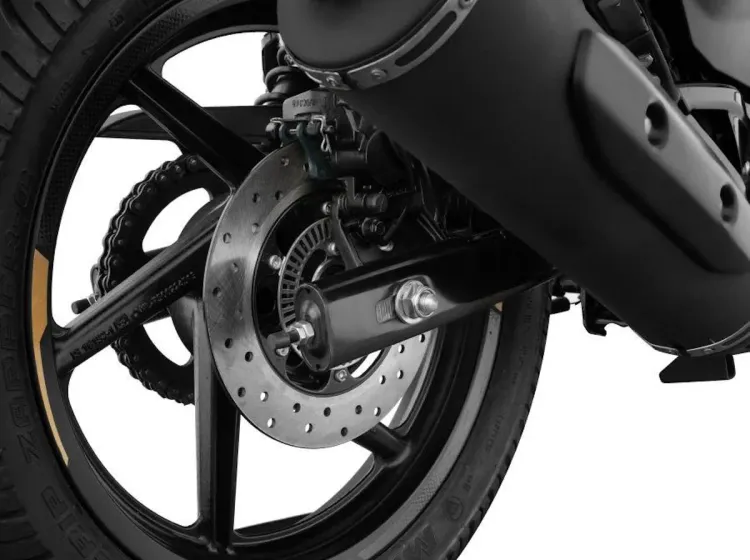
Cosmetically, the 2026 version gets a blacked-out paint theme with contrast graphics, a carbon-fibre-style front mudguard finish, and revised body decals that align with the current Pulsar family design language. The muscular tank and side fairing silhouette are retained, keeping the Pulsar 180’s classic look intact. More importantly, braking hardware has moved ahead too. The relaunched bike is being listed with disc brakes at both ends and single-channel ABS, which is a more meaningful functional update than the visual changes alone.
At Rs 1.22 lakh, the Pulsar 180 sits in an interesting slot. It is only about Rs 10,000 above the Pulsar 150 based on current price positioning and roughly Rs 20,000 below the Pulsar 220F. That makes its return easier to understand. Bajaj is not trying to create an all-new segment here. It is reopening a price and performance step that used to exist naturally inside the Pulsar family.
The positioning also works because the spec sheet remains straightforward. There is no liquid cooling, no six-speed gearbox, and no complex electronics package. Instead, buyers get a 178.61cc engine, 15 Nm of torque, 156 kg kerb weight, a 15-litre tank, LED lighting, Bluetooth-enabled LCD console and dual-disc braking.
For a rider upgrading from a 125cc or 150cc commuter, those numbers still translate into a noticeable step up in highway stability, overtaking ease and overall road presence without crossing into the cost or complexity of a much larger motorcycle.
For someone who wants a straightforward 180cc commuter-sport without spending above Rs 1.25 lakh, the Pulsar 180 re-entry is a option worth considering.
Comments are closed.