
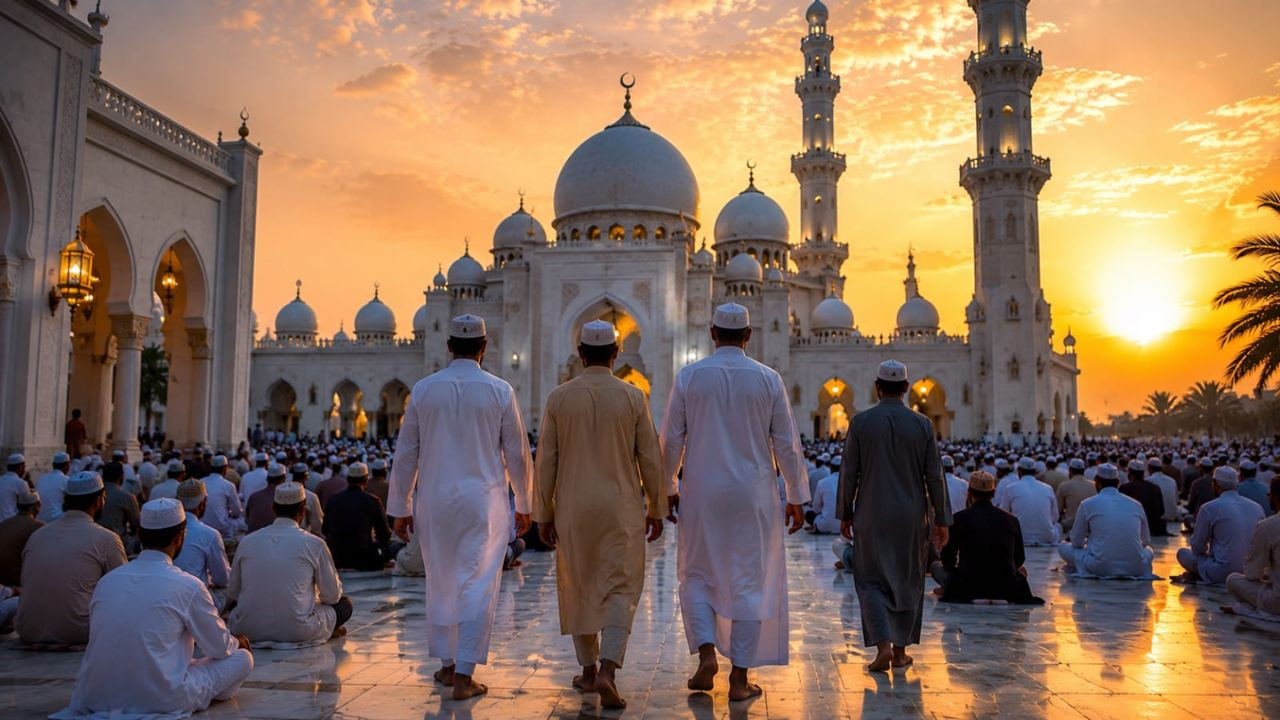
Bakrid 2026: Eid-ul-Azha is not only a festival of sacrifice but also of duty and worship, know its importance and history.

New Delhi: Today, Eid-ul-Azha (Bakrid), the second biggest and holiest festival of Islam, is being celebrated with full enthusiasm across the country. Since morning, a huge crowd of worshipers was seen in all the historical mosques and Eidgahs of the country, where people wore new and clean clothes and collectively offered two Rakat special prayers.
When is Bakrid celebrated
After the completion of the Namaz, special prayers were sought for peace, tranquility, progress and mutual brotherhood in the country. Celebrated on the 10th of ‘Zil-Hijja’, the last month of the Islamic calendar i.e. Hijri calendar, this festival mainly gives a living message of unwavering faith in Allah, supreme dedication and selfless sacrifice.
What is its sacred history?
Eid-ul-Azha is directly related to a litmus test in the life of Prophet Hazrat Ibrahim and his son Hazrat Ismail. It is believed that Allah appeared in Hazrat Ibrahim’s dream and asked him to sacrifice his most favorite thing. For Hazrat Ibrahim, his son Hazrat Ismail, born in his old age, was dearer than life itself, but he left his love behind in front of the orders of Allah.
How did it start?
When Hazrat Ibrahim was completely ready to sacrifice his son and as soon as he blindfolded himself and used the knife, Allah accepted his indomitable spirit and honesty. At the last moment, through the angel Gabriel, a sheep was placed in place of Hazrat Ismail and the child remained completely safe. In memory of this historical and spiritual event, Muslims around the world sacrifice halal animals every year, which is called ‘Sunnat-e-Ibrahimi’.
What is the special rule of the festival?
The sacrifice made on the occasion of Bakrid is not just a religious ritual but there is a deep social and humanitarian message hidden behind it. No person can store the sacrificed meat completely in his house. To strengthen the social fabric and harmony, the meat is compulsorily divided into three equal parts.
first part: It is reserved for the extremely poor, destitute and needy people of the society.
second part: It is distributed among your relatives, dear friends and people in the neighborhood.
Third part: Used for own family consumption.
Deep connection with the holy Hajj pilgrimage
This festival also marks the successful completion of the annual Hajj pilgrimage to Mecca. When lakhs of pilgrims from all over the world complete all the rules of Haj, then they complete their worship on this day. This festival teaches humans to rise above their personal interests and serve humanity. After the prayers and sacrifice, people are hugging each other and saying ‘Eid Mubarak’ and the hospitality continues in homes with traditional dishes.

Comments are closed.