
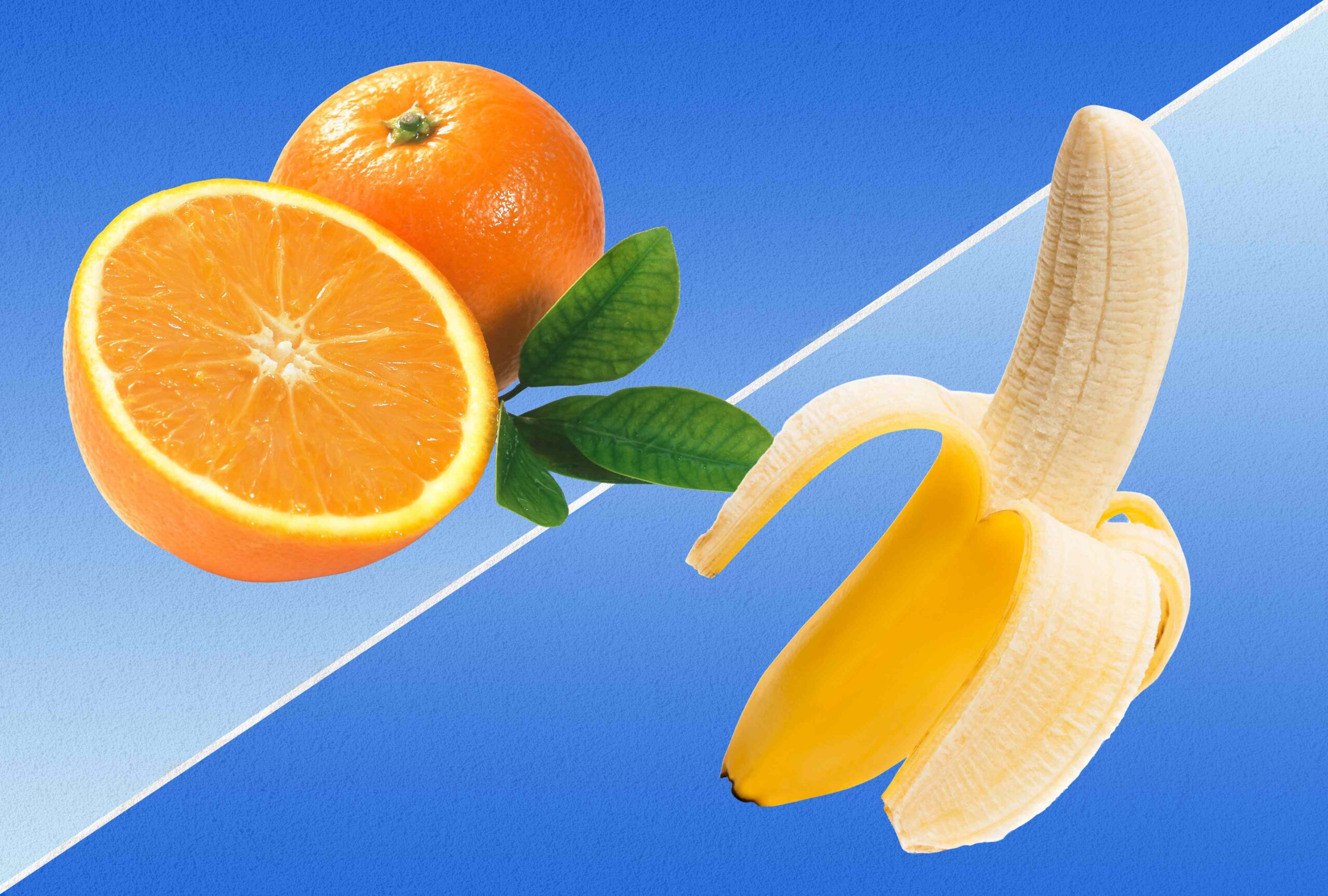

Dietitians say you don’t have to choose.
Reviewed by Dietitian Jane Leverich, M.S., RDN
Key Points
- Heart disease remains the leading cause of death in the United States.
- Bananas and oranges are heart-healthy fruits that are affordable and accessible.
- Dietitians explain how both fruits fit into a heart-healthy eating pattern.
No matter the season, you’ll find bananas and oranges front and center in the produce section of almost any grocery store. These popular fruits not only come with their own wrappers but they’re also affordable, sweet and loaded with heart-healthy nutrients like potassium, fiber, vitamin C and antioxidants.
With heart disease remaining the leading cause of death in the United States year after year, eating to help prevent heart disease or improve risk factors—like high blood pressure and high cholesterol—is a top priority for many. Oranges and bananas are both affordable and easy to find, but which one is better for your heart? We asked dietitians to explain the benefits of each and how to fit these heart-healthy fruits into your daily diet.
How Bananas Affect Heart Health
Bananas are a good source of potassium, fiber and potent polyphenols that work together to support cardiovascular health. “These compounds help lower blood pressure, influence cholesterol and reduce cell damage to support healthier blood vessels and function,” says Amy Brownstein, M.S., RDN.
In fact, in one large banana, you’ll get over 10% of the Daily Value of potassium, a mineral that’s linked to lower blood pressure and a lower risk of stroke., “Bananas are a great source of potassium and help counteract sodium’s blood pressure–raising effects by promoting its excretion in urine,” says Whitney Stuart, M.S., RDN, CDCES. Recent research also highlights the importance of potassium in maintaining healthy blood pressure, suggesting that increasing potassium intake may be an effective strategy alongside reducing sodium intake.
And while bananas are a good source of fiber, providing about 3.5 grams in each, you’ll get more resistant starch if you enjoy them while they’re still slightly green. As bananas ripen, resistant starch is converted into sugars, giving the fruit a sweeter taste. Underripe bananas are one of the richest sources of resistant starch—a gut-friendly polysaccharide. “Resistant starch is fermented by gut bacteria into short-chain fatty acids and can help lower cholesterol levels with regular consumption,” says Stuart.
Beyond the macro- and micronutrients, bananas are also rich in polyphenols with cardioprotective properties. Compounds such as quercetin and catechins may help support blood vessel function, decrease LDL cholesterol oxidation, decrease vascular inflammation and enhance nitric oxide production, which supports healthy blood flow.
How Oranges Affect Heart Health
The only thing better than biting into a fresh, sweet, juicy orange is the abundance of heart-healthy nutrients you get from one. In fact, one orange provides about 3 grams of fiber, along with vitamin C, folate and a rich supply of citrus flavonoids.
The most abundant flavonoid in citrus fruits is hesperidin. “Hesperidin, a flavonoid found in oranges and orange juice, may support heart health by helping improve several cardiovascular risk factors, including blood pressure, blood vessel function, blood sugar regulation, inflammation and cholesterol levels,” says Brownstein.
Research suggests hesperidin-rich orange juice may help support healthy blood pressure and reduce levels of homocysteine, a compound associated with an increased risk of heart disease. For a bigger hesperidin boost, Stuart recommends leaving a layer of the white pith on your orange, as that’s where much of the hesperidin is found.
But hesperidin doesn’t work alone to support heart health. The folate in oranges helps convert homocysteine into methionine, which may help maintain healthy homocysteine levels. Research also suggests that higher dietary folate intake may be associated with a lower risk of stroke.
Rounding out oranges’ heart-healthy trio of nutrients, vitamin C helps protect blood vessels from oxidative stress and supports healthy vascular function. Higher circulating levels of vitamin C have also been associated with a lower risk of high blood pressure and stroke.
Bananas vs. Oranges: Which Is Better?
One isn’t actually better than the other, as both bananas and oranges provide nutrients that support heart health. Instead of choosing one, regularly including both in your diet can provide a variety of nutrients—including potassium, vitamin C, folate, fiber and antioxidants—that work together to support cardiovascular health and help reduce the risk of heart disease.
How to Include Both in a Heart-Healthy Eating Pattern
Not sure how to include more bananas and oranges in your heart-healthy eating pattern? Here are a few nutrient-rich and delicious ideas to try:
- Blend them into a smoothie. Combining bananas and oranges gives any smoothie a slightly tropical twist. Dietitians recommend blending together frozen bananas, oranges (with the peel on for a boost of fiber and hesperidin!), pineapple, ginger and yogurt for a high-protein, high-fiber snack.
- Naturally sweeten baked goods. Brownstein recommends using mashed banana to naturally sweeten baked goods and oatmeal while adding fiber and potassium.
- Add them to breakfast. Add orange slices to your yogurt, top your toast with sliced banana or enjoy the fruits alongside your usual breakfast for a naturally sweet way to round out the meal.
- Pack them as an easy snack. Need a quick snack as you head out the door? Oranges and bananas are ideal for grab-and-go nourishment, as they come in their own wrappers and are perfectly shelf-stable.
Our Expert Take
Rather than picking one over the other, dietitians recommend regularly eating both bananas and oranges as part of a heart-healthy eating pattern. This way, you’ll benefit from bananas’ potassium, resistant starch and polyphenols, in addition to the high concentrations of vitamin C, folate and hesperidin in oranges. Together, these fruits provide a variety of nutrients that support heart health and may help reduce your risk of heart disease. Making room for both is a simple and delicious way to support your heart.

Comments are closed.