
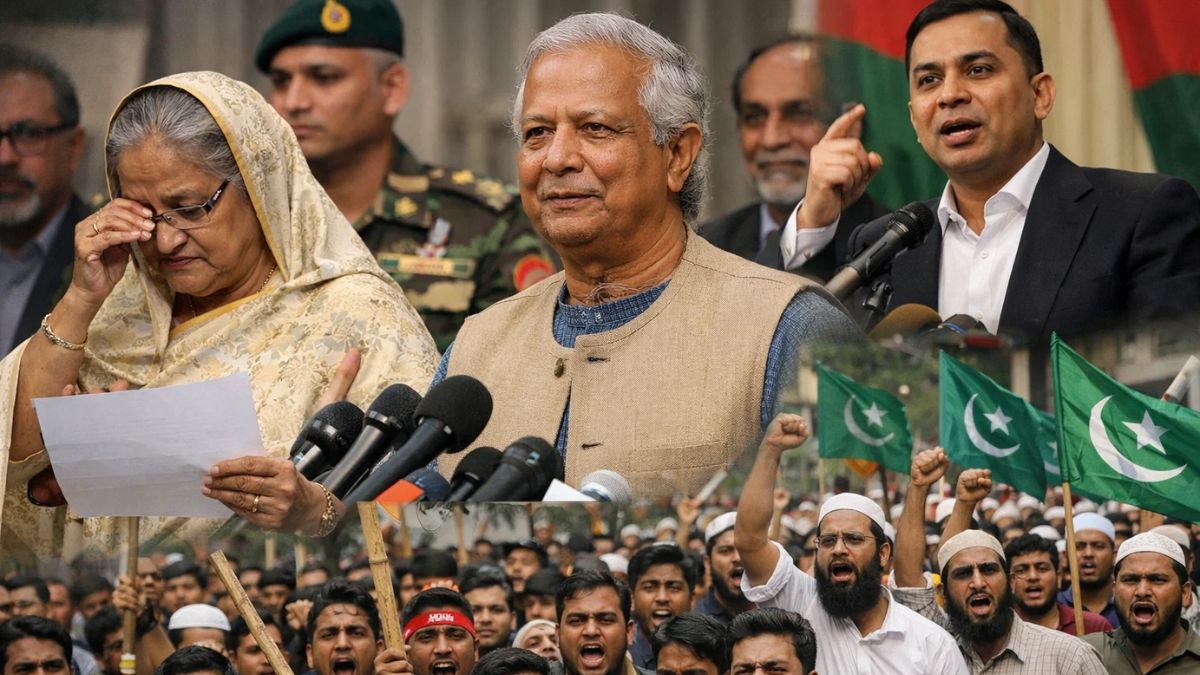
General elections in Bangladesh today, who will win and which countries are keeping an eye on them? Know everything in one click

BNP, Jamaat or Chhatra Shakti? Bangladesh’s decision will decide the direction of India and China
Bangladesh Election 2026: On the politics of Bangladesh till about one and a half years ago Sheikh Hasina and her party Awami League had dominance, but the student movement that started in July 2024 took such a form that the government was shaken. The protest that started against the quota system in government jobs soon turned into a nationwide rebellion. More than 1000 people died in violence, police action and clashes. Ultimately, on August 5, 2024, Sheikh Hasina had to resign and come to India.
Nobel laureate after this Mohammad Yunus An interim government was formed under the leadership of, which promised constitutional reform and fair elections. Now general elections are being held in Bangladesh on 12 February 2026… and this is not just an election to change power, but is considered to be an election to decide the direction of the country.

Mohammad Yunus
Read this also:Battle of the Begums- 4 Decades, 2 Powerful Women and 1 Country! A story of blood, betrayal and enmity born of inheritance.
Bangladesh Elections 2026: Who is in the fray?
- BNP (Bangladesh Nationalist Party): After the death of Khaleda Zia, her son Tariq Rehman is taking charge of the party. BNP can get the biggest benefit from Awami League’s exit from the elections. Tariq has raised the issue of ‘national self-respect’ and economic reforms. It is believed that if someone gets a clear majority, then BNP can remain at the forefront.
- Jamaat-e-Islami: After being banned for years, he is now in the electoral fray again. The party has softened its image a bit and is talking about focusing on social issues, but its growing strength is considered important from the point of view of Indian and regional politics.
- NCP (National Citizen Party): A new party emerged from the student movement, which is talking about ‘system change’. It has a good influence among the youth. However, it is still considered weak at the level of resources and organization. If a hung parliament is formed then NCP and Jamaat can become ‘kingmakers’.
Sheikh Hasina’s silent factor
Awami League is not contesting the elections, but its traditional vote bank is present. If these voters abstain from voting in large numbers or give strategic support to a particular party, the results could be surprising.

Sheikh Hasina
Read this also:Has Jamaat-e-Islami become Bhasmasur? Bangladesh is bearing the brunt of the mistake
How did the crisis start?
- In July 2024, students started protesting against reservation (quota) in government jobs. Initially it was a limited student movement, but within a few weeks it turned into a nationwide rebellion against the Sheikh Hasina government.
- Violent clashes took place between police and protesters in many cities including Dhaka. In August 2024, the situation worsened so much that hundreds of people were killed in the firing by security forces. In total more than 1,000 people died.
- This was the worst violence since 1971. On 5 August 2024, Sheikh Hasina resigned and went to India.
- After Hasina’s departure, an interim government was formed under the leadership of Nobel laureate Professor Mohammad Yunus. This government promised that action will be taken against the culprits of violence, elections will be held and ‘July Charter’ will be implemented to change the constitution. Now along with the elections on 12th February, a referendum is also being held on this reform proposal.
- The biggest change is that the Awami League, which was in power for the last one and a half decade, has been thrown out of the elections. Due to this the entire political field has changed.
India, China and Pakistan’s eyes
Bangladesh is strategically important for India, which includes 4000 km long border, connectivity to the north-eastern states and security cooperation. China has already invested heavily in infrastructure. Pakistan is seeing diplomatic opportunity in the victory of Jamaat or BNP. However, experts believe that whichever government comes, it will have to adopt a balanced and practical foreign policy.
Read this also:Election contest in Bangladesh, know the answer to every big question before voting
What does it mean for India?
Relations between India and Bangladesh have always been changing according to the government. Relations were very strong during the time of Sheikh Hasina. There was tension in relations during the BNP era. Jamaat’s past has been anti-India.
Read this also:War of power in Bangladesh; Which is better for India – BNP or Jamaat-e-Islami?
Key issues for India:
- 4,000 km long border
- Security of ‘Chicken Neck’ i.e. Siliguri Corridor
- Connectivity to North East India
- teesta river water sharing
- China’s growing influence
India no longer wants to be seen openly in favor of any one party, but is trying to maintain balanced relations.
What are China and Pakistan looking at?
China
- Large infrastructure projects in Bangladesh
- Belt and Road Initiative
- port and energy investment
- China wants that whatever government comes, its projects should be safe.
Pakistan
- Symbolic benefit to Pakistan if Jamaat becomes stronger
- Cooperation may increase on forums like OIC, but Pakistan’s influence economically will remain limited.
The real challenge: the economy
Bangladesh’s economy depends on textile exports. If there is political instability, loss of investor confidence and attacks on minorities continue, it will affect the entire South Asia.
Read this also:Bangladesh Elections 2026: ‘We are from here, still why fear’, why is there restlessness among Bangladeshi Hindus before the elections?
What’s at stake?
This election is not just a change of power. This will decide whether Bangladesh will return to stable democracy? Will the role of political Islam increase? Will there be a balance between India and China? Dhaka’s decision will not be limited to Dhaka only, its impact will reach New Delhi, Beijing and Islamabad.

Comments are closed.