
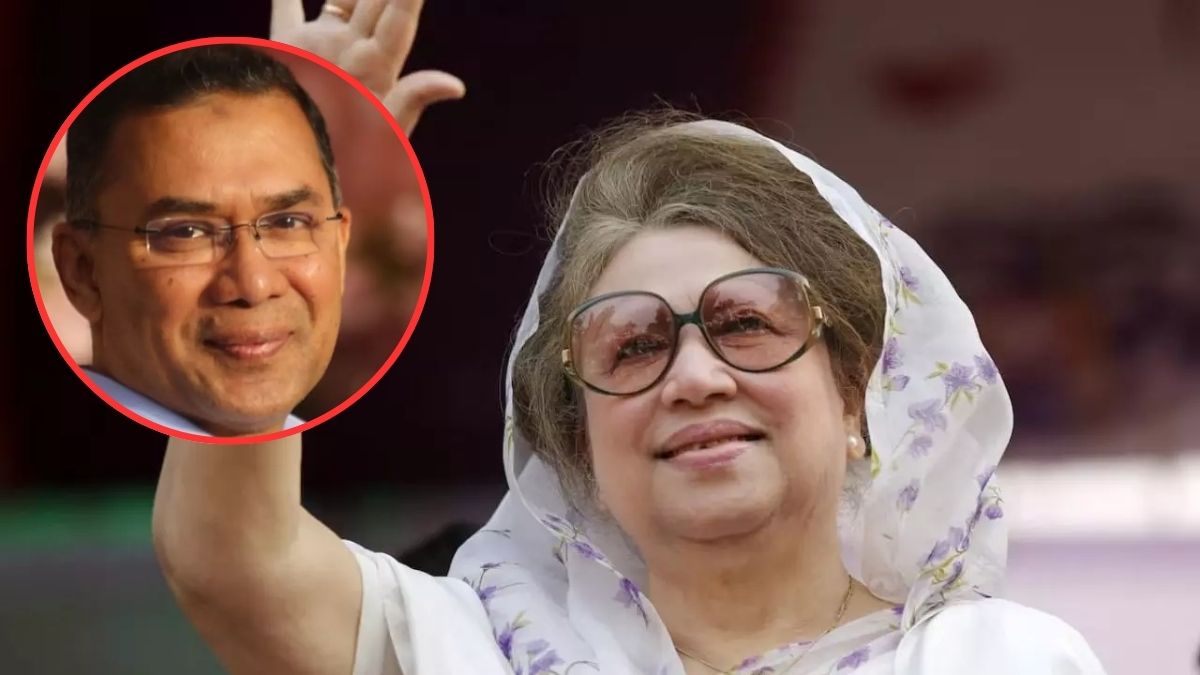
Jail, exile and now claiming power… Will the return of Khaleda Zia’s ‘heir’ returning to Bangladesh after 17 years prove to be a game-changer?

Khaleda Zia son Tarique Rahman return, Bangladesh elections 2026: Bangladesh is currently going through a period of political instability, violence and increasing activities of radical Islamic groups. Before the general elections to be held in February 2026, a major political incident has caught the attention of the entire country. He is- former Prime Minister Khaleda Zia BNP’s son and acting president Tariq Rahman returns to Bangladesh after 17 years.
Read now on WhatsApp also, click to subscribe
on thursday tariq rehman Returning to Dhaka from London. Bangladesh Nationalist Party (BNP) has received permission to organize a formal program to welcome him. This comeback is taking place at a time when Bangladesh is at a crucial juncture.
Who is Tariq Rehman?
Tariq Rahman is considered the political successor of former Bangladesh Prime Minister and BNP chief Khaleda Zia. In 2008, after spending 18 months in jail during the military-backed government, he went to Britain and was living in exile since then. Now his return after 17 years is being seen as a complete political comeback of BNP.
Why is his return important?
BNP is currently considered to be the strongest contender in the February 2026 elections. In the current situation, when Sheikh Hasina’s Awami League has been thrown out of the elections, BNP is at the center of mainstream politics in Bangladesh. In such a situation, the presence of Tariq Rehman can give a decisive edge to the party.
Mohammed Yunus vs BNP
The opposition is accusing the interim government led by Nobel laureate Mohammad Yunus that it neither has the mandate nor the authority to take long-term decisions like foreign policy… Tariq Rehman has clearly said that the interim government should be limited to holding elections only.
‘Bangladesh First Policy’
Tariq Rehman has presented a clear outline of his foreign policy – Not Dilli, Not Pindi — Bangladesh First. That means neither inclination towards India nor towards Pakistan, but only the interests of Bangladesh are paramount. This policy is different from both Sheikh Hasina’s India-centric approach and Yunus’s pro-Pakistan policy.
Jamaat-e-Islami and electoral mathematics
The Yunus government gave Jamaat-e-Islami a chance to return to the mainstream, so that the BNP could be balanced. But Jamaat has refused to join any traditional alliance. Experts believe that delay in elections can harm BNP and benefit Jamaat and NCP.
an atmosphere of violence and anarchy
As elections approach, political violence has intensified in Bangladesh. Student leader and NCP labor organization chief Mohammad Motaleb Sikdar was shot in the head. Earlier, the assassination of fundamentalist leader Osman Hadi had shaken the entire country.
Anti-India statements and concerns
Anti-India statements are being made openly by NCP and its associated fundamentalist elements. One leader even threatened that India’s ‘Seven Sisters’ i.e. 7 North East states would be separated. India has completely rejected these allegations and has demanded the Bangladesh government to maintain peace and law and order.
What has happened till now? (Timeline Snapshot)
- Fall of Sheikh Hasina’s government
- Formation of interim government under the leadership of Mohammad Yunus
- Awami League was excluded from the elections
- Jamaat-e-Islami returns to politics
- NCP emerged from student movement
- Murder of fundamentalist leader Osman Hadi
- Bullet attack on NCP leader Motaleb Sikdar
- Increase in anti-India statements and violence
- Announcement of February 2026 elections
- Tariq Rahman returns to Bangladesh after 17 years

Comments are closed.