
Partition 1947: Why was this story banned in Pakistan? Know the truth of Asghar Wajahat’s play

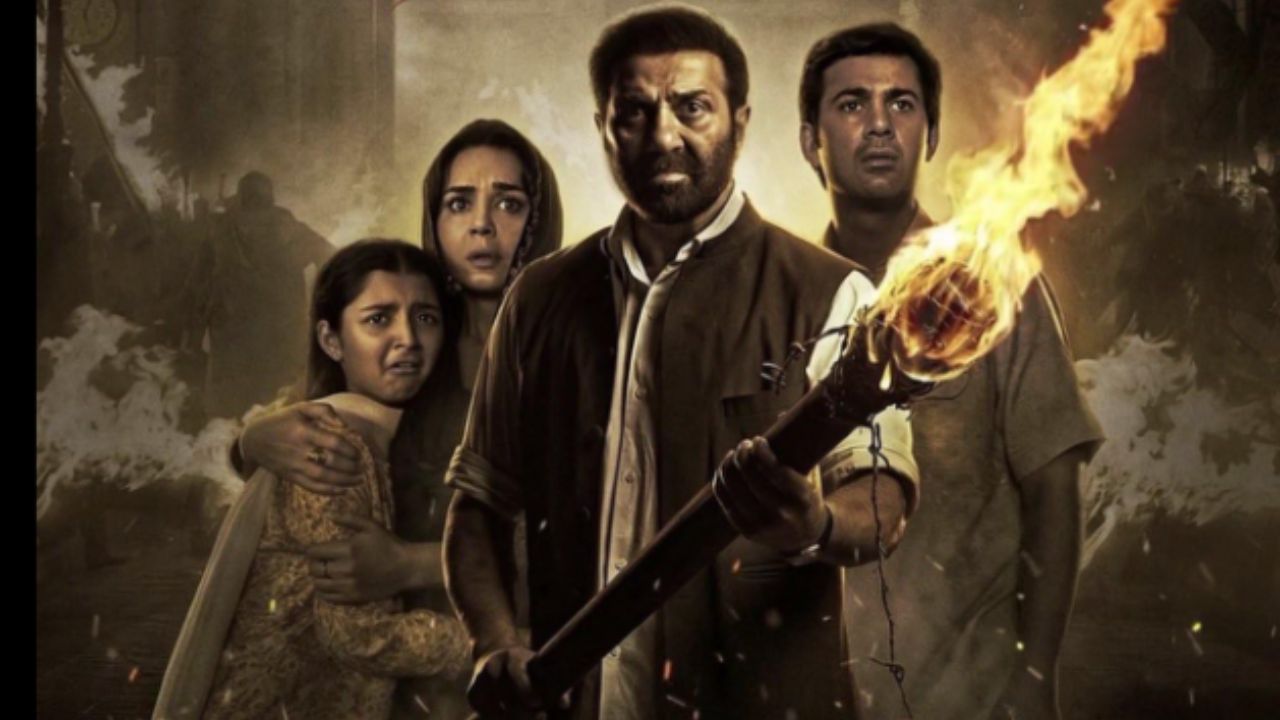
Sunny Deol: Three years after ‘Gadar 2’, once again the story of India-Pakistan is coming to light on the big screen. Whose name is ‘Batwara 1947’ (Batwara 1947), when the teaser was released, tremendous excitement was seen among the audience. This film, produced by Aamir Khan, is ready to be released in theaters on 14 August 2026. The story of the film is based on the 1947 India-Pakistan partition. But an interesting link related to the film has come to light whose links are directly connected to Pakistan. The year 1947… between 14th and 15th August, on one side independence was being celebrated, while on the other side the most horrifying scene of history was being written.
Land was divided, houses were divided and overnight such a wall of religion was erected between humans which destroyed millions of happy families forever. When this pain, fear and human greed of partition was brought before the world through a play, the corridors of power were shaken. We are talking about the famous play ‘Jis Lahore Nahi Vekhya, O Jamya Hi Nahi’, on which the foundation of the blockbuster film ‘Batwara 1947’ (Viceroy’s House) was laid. But do you know what was there in this story that gave sleepless nights to the Pakistan government? Why was it completely banned there?
That play of Asghar Wajahat
This entire story begins with a play written by well-known writer and playwright Asghar Wajahat, whose name is ‘Jis Lahore Nahi Vekhya, O Jamya Hi Nahi’. This was not just a drama, but a story of human emotions that were bleeding during the period of partition, which was created through drama. Which meant ‘One who has not seen Lahore, it is as if he has seen nothing’. This saying was once famous for the beauty of Lahore and its culture, but Asghar Wajahat through it exposed the dark truth of partition which both the countries often try to hide.
What was the original story of the play?
The story is of the year 1947 in Lahore, riots were raging in the city. The Hindu population was fleeing to India to save their lives and the Muslim refugees uprooted from India were reaching Pakistan. Amidst this turmoil, a Muslim family from India (the Mirza family) is allotted a luxurious mansion in Lahore by the government. When the Mirza family steps into their new mansion, they are stunned. The mansion was not empty, there was an old Hindu woman living there, whom everyone called ‘Mai’. Even during that dreadful period of partition, Mai had clearly refused to leave her house, her memories and her Lahore.
A feeling of belonging grows amidst hatred
Initially the Mirza family sees Mai as an unwanted guest. Amidst the atmosphere of communal tension and hatred, they feel that a Hindu woman living with them is not without danger. But as days pass, Mai’s unconditional love, affection and passion for Lahore wins the hearts of the Mirza family. They consider mother as a part of their family. But the real twist in the story comes when local goons and fundamentalist elements start opposing this. They cannot tolerate the presence of a Hindu woman in a Muslim area. The end of the play is extremely poignant and hair-raising, which forces one to think about how the lines drawn by politics became bigger than human emotions.
What is its connection with the film ‘Batwara 1947’?
When renowned British-Indian filmmaker Gurinder Chadha decided to make a film on the tragedy of Partition, he combined the human aspects of the drama with historical documents to create ‘Viceroy’s House’, which is being released in India as ‘Batwara 1947’. In this film, on one hand, the political diplomacy going on inside Lord Mountbatten’s palace and the ideological differences between Nehru, Jinnah and Gandhi were shown, while on the other hand, the pain of the common people was brought on screen, capturing the soul of this drama. The film made it clear that partition was not just a line drawn on a map, but a painful political decision to tear two hearts and cultures apart.
Why was this story banned in Pakistan?
There were three major reasons for banning this play in Pakistan, the first reason was that the image of Mohammad Ali Jinnah, who is called ‘Quaid-e-Azam’ in Pakistan, is a very sensitive matter there. In some scenes of the film and drama, Jinnah was shown adopting a stubborn stand for partition. Which Pakistan Censor Board considered it against Jinnah. The second reason was that in the Pakistani narrative it has always been shown that at the time of partition, only Muslims were subjected to atrocities. But this story and film of Asghar Wajahat showed that the fire of hatred was burning equally on both sides. But Pakistan Censor Board did not agree with this also. In the end, the Censor Board also argued that showing this film could reopen old wounds and worsen the communal atmosphere in the country. The scenes of riots and religious fanaticism shown in the film were considered ‘controversial’ and its screening was completely banned in Pakistan.

Comments are closed.