
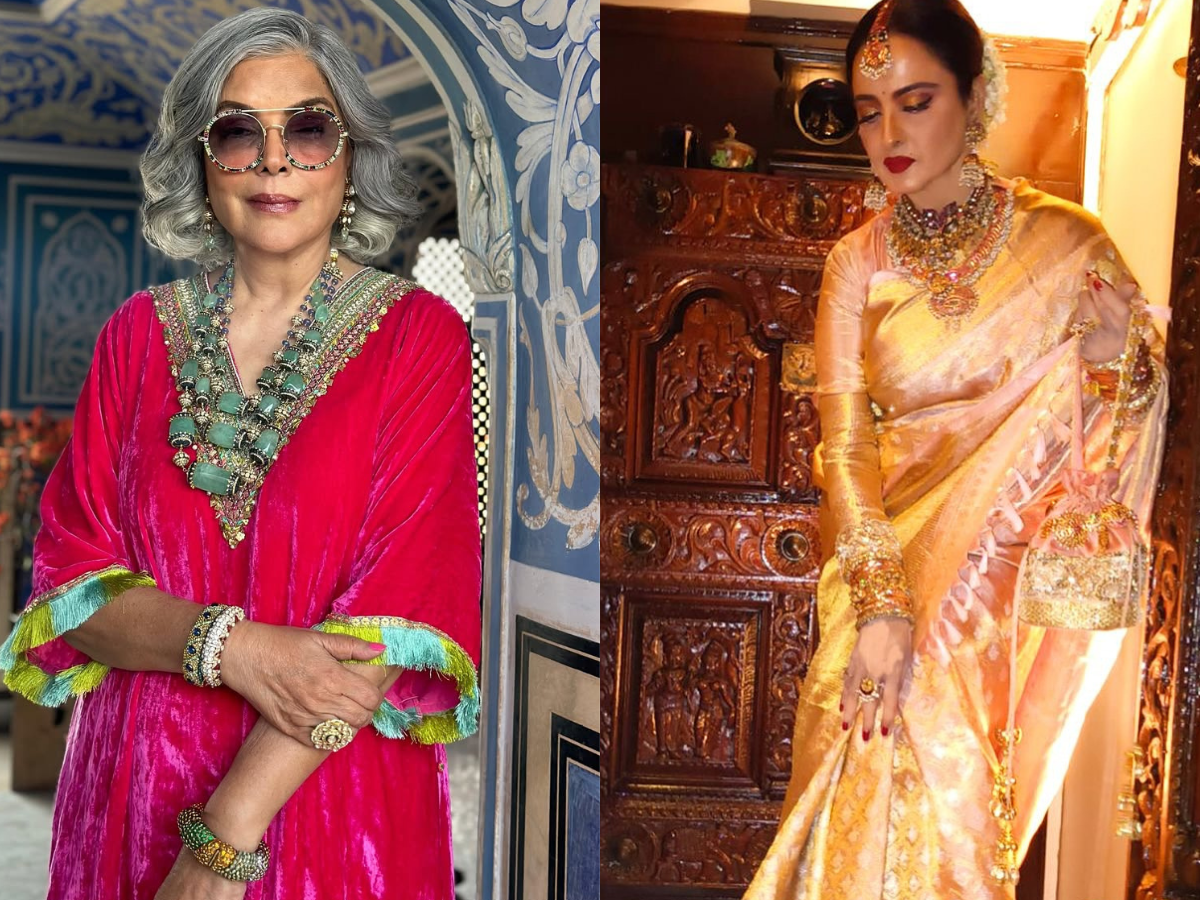

If the pages of the cultural chronicle of India are flipped through, it would become evident that the most dynamic, indicative, and flamboyant pages are penned in the style of Indian fashion from the world of Bollywood. However, the journey of Indian fashion in the world of Bollywood is not merely about the clothes; it is the very pulsations of the country, its transformations, its economic dynamics, and the never-ending ambitions. It traversed from the meek saris of the black-and-white days to the world-class fashion on the red carpets of the present.
This look behind the lens isn’t just about remembering pretty dresses; it’s about understanding how filmmakers and designers used fabric, colour, and silhouette to build character, define an era, and ultimately, shape the Indian cinema fashion trends of an entire subcontinent. Let’s rewind the reel and trace how Bollywood style icons taught a nation to dream in colour, pattern, and sequins.
The Golden Age (1950s-60s): Elegance in Restraint
View this post on Instagram
(Kangana Ranaut – 60s inspired look)
The post-independence era of Hindi cinema was characterised by poetic romance and timeless grace. The fashion was an extension of this idealism. Actresses like Madhubala and Meena Kumari embodied a delicate, ethereal beauty. Think iconic Bollywood outfits that were heavy on tradition but breathtaking in their execution: the classic white sari with a border in Mughal-e-Azam, the chiffon saris of Sangam that floated against picturesque Swiss backdrops.
Bollywood costume design here was about subtlety. Fabrics were fluid, chiffon, georgette, and fine cotton. The focus was on exquisite drape, subtle embroidery, and an aura of unapproachable beauty. This was the foundation, the elegant grammar from which all future Bollywood fashion trends would spring.
The Zeenat-Zarda Decade (1970s): The Rebellious Turn
View this post on Instagram
If the 60s whispered, the 70s Bollywood fashion shouted. This was the decade of the disco ball, and Bollywood fashion gleefully caught the light. The true revolution arrived with Zeenat Aman. She didn’t just wear clothes; she wore an attitude. In Hare Rama Hare Krishna, she introduced the hippie chic look to India, bell-bottoms, headbands, and kurtas. In Qurbaani, her yellow swimsuit scene wasn’t just bold; it was a cultural reset.
This 70’s Bollywood retro fashion era saw a dramatic evolution of Bollywood style from traditional to contemporary Western fusion. Synthetics like polyester became popular. Colours turned bold, silhouettes became body-conscious, and the screen siren was redefined as confident, modern, and unabashedly sexy. It was the first major crack in the traditional mould.
The Romantic & Quirky 80s-90s: Excess and Everyday
View this post on Instagram
The 80s embraced glorious, unapologetic excess. Think Rekha’s heavy Kanjeevaram saris, piled-high hair, and dramatic eyeliner, a look that cemented her as a Bollywood style icon. Shoulder pads, neon, and sequins were everywhere. This was the era of the “designer” label entering mainstream consciousness, with names like Bhanu Athaiya making history.
The 90s Bollywood fashion offered a fascinating contrast. It is split into two parallel tracks. One track was the lush romanticism of Yash Raj films, where chiffon saris in the rain (Dilwale Dulhania Le Jayenge) became the ultimate symbol of Bollywood glamour. The other track was the rise of the “girl-next-door” in films like Raja Hindustani, where Karisma Kapoor’s simple ghagras and midriff-baring blouses sparked a nationwide trend. This duality showed Bollywood fashion could be both fantastical and relatably aspirational.
The Globalised 2000s: The Designer Era & Brand Mania
View this post on Instagram
View this post on Instagram
The new millennium marked a professional and global shift. Bollywood costume design was no longer just the domain of studio tailors; it became the playground of Bollywood fashion designers like Manish Malhotra, who essentially shaped an era with his glittering, NRI-friendly glamour in Kuch Kuch Hota Hai and Kabhi Khushi Kabhie Gham.
This 2000s Bollywood fashion saw the meteoric rise of the fashion influencer. Actors became walking brand ambassadors. Red carpet appearances at international events became as scrutinised as film performances. The look was polished, branded, and media-savvy. Western luxury labels began dressing stars, and the fusion of Indian and Western wear in films like Bunty Aur Babli became the definitive urban style.
The Contemporary Scene (2010s-Present): The Eclectic, Personal Revival
View this post on Instagram
The current fashion in Bollywood defies easy definition, and this is what makes it so fashionable. It’s a carefully crafted confluence of different strands of fashion. There’s a clear resurgence in the use of handloom fabrics and Indian textiles, thanks to the likes of Vidya Balan and Kangana Ranaut, among others.
At the same time, street fashion, fluid cuts, and bold statements with minimalism come together. There is greater genre differentiation in films, and the costumes reflect this, ranging from the realistic and tough Garmin look of Gully Boy to the retro and glamorous style of The Dirty Picture. Today, the Bollywood fashion idol is a chameleon that can morph from wearing a traditional saree at a wedding to a sleek pantsuit at a film festival. The story has shifted to self-expression.
Why the Evolution Matters
What makes this fashion story fascinating is that cinema continues to shape everyday life. Clothes worn on screen inspire markets, and stars who adopt sustainable practices can nudge entire supply chains. Bollywood style is not merely costume; it is a cultural shorthand. Whether it is the sari that taught a generation about elegance or a red carpet gown that turned into next season’s must-have, film fashion has influence.
Final Takeaway
The journey of Bollywood fashion through the decades is, in essence, the story of modern India finding its visual voice. It moved from demure tradition to rebellious westernisation, through excessive glamour to a balanced, global-individualistic confidence. Each iconic Bollywood outfit, from Madhubala’s anarkali to Deepika’s Padmaavat lehengas to Alia’s Gangubai saris, is a cultural bookmark. In short, Bollywood remains both a mirror and a compass for style, guiding what people wear and why they choose to wear it.
If you love fashion that tells a story, follow the films. The next wardrobe moment might already be dancing across the screen.
The post Behind the Lens: The Evolution of Bollywood Fashion Through the Decades appeared first on NewsX.

Comments are closed.