
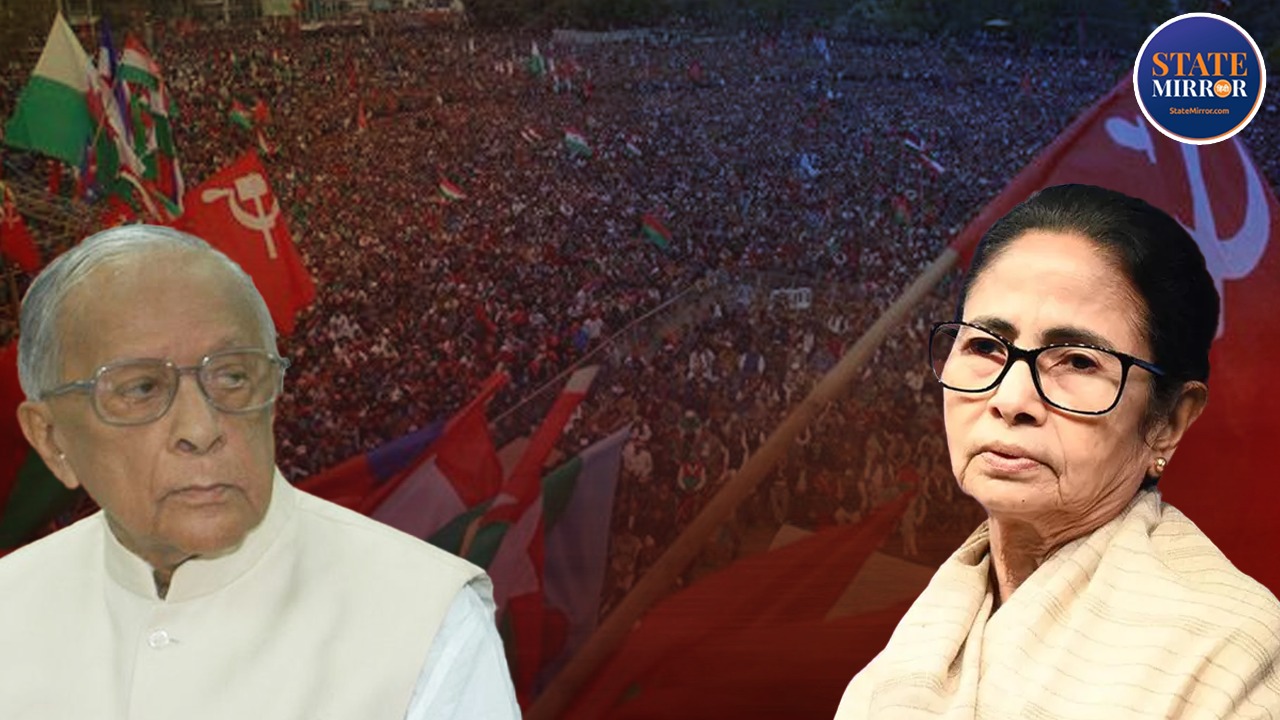
Naxalbari’s incomplete dream: Why did Charu-Kanu’s ‘revolution’ not change the reality, neither Jyoti nor Mamta, now who will fulfill it?

Amidst the hustle and bustle of West Bengal Assembly elections 2026, Naxalbari Uprising is once again at the center of political debate. The revolution that Charu Majumdar, Kanu Sanyal and Jangal Santhal had once dreamed of, was of ‘land, equality and social justice’. Even today it is considered incomplete. According to columnist Prabhat Kumar Roy, be it the 34-year-old Left government or Mamata Banerjee’s ‘change’, the change on the ground remained limited. Naxalbari’s issues ‘tribal rights, employment and development’ still appear more in political promises and less in reality. In such a situation, the 2026 elections have not only become a battle for change of power, but also a test of the question whether any party will be able to truly fulfill this unfulfilled dream, or Naxalbari will again be reduced to election slogans.
History of Naxalbari movement and how it started?
Naxalbari Uprising is considered a decisive event in the history of Indian politics. In 1967, landless farmers and tribals in the Naxalbari area of Darjeeling district launched a rebellion against the landlords. This was not just a local movement, but was the beginning of an ideological wave that spread across the country. At that time, deep economic inequality, landlord exploitation and administrative apathy in rural areas forced people to adopt the radical path. This movement soon became the center of national debate and a new political trend emerged in the form of ‘Naxalism’.
Who were Charu, Kanu and Jangal – and what were their roles?
There were three prominent faces at the center of this movement. Charu Mazumdar, Kanu Sanyal and Jangal Santhal. Charu Majumdar is considered the ideological pillar of this revolution, who gave the strategy of armed struggle inspired by Maoism. Kanu Sanyal organized it on the ground and expanded the movement by including farmers. Jangal Santhal united the tribal community and gave it the form of a mass movement. Together, these three gave birth to an alternative thinking against power and system.
What was the real dream of Naxalbari movement?
The basic objective of the Naxalbari movement was equal distribution of land, end of the Zamindari system and establishment of an exploitation-free society. This was not just an issue of economic reform, but also a question of social justice and political equality. The leaders of the movement believed that unless the poor had control over land and resources, real independence would remain incomplete. That’s why he talked about changing the system through revolution. This dream became a ray of hope for millions of poor farmers and tribals of that time.
What did Jyoti Basu government change and what remained incomplete?
Under the leadership of Jyoti Basu, the Left Front government came to power in 1977 and took major steps towards land reforms. Under ‘Operation Barga’, tenant farmers were given legal rights, which provided security to millions of people on their land. This is considered the biggest achievement of the Naxalbari movement.
But despite this, many big issues remained incomplete. The pace of industrial development remained slow, due to which employment opportunities remained limited. The expected improvement could not be achieved even in the fields of education and health. Problems like poverty and migration persisted in rural areas. Thus, despite land reforms, comprehensive socio-economic transformation remained incomplete.
Why was the dream of Naxalbari not fulfilled in the last five decades?
More than five decades have passed since the Naxalbari movement, but its core issues have not been completely resolved. There were many reasons behind this:
- First, political parties included the issues of the movement in their agenda, but did not show consistency in implementing them.
- Second, lack of industrial investment limited employment opportunities, which stunted economic growth.
- Third, weaknesses in the administrative structure and corruption reduced the effectiveness of the schemes.
- Fourth, with time the ideological base of the movement weakened and it got divided into different groups.
- All these reasons together prevented the major change that was expected.
Mamata Banerjee’s ‘Change’ – Has there been real change in Naxalbari?
Mamata Banerjee came to power in 2011 with the slogan of ‘change’. He harnessed public anger against Left rule in his favor and led major political changes. His government launched many social schemes – such as Kanyashree, Sabuj Sathi, and Rural Road Development. Some improvement was also seen in the infrastructure. But in areas like Naxalbari, large-scale industrial development, sustainable employment and economic empowerment are still limited. According to local people, political change took place, but the change that was expected was not visible at the ground level.
Can 2026 elections provide a solution to the unfulfilled dream of Naxalbari?
Now the eye is on the 2026 assembly elections, where all the major parties (TMC, BJP and Congress) are in the fray with their own strategy. The question is whether any party will present a concrete plan on the core issues of Naxalbari (land, employment, education and health)? If the elections remain limited only to political allegations and counter-accusations, then perhaps this dream will again remain unfulfilled. But if any party offers practical and long-term solutions to grassroots problems, this movement can find a new direction.
Naxalbari Movement – Turning Point of Bengal Politics
In Didi: The Untold Mamata Banerjee, Shutapa Paul has linked Mamata Banerjee’s political journey with grassroots struggles and mass movements. In the book, the Naxalbari movement has been presented as the turning point of Bengal politics, which decided the direction of left politics and the mass politics that emerged later.
The author says that even though the Naxalbari revolution did not bring immediate change of power, it brought the questions of social inequality, land rights and the poor class into mainstream politics. The rise of Mamata Banerjee was also seen to be linked to this background, where she gave the slogan of ‘change’ against the Left rule.
However, the book also indicates that after coming to power, Mamata faced the same challenges (poverty, unemployment, and rural backwardness) that the Naxalbari movement wanted to eliminate. Thus, the book leaves the question whether political change has actually translated into the radical social transformation that Charu and Kanu envisioned, or whether that dream remains unfulfilled.
Will the dream of Naxalbari be lost in history?
Naxalbari is not just a movement, but an ideology – of equality, justice and rights. The revolution that Charu, Kanu and Jungle had dreamed of has not been fully realized even today. Even after five decades, this question remains equally relevant – will any government be able to fulfill that unfulfilled dream, or will Naxalbari remain an incomplete revolution in the pages of history? The 2026 elections can answer this question, but for this it is necessary to move beyond politics and give priority to real development and social justice. Only then will the dream of Naxalbari truly be fulfilled.

Comments are closed.