

133
With just 24 hours to go before votes begin to be counted in the 2026 West Bengal Assembly elections, the air in the state hangs heavy with anticipation, accusations and unusual political theatre. The ruling Trinamool Congress (TMC), led by Chief Minister Mamata Banerjee, and the challenger Bharatiya Janata Party (BJP) are both in full precount war mode—but the mood in their respective camps could not be more different. The TMC is restless. The BJP is composed. And somewhere in between, the police, the Election Commission of India (ECI), and the Central Armed Police Forces (CAPF) are navigating a storm of allegations and counter-allegations in one of India’s most fiercely watched electoral contests.
It began, as dramatic things in Bengal tend to, in the small hours of the morning. Chief Minister Mamata Banerjee emerged around 12.07 a.m. on May 1 after spending nearly four hours at the counting centre for her Bhabanipur constituency, housed in Sakhawat Memorial School in south Kolkata. “It is essential to maintain transparency. People’s votes must be protected. I rushed here after receiving complaints. The Central forces initially did not allow me to enter,” she told reporters as unseasonal rain poured down. The images of a sitting Chief Minister locked out of a counting centre—even briefly—were striking, regardless of how one reads the politics behind them. Earlier, in a video message, Mamata had urged party leaders and polling agents to maintain a 24-hour vigil on EVM strong rooms, alleging that the BJP could attempt to tamper with the machines before counting begins.
The Election Commission was having none of it. West Bengal Chief Electoral Officer Manoj Agarwal called CM Banerjee’s allegations “baseless,” saying: “There is no scope for any wrongdoing given the arrangements made,” and confirming a three-layer security system with round-the-clock CCTV monitoring at all counting centres. TMC candidates Kunal Ghosh and Shashi Panja then staged a sit-in outside the Khudiram Anushilan Kendra in north Kolkata, alleging possible EVM tampering, leading to face-offs between party supporters. Ghosh offered a dramatic account: “Party workers had been present outside the strongroom till 3:30 pm. Suddenly, an email informed us it would be opened at 4 pm. We rushed here. Now we are not being allowed to enter. BJP is being invited.”
The BJP-TMC standoff ultimately led the Kolkata Police to impose Section 163 of the BNSS, 2023, banning gatherings in at least seven areas around EVM strongrooms—a measure that, in a different political era, many would not have readily associated with a force long perceived as closely aligned with the state’s ruling establishment. That perceived alignment now appears to be shifting. With CAPF personnel deployed extensively across the state and Central forces dominating security at counting centres, local police find themselves operating in an environment where the traditional levers of political influence seem diminished, at least for the moment. It is in this context that TMC vice-president Jay Prakash Majumdar’s formal complaint to the Chief Election Commissioner of India, dated May 1, takes on additional significance.
Addressed to the CEC, the CEO of West Bengal, and the Commissioner of Police, Kolkata, the letter complained about a Facebook post by Gautam Das, Officer-in-Charge of Kalighat Police Station, who had uploaded a photograph of himself in uniform holding what Majumdar described as “a very sophisticated weapon,” captioned: “Ready for new assignment.” Majumdar called the post “not only disturbing but also highly objectionable in the eye of law,” citing a Kolkata Police memo (No. 16/CP, dated 19/02/2026) that prohibits officers from posting photographs of themselves in uniform on social media. He questioned whether the officer was authorised to carry or trained to use the weapon, and characterised the post as “a direct threat to the general public,” demanding immediate inquiry and action.
The complaint is a telling indicator of the TMC’s current state of mind: a ruling party finding itself in the unfamiliar position of filing complaints against the very police apparatus it has long been accused of controlling. The BJP framed the shift differently. BJP MP Sukanta Majumdar alleged that the TMC is “not habituated to impartial administration,” saying the Election Commission was now “appointing officers who are known for honesty, discipline and being impartial”—officers the TMC, he claimed, was desperate to obstruct. In party offices across Kolkata, a quieter anxiety has been building. Every candidate is entitled to deploy counting agents who watch the process in real time—effectively, a party’s last line of democratic defence at the count. The ECI has introduced a new QR code-based verification mechanism for such personnel, adding technological oversight to the process.
There are unverified reports circulating in political circles that the TMC is finding it harder than usual to fill its full quota of counting agents across constituencies—a whisper that, if true, could reflect either a logistical squeeze or a subtler crisis of confidence among party workers. The TMC has not formally acknowledged any such difficulty, and the claim remains unconfirmed. The TMC also fought—and lost—a significant legal battle over who supervises counting tables. The party moved the Supreme Court challenging the ECI’s decision to deploy only Central government and PSU employees as counting supervisors. The Calcutta High Court had already rejected this argument, ruling that the directive ensuring at least one Central or PSU official at every counting table was aimed at reinforcing neutrality.
In a special session on Saturday, the Supreme Court Bench firmly dismissed the TMC’s claim that Central employees could be influenced by the BJP: “Such an allegation is difficult to accept.” Trinamool counsels Kapil Sibal and Kalyan Banerjee argued the directive lacked jurisdiction; the EC’s counsel flagged the last-minute timing of the plea as an attempt to delay the process. In contrast to the TMC’s visible anxiety, the BJP’s pre-count posture has been markedly composed—even celebratory. State BJP president Samik Bhattacharya set the mood with characteristic sharpness. “This was an election for change. Not just the change of government or leader, but change necessary to bring back Bengal’s dignity, culture, business and education, which was destroyed by the Trinamool Congress,” he told reporters, adding: “We will give a party to everyone on behalf of the BJP on May 4.”
During the second phase of voting, he had drawn on a cricket analogy: “Our batsmen have scored a century in the first phase; now the target is a double century.” In a pointed rejoinder to Abhishek Banerjee’s campaign language, he said: “Those who said they would play DJs, we hope they will play DJs for us after the 4th”. Leader of Opposition Suvendu Adhikari was more specific, turning his guns on Mamata Banerjee’s home turf. “Mamata Banerjee spent the entire day trying to intimidate the Central forces. I will win Bhabanipur by over 20,000 votes. I will lead in seven of the eight wards. The BJP will win more than 180 seats. A BJP government will be formed,” he told reporters. In 2021, Adhikari famously defeated Banerjee in Nandigram; he is now seeking to repeat the feat in her own backyard.
Sukanta Majumdar went the farthest of all. “I believe a government of the Bharatiya Janata Party is going to be formed here with a two-thirds majority. Many people who had migrated to other states for work returned to cast their votes against the current government. When the EVMs are opened, the results will clearly reflect a massive victory for the BJP under Prime Minister Narendra Modi,” he said. He had earlier added: “Look, the BJP government is being formed. For Bengal, exit polls are more difficult because people here don’t speak much; they act. We are forming a government with more than 170 seats.”
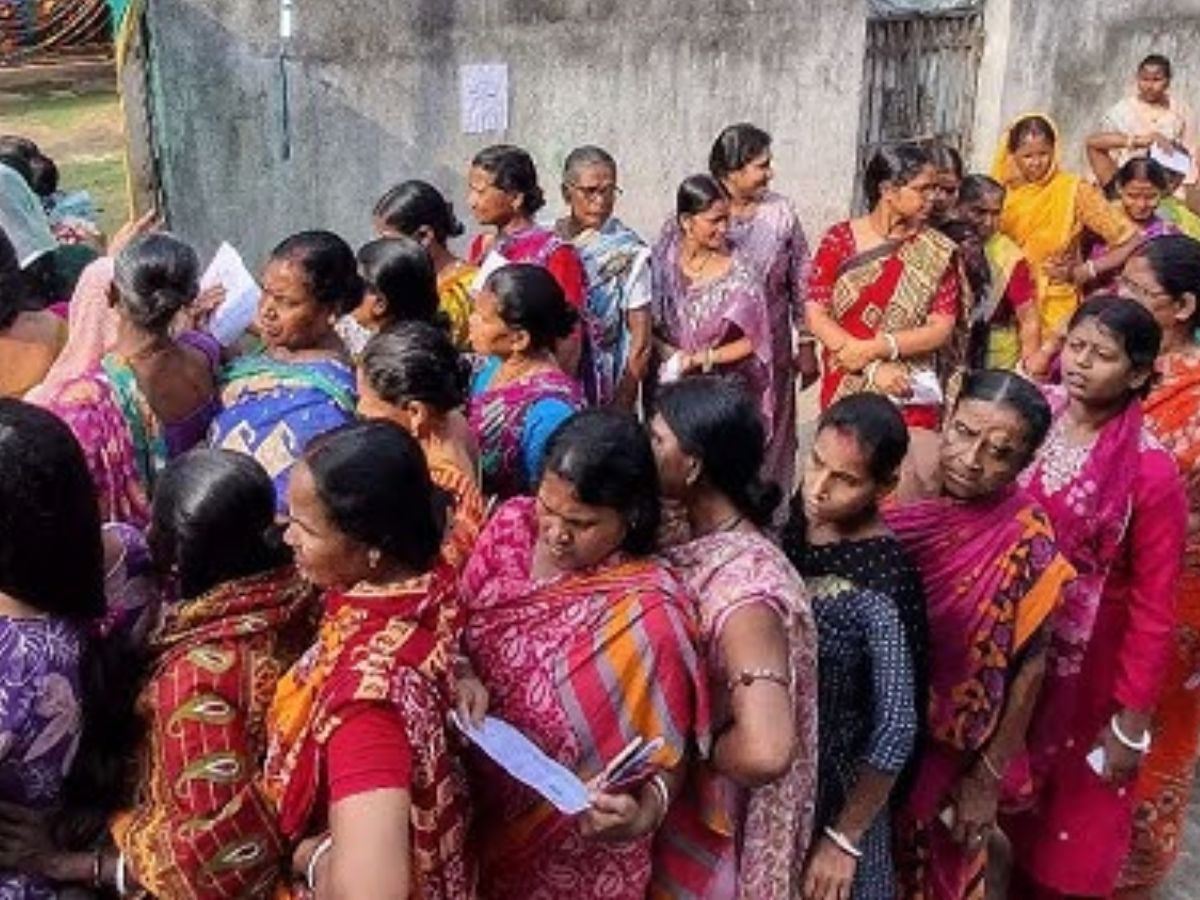
Exit polls—whose track record in Bengal is historically mixed—have broadly suggested a BJP edge. Mamata called them “paid” surveys “circulated from the BJP office,” insisting the TMC would cross “226 in 2026.” The elections recorded a historic voter turnout of 92.93%, surpassing even 2011—the election that ended 34 years of Left Front rule. Over 350,000 security personnel, including the NIA deployed in a state election for the first time, were stationed across West Bengal. The high turnout is being read differently by each side. The TMC sees validation; the BJP sees a verdict. The truth, as it usually is in Bengal, will begin to emerge on the morning of May 4—when the machines start talking.
Until then, the vigil continues.

Comments are closed.