

4
New Delhi: Abhishek Banerjee, national general secretary of the All India Trinamool Congress and Member of Parliament from Diamond Harbour, mounted a sharp attack on the Bharatiya Janata Party’s election manifesto for West Bengal, questioning its credibility, accusing the Centre of neglecting the state, and asserting that Bengal “will not be ruled from Delhi or Gujarat.” Banerjee, is also the nephew of Chief Minister Mamata Banerjee.
The BJP’s manifesto was released on Friday April by Union Home Minister Amit Shah, prompting a response from the Trinamool Congress leadership.
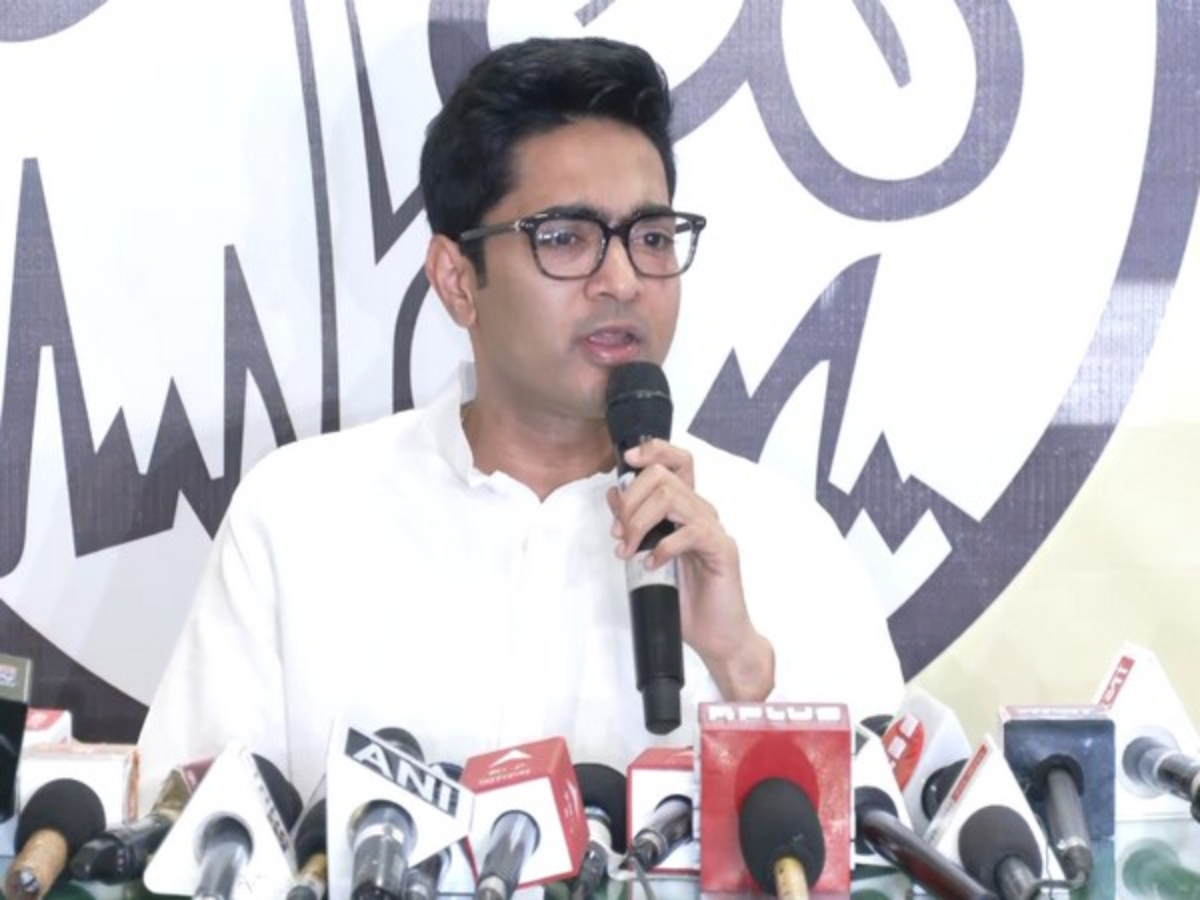
Addressing a press conference at Trinamool Bhavan, Banerjee described the document as a “15-point list of promises without accountability” and said the BJP should have begun with an apology to the people of Bengal for alleged harassment linked to citizenship and identification exercises over the past six months.
Banerjee claimed that large numbers of names had been removed from official records in recent exercises, alleging that nearly 90 lakh names were deleted in multiple phases, with a significant proportion belonging to Hindus. He linked this to earlier exercises such as the National Register of Citizens in Assam, alleging that Bengali-speaking populations had faced discrimination.
He criticised remarks attributed to BJP leaders on infiltration, arguing that the party was attempting to portray Bengal through a “foreign lens.” Referring indirectly to comments made during the manifesto release, Banerjee said any suggestion that Bengal would be governed from outside the state was an insult to its electorate.
Raising questions on national security, he cited incidents including the Pahalgam attack to argue that the Centre had failed to ensure safety despite controlling key agencies. He also questioned the BJP’s repeated emphasis on infiltration, saying similar claims had been made for over a decade without demonstrable outcomes.
On economic promises, Banerjee challenged the BJP to account for its past commitments, including job creation. He referred to earlier national-level assurances made during the 2014 general election campaign, arguing that employment targets had not been met. He also questioned proposed financial assistance schemes, including monthly stipends for youth and women, asking why similar measures had not been implemented in BJP-ruled states.
He contrasted these with the Trinamool Congress government’s welfare schemes, including Lakshmir Bhandar, which provides monthly financial assistance to women in the state, stating that such programmes were already being delivered without the conditions attached to central schemes.
On governance and corruption, Banerjee accused the BJP of inconsistency, alleging that leaders facing corruption charges had received relief after joining the party. He also criticised the Centre for not releasing detailed financial data on funds allocated to Bengal under central schemes such as housing and rural employment.
Banerjee further questioned proposals relating to agriculture, industry, and social policy, including the proposed implementation of the Uniform Civil Code, stating that such measures raised concerns among minority and tribal communities.
He also highlighted pending demands such as the inclusion of regional languages in the Eighth Schedule of the Constitution and alleged delays in central support for sectors like tea and jute.
Concluding his remarks, Banerjee said voters in West Bengal would assess political parties based on performance rather than promises, adding that “the people of Bengal will decide their future.”

Comments are closed.