
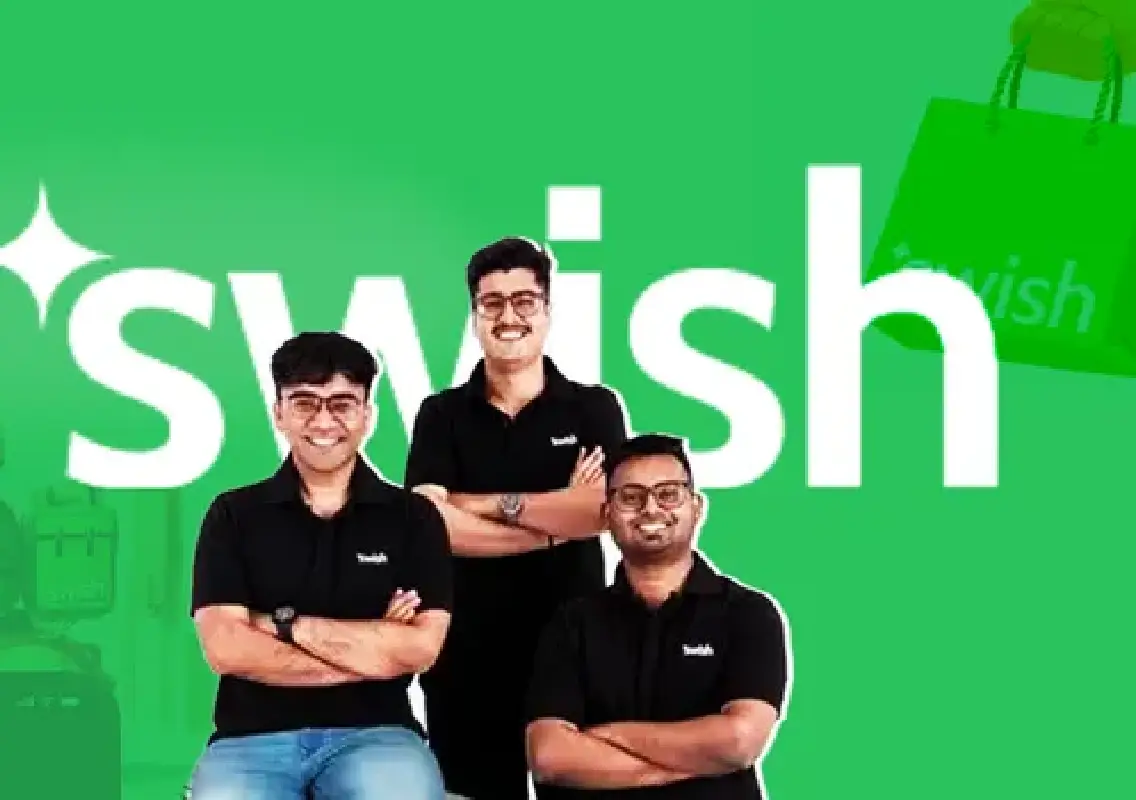

Swish, a Bengaluru-based food delivery startup, has raised $38 million in a Series B funding round, signalling strong investor confidence in its rapid 10-minute fresh food delivery model.
Strong investor backing
The funding round was led by Hara Global and Bain Capital Ventures, with participation from Accel, Stride Ventures, and Alteria Capital. The latest investment values Swish at $139 million post-money—more than double its valuation from the previous year—bringing its total funding to $54 million.
Betting on ultra-fast delivery
Founded in 2024, Swish operates a full-stack model, managing its own kitchens, supply chain, and delivery network. Unlike traditional marketplace platforms, the startup focuses on hyperlocal clusters with delivery radii of about one kilometre, aiming to improve efficiency and reduce costs.
The company currently processes around 20,000 orders daily, a sharp rise from 5,000 orders just four months ago. It operates across 10 micro-markets in Bengaluru, targeting dense urban neighbourhoods.
Focus on efficiency and repeat users
Swish offers over 200 items, including meals, snacks, and beverages, with an average order value between ₹200 and ₹250. The platform has seen strong repeat usage, particularly among young consumers aged 20 to 35, with some users placing more than 10 orders per month.
The company has also invested in automating kitchen operations to ensure faster preparation and consistent quality, a key factor in maintaining its 10-minute delivery promise.
Industry challenges remain
Despite Swish’s rapid growth, ultra-fast food delivery remains a challenging segment in India. Larger players such as Swiggy, Zepto, and Zomato have recently scaled back similar rapid-delivery initiatives due to high operational costs and logistical complexities.
Swish, however, believes its tightly controlled, hyperlocal approach offers better unit economics and sustainability.
Expansion plans ahead
Looking ahead, the startup plans to deepen its presence in Bengaluru and expand into major markets like Delhi-NCR and Mumbai. While early signs of profitability have emerged in older kitchen clusters, the long-term viability of the model will depend on maintaining high order volumes and operational efficiency.

Comments are closed.