
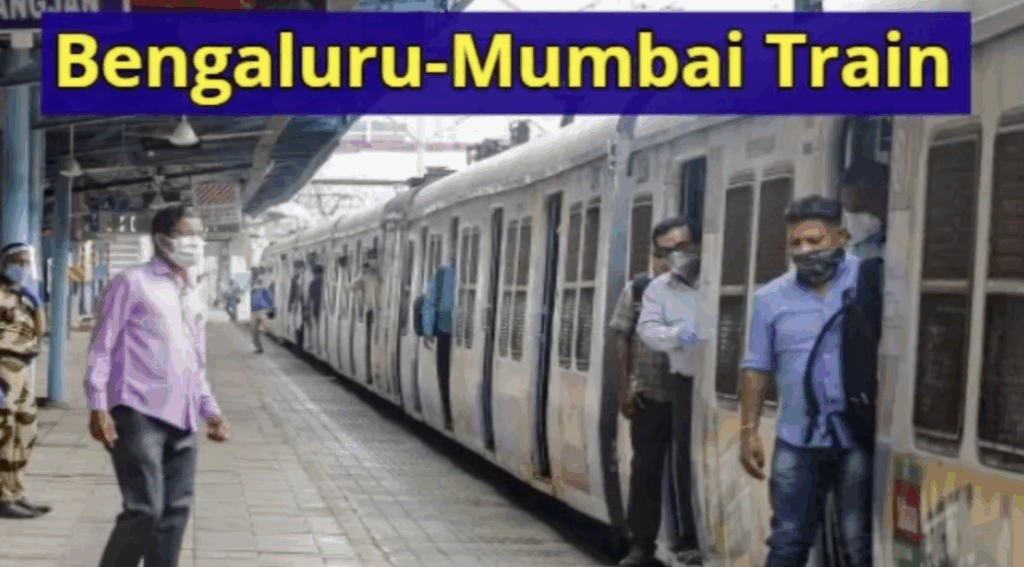

India’s two biggest economic powerhouses — Bengaluru, the country’s tech capital, and Mumbai, the financial hub — are finally set to receive a major railway connectivity boost. A new superfast train between the two cities is expected to launch by June 2026, nearly three decades after the launch of the iconic Udyan Express.
Union Minister Pralhad Joshi confirmed that the service is likely to be transformed into a next-generation Vande Bharat Sleeper train in the near future, signaling Indian Railways’ aggressive push toward faster and smarter long-distance travel.
Travel Time May Drop By 25%
Currently, the Bengaluru-Mumbai rail journey covers around 1,136 km and takes almost 20 to 24 hours via conventional trains like the Udyan Express. With the upcoming superfast train, travel duration is expected to reduce to nearly 14-16 hours.
That means passengers could save almost 4-8 hours per trip — a huge advantage for business travelers, IT professionals, startup founders, students, and tourists moving between the two metro cities.
The route is expected to pass through key Karnataka growth centers including Tumakuru, Davanagere, Hubballi-Dharwad, Haveri, and Belagavi, improving intercity mobility across central Karnataka as well.
Vande Bharat Sleeper: India’s New Rail Ambition
The bigger story, however, is the expected conversion into a Vande Bharat Sleeper service. Unlike the current chair-car Vande Bharat trains, the sleeper version is designed for overnight journeys exceeding 1,000 km.
The Vande Bharat Sleeper trains are equipped with:
- AC First Class, 2AC, and 3AC coaches
- Automatic doors and bio-vacuum toilets
- Wi-Fi and infotainment systems
- CCTV surveillance and Kavach safety technology
- Potential speeds up to 160-200 kmph during trials
India plans to launch 12 Vande Bharat Sleeper trains by March 2027, making overnight rail travel faster, safer, and airline-like.
Why This Train Matters For India’s Economy
The Bengaluru-Mumbai corridor is one of India’s busiest economic routes, connecting IT, finance, manufacturing, startups, exports, and logistics ecosystems.
A faster rail connection can:
- Reduce pressure on expensive flights
- Improve business travel efficiency
- Boost tourism and regional trade
- Strengthen Tier-2 city connectivity
- Increase railway revenues significantly
Interestingly, existing Vande Bharat routes in South India are already witnessing massive demand. The Bengaluru-Chennai Vande Bharat reportedly achieved booking levels of nearly 120% and generated over ₹80 crore in revenue.
With strong passenger demand and India rapidly modernizing its rail infrastructure, the Bengaluru-Mumbai Superfast and future Vande Bharat Sleeper could become one of the country’s most transformative railway projects in recent years.
Image Source
Comments are closed.