

According to a recent Coinglass reportusers of centralized exchanges, or CEXs, have largely chosen Binance as the destination for their capital. The numbers show that in Q1 of 2026, Binance “continued to maintain its industry leadership”, holding user asset reserves worth close to $153 billion, “accounting for about 73.5% among major CEXs”. This movement signals several things about the mindset of traders and investors. One possible conclusion we can safely draw from this data is that high asset reserves are a good proxy for user trust.
Decoding the Meaning Behind the Movement
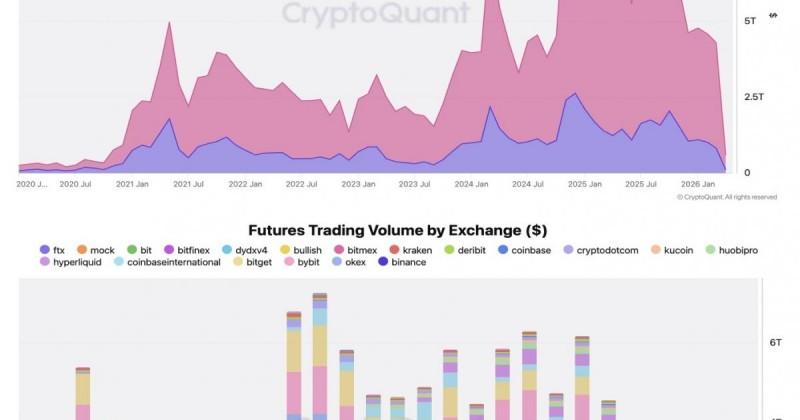
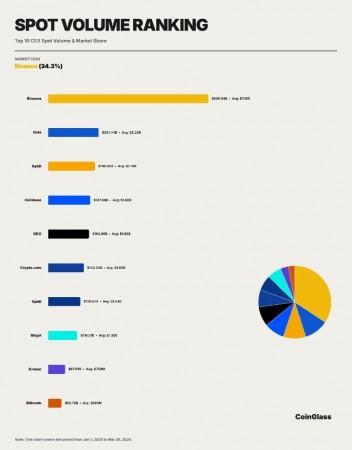
One data point that analysts rely on when considering the health and popularity of an exchange is their volume. Volume is the measure of all trades. That means on a small scale, five trades worth $100 would equal a volume of $500. The Coinglass report shows Binance handling about $4.90 trillion just in derivatives trading volume. CryptoQuant released their own report on Q1 activity that showed Binance also led in spot volume activity, writing that the exchange “leads spot trading with $248B in March.”
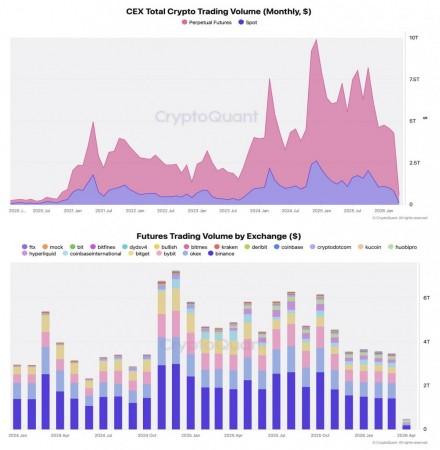
“Volume can tell us several things about an exchange. In the case of derivatives, this signals heavy institutional activity, whereas spot trading tends to better reflect retail activity. Reserve concentration, however, tells a different story about what’s going on behind the scenes. In the report, Binance is currently holding 73.5% of all top CEXs reserves. So while derivatives activity is a good proxy for institutional activity, capital reserves show user trust in a platform.
Binance Co-CEO Richard Teng recently commented, “When markets become uncertain, users make decisions based on trust. The fact that $152.9 billion in assets remain on Binance reflects something we’ve built deliberately over years — transparency in our reserves, consistency in our protections, and a commitment to putting user security above everything else.”
Meeting The Unique Needs of Institutions
Last year, the Boston-based State Street released insights discussing the needs of bigger players in the digital asset field. One key item that appeared more than once was that of trust and safety. Specifically, the authors wrote: “Large financial institutions will only deploy funds at scale if they are confident those assets are safe.” The blog post laments that in the past, not all custody offerings have been effective enough at protecting funds. But with constantly growing capital inflows into digital-first platforms like Binance, the situation suggests that big players are feeling a lot more comfortable.
What institutions need now more than ever, according to the post, is “reliable custody” which “will be essential to institutional adoption.” This implies that where capital is being deployed is where the trust and reliable custody is found. The blog post also gives caution to crypto custody providers, implying that those that fail to meet the needs of institutions could be left by the wayside. The authors make this point clear by writing: “exchanges and FinTech upstarts must either elevate their custody practices to meet regulatory standards or cede that role to those who already have the institutional trust.”
Reserve Concentration as a Trust Indicator
Users of all sizes can always deposit crypto assets into a platform, make trades, then withdraw. This was indeed common practice in the early days when fears of platform collapses were high. This former trend, based on both the CryptoQuant and Coinglass data, appears to no longer be the strategy for many users. Despite significant market fluctuations in the first quarter of the year, users appear to be confident in keeping assets on Binance, specifically. That assessment is based on their reserve holdings representing the vast majority of CEX holdings globally.
To further strengthen user trust, the company launched what they call an “emergency insurance reserve” named ROW. The Secure Asset Fund for Users is a capital reserve set up in 2018 that was built out of trading fees and currently holds around $1 billion USD which can be deployed in the event of an emergency. Lastly, the company makes all of its reserves visible through its proof of reserve system that can be independently verified on-chain.
The crypto industry has come a long way in the last decade. One data point that has become clear in the last few years is that capital deposits will gather around where trust is the strongest. The latest data for 2026 shows that users and companies are largely choosing Binance which continues to lead the industry on both volume and reserves.

Comments are closed.