
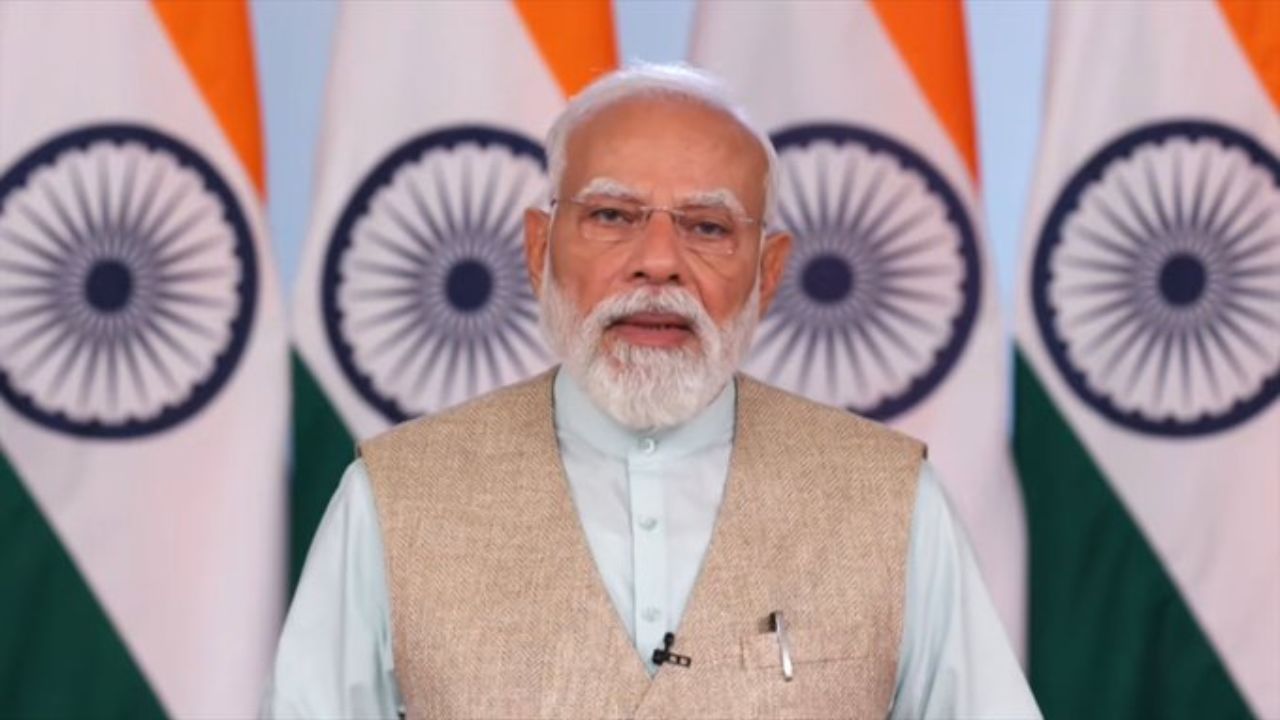
Big achievement in the second phase of India’s nuclear energy program, indigenous fast breeder reactor in Kalpakkam achieved criticality, PM Modi congratulated the scientists.

India has achieved an important milestone in the second phase of its nuclear power programme. The indigenously designed and built Prototype Fast Breeder Reactor (PFBR) at Indira Gandhi Center for Atomic Research (IGCAR) at Kalpakkam, Tamil Nadu has achieved criticality. This achievement is a great testament to the scientific and engineering capability of the country, with which India has now taken another step forward towards self-reliance in the nuclear fuel cycle.
Prime Minister Modi congratulated scientists and engineers
Prime Minister Narendra Modi heartily congratulated the scientists and engineers of the country on this proud moment. He posted on his social media platform X that this is an important milestone in India’s civil nuclear journey. The Prime Minister stressed that this success will ensure energy security and long-term stability for the country.
“Today India has taken an important step in the field of civil nuclear journey and advanced the second phase of its nuclear programme. The indigenously designed and built prototype fast breeder reactor at Kalpakkam (Tamil Nadu) has achieved criticality.” (Prime Minister Narendra Modi)
Prime Minister Modi further said that this state-of-the-art reactor is capable of producing more nuclear fuel than its consumption. This is one of its most special characteristics, which makes it extremely important for future energy needs. This reactor is a direct testament to the depth of India’s scientific capability and the strength of our engineering proficiency. Through this, the country has also taken a decisive step towards efficiently utilizing its vast thorium reserves, which is the cornerstone of the third phase of the nuclear power programme.
Achieving criticality is a very important milestone in the operation of any nuclear reactor. This means that the nuclear fission chain reaction in the reactor core has become self-sustaining and can now be maintained in a controlled manner. This indicates that the reactor is ready to begin producing energy in a safe and stable manner. This achievement marks the beginning of the second phase of India’s ambitious three-phase nuclear power programme.
India’s three-phase nuclear power program
The Department of Atomic Energy of India is working on a three-phase nuclear energy program keeping in mind the country’s specific energy needs and available resources. The program is primarily designed to make maximum use of India’s limited uranium reserves and exploit the abundant thorium reserves in the country. Its ultimate goal is to provide long-term energy security to India through nuclear power generation.
The program is based on a ‘closed nuclear fuel cycle’. This means that once the fuel in the reactor is used up, it is reprocessed so that useful plutonium and other fissile material can be removed and used again as new fuel. This not only increases fuel efficiency but also reduces the amount of nuclear waste, thereby controlling environmental impact.
In the first phase, India is focused on Pressurized Heavy Water Reactors (PHWRs) using natural uranium as fuel, which produces plutonium-239. In the second stage, reactors such as the Prototype Fast Breeder Reactor (PFBR) use plutonium-239 as fuel. These reactors not only produce energy but also ‘breed’ more plutonium than they consume. Additionally, they are also able to convert thorium into uranium-233, which is important for the third stage.
The third and final phase will focus on thorium-based reactors. In this phase, uranium-233 will be used as fuel, which is derived from thorium. India has one of the largest thorium reserves in the world, and successful implementation of this program will provide the country with the ability to meet its energy needs for centuries, significantly reducing dependence on foreign fuels.
India’s technical capability strengthened by success of PFBR in Kalpakkam
This success of PFBR in Kalpakkam strengthens the feasibility of this entire scheme and the technical capability of India. This will not only ensure domestic energy security but will also establish India as a leading country in the field of nuclear technology. This achievement is a shining example of India’s Atmanirbhar Bharat campaign and its commitment towards scientific progress, which has brought a wave of pride throughout the country.
Today, India takes a defining step in its civil nuclear journey, advancing the second stage of its nuclear programme.
The indigenously designed and built Prototype Fast Breeder Reactor at Kalpakkam has attained criticality.
This advanced reactor, capable of producing more fuel…
— Narendra Modi (@narendramodi) April 6, 2026

Comments are closed.