

Kantilal Mandot, senior journalist
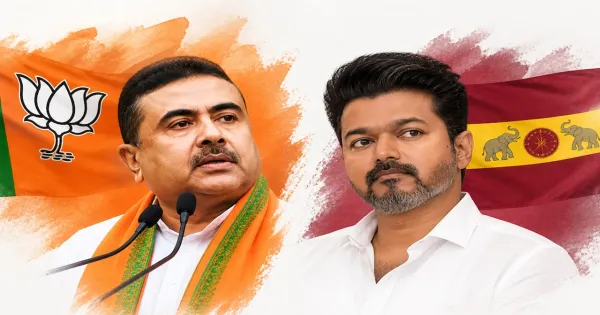
After the decisive victory of the Bharatiya Janata Party in West Bengal and the emergence of Vijay’s party TVK as the largest party in Tamil Nadu, the country’s politics appears to be at a new turning point. The promises made in election rallies will soon come out of paper and demands will start turning into reality. The trust with which the public has handed over power to these parties has now become the biggest test for them. The excitement of victory is gradually turning into the burden of responsibilities and this is the time when the real cost of political announcements comes to the fore.
In West Bengal, BJP had shown the dream of ‘Sonar Bangla’. This dream was not just a slogan, but a promise of comprehensive social and economic change. Many big announcements were made like providing financial assistance to women every month, giving allowance to unemployed youth, preparing funds for farmers and strengthening the infrastructure.
If all these schemes are implemented together, it is sure to put huge pressure on the state exchequer. Estimates suggest that the monthly assistance given to women alone could generate an expenditure of thousands of crores of rupees annually. Similarly, unemployment allowance and other schemes can make the financial condition of the state more challenging.
On the other hand, Vijay’s party TVK in Tamil Nadu will face no less challenge. Vijay, an actor-turned-politician, has won big on the basis of popularity among the public, but now he has to grapple with administrative and financial complexities. Tamil Nadu is already counted among the states with high fiscal deficit. In such a situation, raising additional thousands of crores of rupees for new schemes will be a difficult task, although at present there is confusion regarding government formation.
The biggest question here is whether the free schemes are really a long-term solution or just a means of immediate political gain. Experts believe that such schemes may provide relief in the short term, but in the long run they can become an economic burden. If a large part of the state budget starts being spent on subsidies and cash assistance, resources for development projects may fall short. Investment in sectors like education, health, industry and infrastructure, which are essential for the long-term progress of any state, may be affected.
It is also true that social inequalities are still a big challenge in a country like India. Government assistance to the poor and weaker sections is necessary, but its form and scope should be balanced. Targeted schemes, if implemented with transparency and accountability, can bring about positive change in society, but if used merely as an electoral weapon, their impact can be limited and sometimes even negative.
This time is also important from political point of view. If these governments implement their promises effectively and maintain economic balance, it may lead to long-term political gains for them, but if they fail to do so, public trust may quickly erode. Today’s conscious public is not satisfied with mere announcements, but wants results. (These are the personal views of the author)

Comments are closed.