
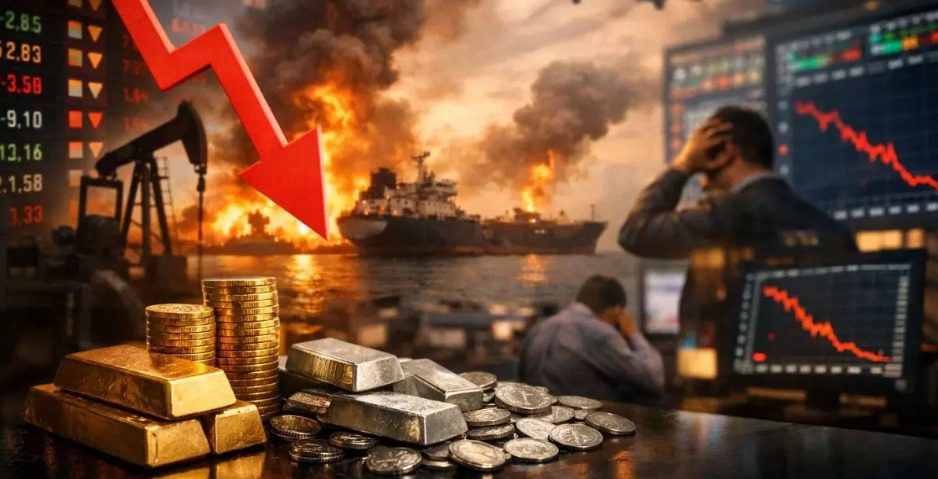
Big impact of Iran-Israel war on Indian market: Sensex-Nifty fall heavily, oil becomes expensive and risk of inflation increases

The ongoing war between Iran and Israel has shaken the global economy and its direct impact is being seen on India’s stock market, oil prices and inflation. In recent times, there has been a huge decline in the Indian stock market, due to which a huge amount of investors’ capital has been lost and an environment of economic uncertainty has been created.
According to the latest data, due to heavy selling in the market, investors’ wealth worth about ₹ 5 lakh crore was wiped out in a single day. BSE Sensex A decline of 1400 to 1500 points was recorded in, while Nifty 50 also slipped around 22,600.
Experts believe that the main reason for this decline is the increasing tension in West Asia, which has created an atmosphere of fear among global investors. Investors are now turning to safer investment options by withdrawing money from the stock market to avoid risk.
The biggest impact of this war has been on the prices of crude oil. The price of Brent crude has crossed $110 per barrel, causing direct pressure on the economy of an oil importing country like India.
India imports a large part of its energy needs, so the impact of increase in oil prices falls directly on the pockets of the general public. Due to petrol and diesel becoming expensive, transportation costs increase, which impacts everything from food items to everyday items. Due to this, the risk of increasing inflation has increased significantly.
Along with this, pressure on the Indian currency has also increased. According to recent reports, the rupee has reached a record low against the dollar. Continued selling by foreign investors and rising dollar demand for oil imports have weakened the rupee.
In the month of March itself, foreign investors have withdrawn billions of dollars from the Indian market, due to which the market situation has further weakened.
The impact of this entire development is being seen in different ways on different sectors. Sectors like aviation, auto, paint and chemical have come under pressure as their costs are directly linked to oil prices. At the same time, some oil and defense companies may also benefit from this situation.
Experts say that if this war prolongs, its impact on the Indian economy may become more serious. Increase in inflation may put pressure on the Reserve Bank to increase interest rates, which may make loans expensive and slow down the pace of economic growth.
Apart from this, global trade is also likely to be affected. If oil supplies are disrupted or important sea routes like the Strait of Hormuz are affected, it could impact the entire world’s supply chain.
However, some experts are also considering this as a temporary decline. He says that as soon as the war situation becomes normal, recovery can be seen in the market. But at present investors are being advised to be cautious and invest wisely.
Overall, the Iran-Israel war has made it clear how global events can affect the Indian economy. Fall in the stock market, rising oil prices and the threat of inflation – all three together are challenging the economic condition of the country. In the coming days, it will be important to see how long this crisis lasts and how India deals with it.

Comments are closed.