
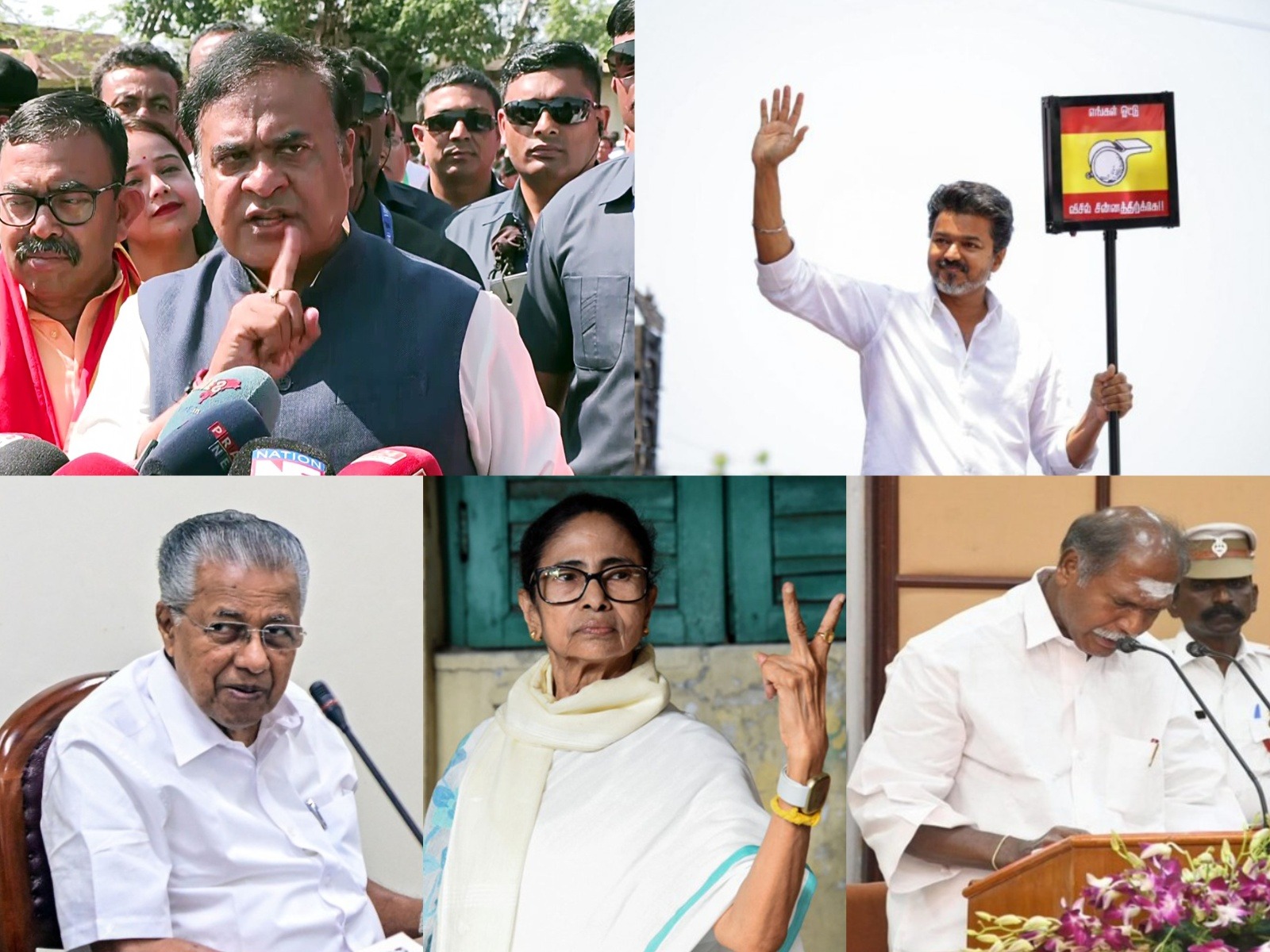

The Bharatiya Janata Party (BJP) made history on January 5 by winning its first government in West Bengal, while its coalition, the National Democratic Alliance (NDA), achieved a third consecutive victory in Assam.
In West Bengal, the BJP secured 207 seats out of the state’s assembly, a significant increase from 77 seats in the previous election. The Trinamool Congress (TMC), which had governed the state for 15 years and won 212 seats previously, fell to 80 seats and is leading in one seat. Notably, TMC leader Mamata Banerjee lost her traditional Bhabanipur seat to BJP’s Suvendu Adhikari. The Congress and Left parties performed poorly, winning two and one seat, respectively.
The BJP’s success in West Bengal reflects a robust campaign that targeted the ruling TMC and made extensive promises across various societal segments amid controversies over the Special Intensive Revision of electoral rolls. The victory marks a milestone as West Bengal had long been dominated by Congress, Left parties, and later TMC. It is also the home state of BJP ideologue Syama Prasad Mookerji.
In Tamil Nadu, actor-turned-politician Vijay’s Tamilaga Vettri Kazhagam (TVK) won 107 seats in the assembly elections, challenging the long-standing dominance of the Dravidian parties. The Dravida Munnetra Kazhagam (DMK) secured 59 seats and the All India Anna Dravida Munnetra Kazhagam (AIADMK) 47. Other parties included Congress with five seats and DMDK with three. Vijay garnered significant youth support and campaigned on an agenda capitalizing on anti-incumbency sentiments against the DMK.
The Congress-led United Democratic Front (UDF) achieved a decisive victory in Kerala, ending a decade of Left Democratic Front (LDF) rule. The Kerala win is a morale boost for Congress, which had underperformed in Assam, where its leader Gaurav Gogoi lost. In Assam, Congress won 63 seats out of 140, while the Communist Party of India (Marxist) has 26 seats and the Communist Party of India 8. The BJP and its allies, Bodoland Peoples Front and Asom Gana Parishad, obtained 82, 10, and 10 seats respectively, marking the NDA’s highest tally since 2021.
In Puducherry, the NR Congress-led alliance retained power comfortably, winning 12 seats, with the BJP obtaining four seats and TVK two seats.
Polling dates were April 9 for Assam, Kerala, and Puducherry, April 23 for Tamil Nadu, and April 23 and 29 for West Bengal.
Prime Minister Narendra Modi addressed BJP workers at the party headquarters, highlighting the party’s impressive West Bengal performance and emphasizing a focus on change rather than revenge. He appealed to political workers for an end to election-related violence and noted that for the first time, West Bengal’s elections were peaceful with no loss of innocent lives.
Modi referenced Syama Prasad Mookerjee, founder of Jan Sangh, the precursor to the BJP, who hailed from Bengal, expressing that the BJP’s formation of government in the state brings peace to Mookerjee’s soul. He assured that women would be safe, youth would receive employment, and strict action would be taken against infiltrators. Modi also promised the swift approval of the Ayushman Yojana in the first cabinet meeting.
The Prime Minister congratulated party workers for their efforts under the leadership of newly appointed BJP President Nitin Nabin, citing victories in recent by-elections in Maharashtra, Gujarat, Nagaland, and Tripura. He highlighted NDA leader and Maharashtra Deputy Chief Minister Sunetra Pawar’s landslide win.
Comments are closed.